This article is based on The Adventure Story Podcast, where I chase legends, uncover history, and ask the questions that sometimes get ignored. Listen below, or wherever you get your podcasts.
In the forests west of Berlin, a hill rises above the treeline. As you follow the path winding upward through the trees, something feels wrong about the gradient. The slope is too steep, too perfectly formed to be natural. Which makes sense, because nature didn’t make this hill. Human hands did, truck by truck, day by day, over twenty years — piling the rubble of a destroyed city into something that now passes for a landscape.
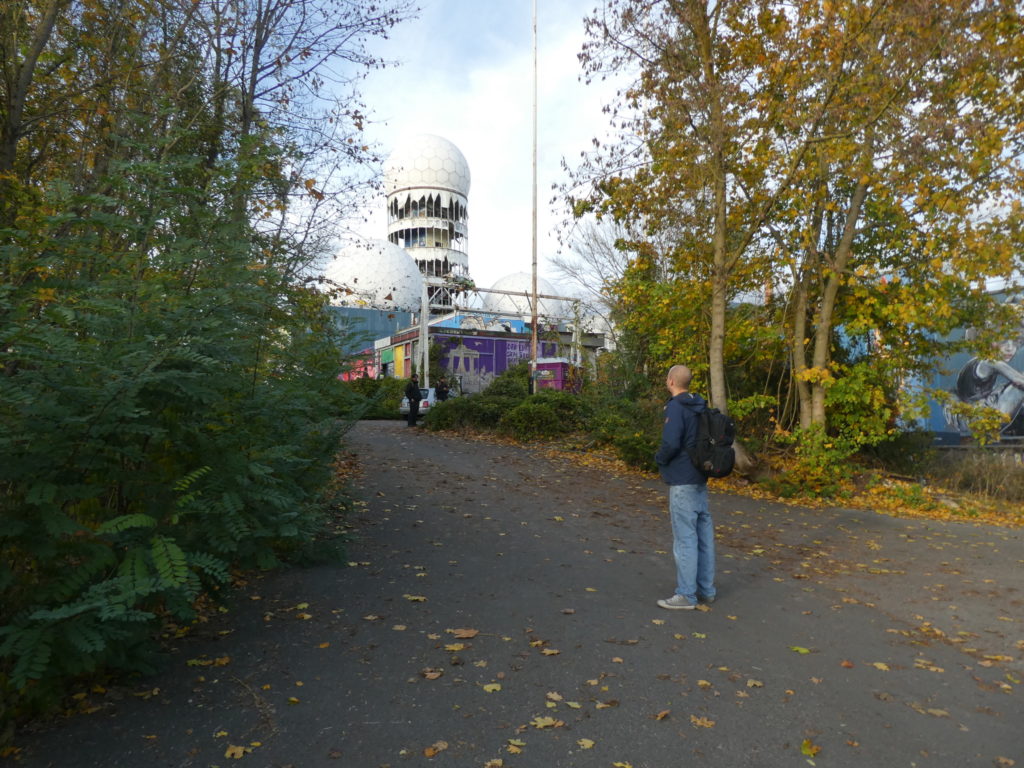
You keep climbing and the trees then, gradually, something emerges from the branches above. Climbing higher, they resolve into focus.
Radar domes. Enormous, white, orbs looming over the forest like the remnants of some half-forgotten science fiction film.
You continue, reaching a triple chain-link fence—alluding that getting inside is not for the faint of heart. The buildings inside peered through the undergrowth, broken windows looking down at you like a gap-toothed smile.
Welcome to Field Station Berlin — known to the locals simply as Teufelsberg. Devil’s Mountain.
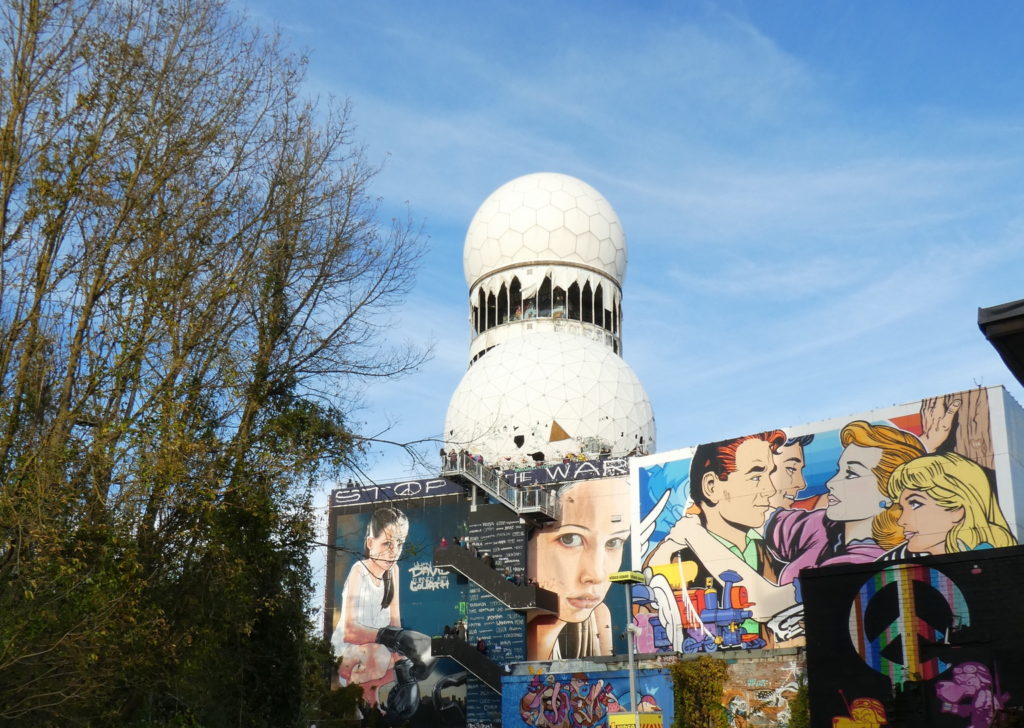
At its peak, this was one of the most important spy stations in the world — the beating heart of the West’s effort to listen to everything happening behind the Iron Curtain. From 1961 to 1991, almost thirty years without interruption, over a thousand people worked here around the clock, intercepting Soviet and East German military communications, feeding intelligence to the NSA, the CIA, and British intelligence. What they heard in these rooms helped shape the course of the Cold War. Most of what they heard, remains classified to this day.
To understand this place properly we have to go back in time. In 1937, as part of Hitler’s grand vision for a rebuilt Berlin — a city to be renamed Germania — construction began on a vast military college. The building was designed by Albert Speer, Hitler’s chief architect. When the war ended the Allies tried to demolish the complex, but found it too robust to bring down easily. So, they did the only thing they could: they buried it.
With a fuel shortage and limited space to put the rubble from the war damaged city, they piled it on top. Over the following two decades, an estimated twelve million cubic metres, the remains of roughly 400,000 bombed buildings — grew the pile into a hill. Local woman transported much of it by hand, they small army becoming known as Trümmerfrauen, or rubble women. Eventually the hill, now 120m high, became the highest point in Berlin.
To understand why Teufelsberg mattered, we have to understand what Berlin was in the early 1960s. The city had been divided since the end of the Second World War — East and West, Soviet and Allied, separated first by an invisible line and then, from August 1961, by a wall of concrete and wire that snaked through the heart of the city. Berlin was the front line of the Cold War, the place where two competing visions of the world stared at each other across a few hundred metres of no man’s land, and where the smallest miscalculation could have triggered something catastrophic.
In that context, intelligence was everything. The Western allies needed to know what the Soviets were planning, what their military was doing, how their communications worked and where their weaknesses were. They needed to listen, and listening, in a city surrounded on all sides by Soviet-controlled territory, required height.
In July 1961 — the same month construction began on the Berlin Wall — mobile Allied listening units began operations on Teufelsberg. Permanent construction began in 1963, and the site quickly developed into one of the most important listening stations in the world, becoming part of the global ECHELON surveillance network — a secret alliance between the intelligence agencies of the United States, the United Kingdom, Canada, Australia, and New Zealand, sharing everything they intercepted with each other around the clock.
From those domes, intelligence officers monitored radio communications from deep into East Germany, into Poland, toward the Soviet Union itself.
Work inside the station was highly classified and structured like a puzzle — everyone only knew their own small part of what was being collected and why. The data was stored on paper and recorded on tape, and large incinerators regularly destroyed information to stop it falling into the wrong hands. Walking through the abandoned station to this day, some of these vast machines remain, clearly too big to pack down and take away. In other places bolt marks and severed electric cables show where something once stood.
And inside those iconic radar domes, the most sensitive surveillance equipment the Western alliance possessed constantly scanned and listened.
One of the more remarkable footnotes in the station’s history involves a Ferris wheel. During the annual German-American Volksfest festival held nearby, the NSA discovered that the Ferris wheel significantly improved their radio reception, functioning as an accidental resonator. They talked the festival organisers into keeping the wheel in place long after the festival was over.
Whilst the facility was far too big to be a secret, what went on inside was highly restricted, giving rise to elaborate stories — including the existence of a secret tunnels beneath. Whether any of this is true has never been confirmed. What is known is that the Nazi college buried beneath the hill was never fully explored after the war, so who’s to know what deep concrete chambers could remain sealed there to this day.
Before the spies arrived, Teufelsberg had a rather more innocent purpose. In the early 1950s, as the rubble was still being piled up and the hill was taking shape, the people of West Berlin did what Berliners have always done with unexpected terrain — they made the most of it. A ski slope appeared down one side of the hill, complete with a ski lift, a ski jump capable of holding 5,000 spectators, and a toboggan run. For a brief, slightly surreal period, families could sledge down what was essentially a mountain built from the ruins of their own city, with an unfinished Nazi college sealed beneath their feet.
The slope fell out of use in 1969 and the structure crumbled quietly away, before being fully removed in the 1990s.
When the Berlin Wall fell in 1989, the station’s purpose evaporated almost overnight. By the 2nd of December 1991 the various agencies had moved elsewhere, leaving the empty buildings, miles of leftover cables, and destroyed interiors. The site passed through several owners, accumulating a remarkable series of failed redevelopment plans along the way — luxury apartments, a hotel, a spy museum, and most memorably, a proposal by the American film director David Lynch to establish a meditation university on the site. None of it came to anything.
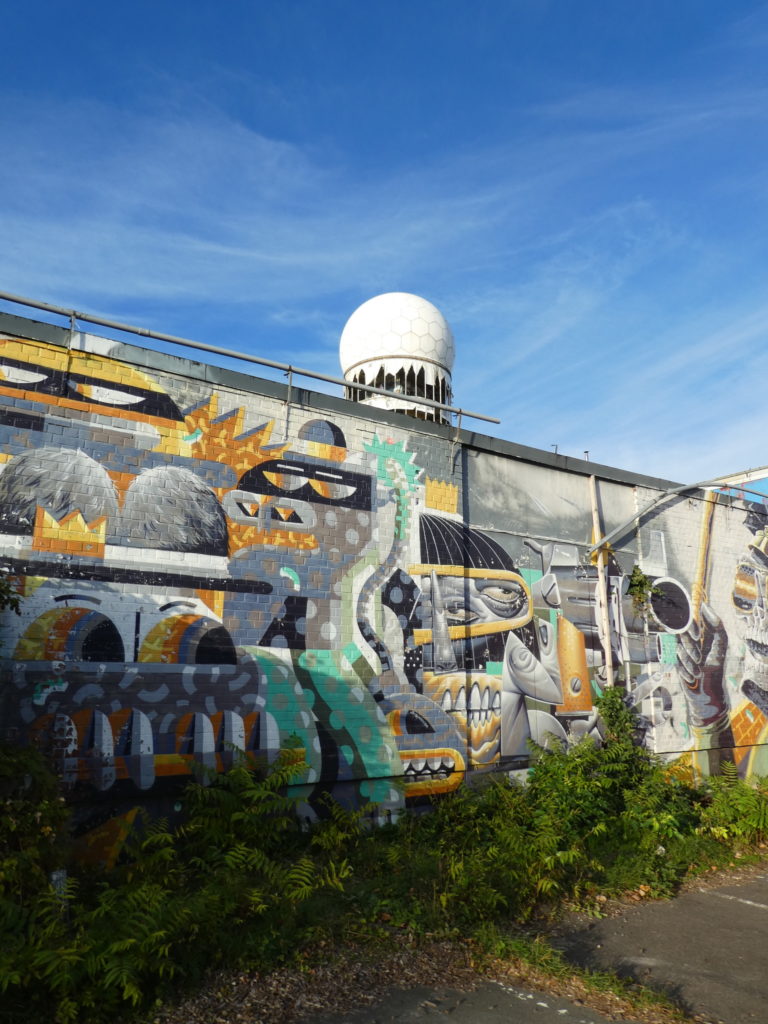
What Teufelsberg became instead was something nobody planned: one of the largest open-air street art galleries in Europe, with over 400 works by local and international artists covering the abandoned spaces.
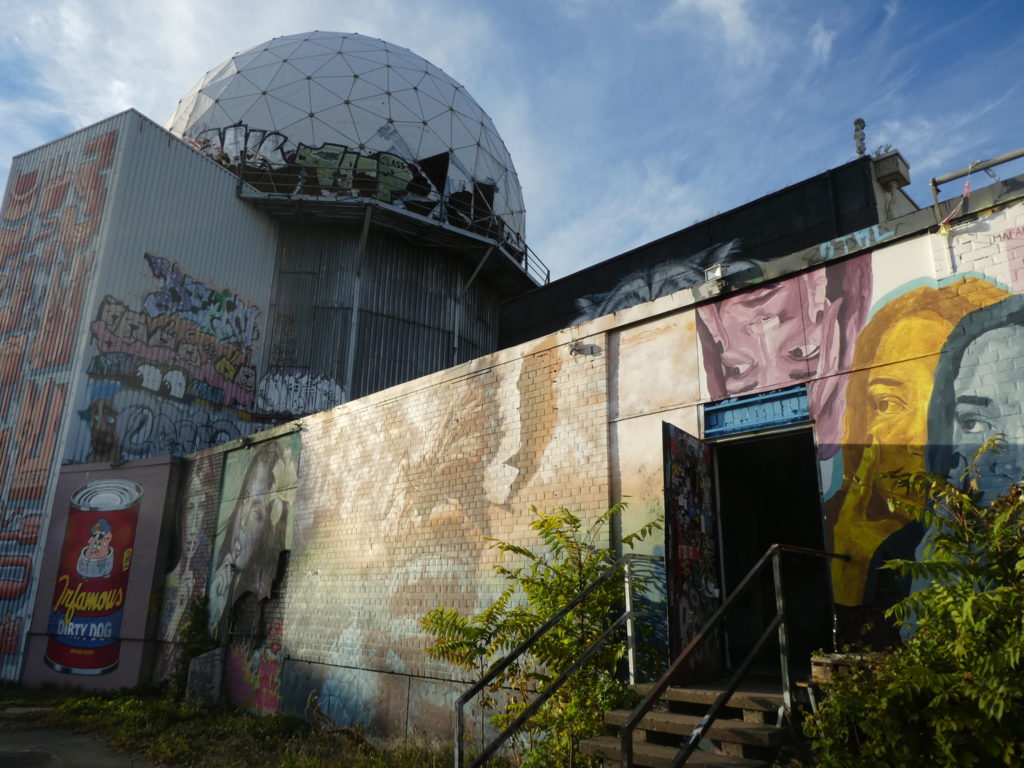
I visited Teufelsberg while researching Berlin Underground, and it got under my skin in the way that only the truly extraordinary places do. Standing inside one of those domes, looking up through the open roof at a sky criss-crossed with graffiti and the ghost of a thousand intercepted signals, it’s impossible not to feel the weight of everything that happened there — and everything that still be buried beneath. Layer upon layer of history, each trying to bury the one before it.
The veterans who worked here left a commemorative plaque on the site. Inscribed on it, in Morse code, are the words: In God we trust, all others we monitor. It’s funny, and it’s proud, and it captures something true about what this place was. But walking through the empty rooms, the severed cables trailing across the floor, the incinerators still too large to remove, I kept thinking about everything those walls heard — and how much of it is still classified, still locked away, and in its own way, still buried.
If you’re ever in Berlin, go. It’s unlike anywhere else on earth — and the view from the top, looking out over the city that was divided and then reunited and is still, somehow, making sense of all of it, is one you won’t forget.
Teufelsberg is open daily from 11am until sunset. The last time I visited, entry was €10 for adults, with reduced and child tickets also available. Guided tours are available at additional cost and are worth booking in advance, particularly at weekends.
The address is Teufelsseechaussee 10, 14193 Berlin. The nearest S-Bahn station is Heerstraße, roughly a 30-minute walk from the site — though personally I’ve always arrived via the Olympiastadion station, which gives you the bonus of walking past the Olympic Stadium itself, an extraordinary piece of architecture in its own right. Alternatively, the S-Bahn to Grunewald station takes you through the forest on a slightly longer but very pleasant route. Either way, allow around an hour from central Berlin, and wear comfortable shoes — the path up the hill is steep and uneven. A taxi or ride-sharing app should be able to get you to the gate if you’d rather not walk, though I’d call ahead to confirm access.
One practical note: if paying on arrival, bring cash, as card payment is not always accepted on site.
Teufelsberg, or Devil’s Mountain, is a man-made hill in the forests west of Berlin, built from the rubble of roughly 400,000 bombed buildings. On top stands Field Station Berlin, a former Allied listening station whose white radar domes were used from 1961 to 1991 to intercept Soviet and East German military communications during the Cold War.
Beneath the hill lies a vast military college begun in 1937 as part of Hitler’s plan to rebuild Berlin as Germania, designed by Albert Speer. The Allies found it too robust to demolish, so they buried it under the city’s war rubble. The college was never fully explored after the war, fuelling stories of sealed chambers and secret tunnels.
The hill was built by human hands over around twenty years, as rubble from war-damaged Berlin was piled on top of the buried Nazi college. Much of it was transported by local women, known as Trümmerfrauen, or rubble women. The resulting hill, around 120m high, became the highest point in Berlin.
Yes. Teufelsberg is open daily from 11am until sunset, and entry was €10 for adults on Luke’s last visit, with guided tours available at extra cost. The address is Teufelsseechaussee 10, 14193 Berlin. Nearby stations include Heerstraße, Olympiastadion and Grunewald. Wear comfortable shoes and bring cash, as card payment isn’t always accepted.
During the annual German-American Volksfest held nearby, the NSA discovered that the festival’s Ferris wheel significantly improved their radio reception, acting as an accidental resonator. They persuaded the festival organisers to keep the wheel in place long after the festival had finished.
If you enjoyed this, you can find more stories like it on The Adventure Story Podcast — wherever you get your podcasts. And if you’d like to join the Adventure Society, my weekly newsletter covering real-world adventures, new books, and podcast updates, head to lukerichardsonauthor.com/adventuresociety.