This post is also an episode on the Adventure Story Podcast. Tap here to listen, or search for ‘the Adventure Story Podcast’ on your favourite podcast app.

There’s a particular kind of quiet that belongs to early mornings, and we felt it the moment we pulled away from my brother’s house in Kent. We’d stayed the night there to break up the drive, and when we left the roads were abandoned apart from the occasional late-night trucker, a taxi or two heading home, and, remarkably, a milk float, which I hadn’t realised still existed.
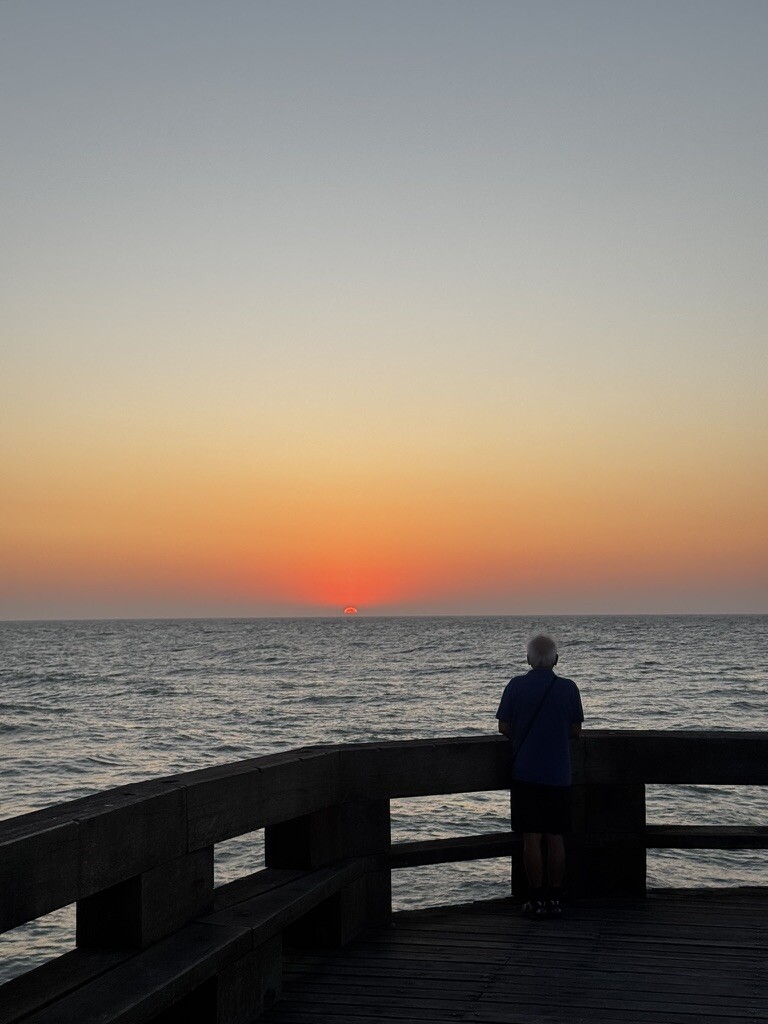
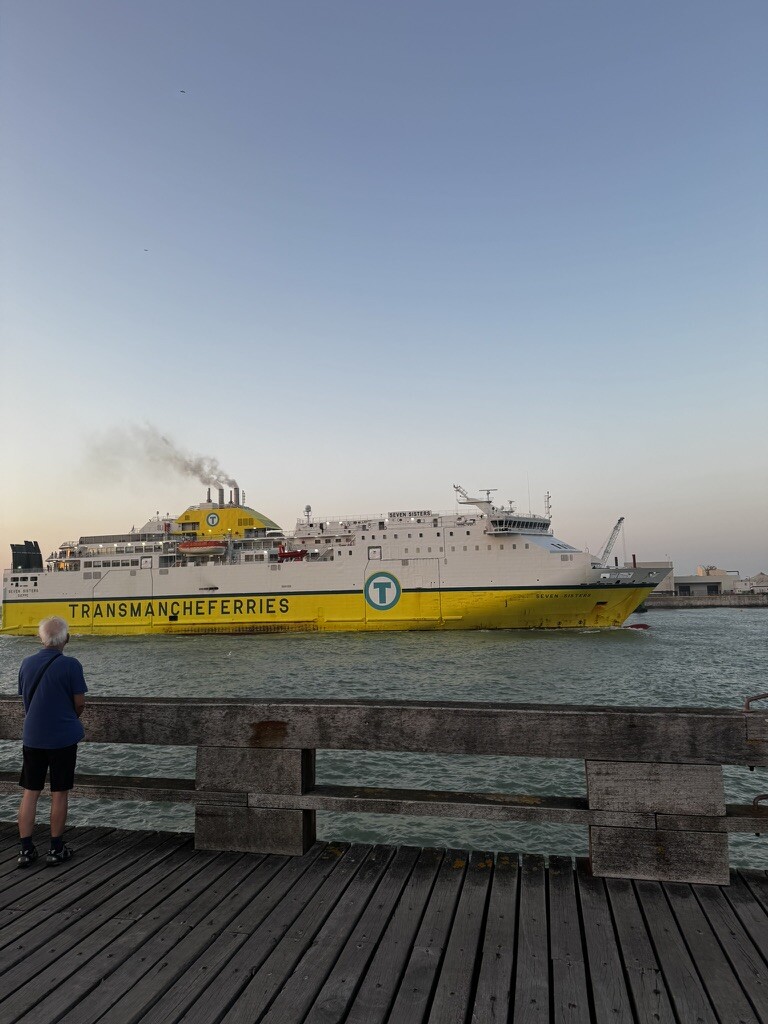
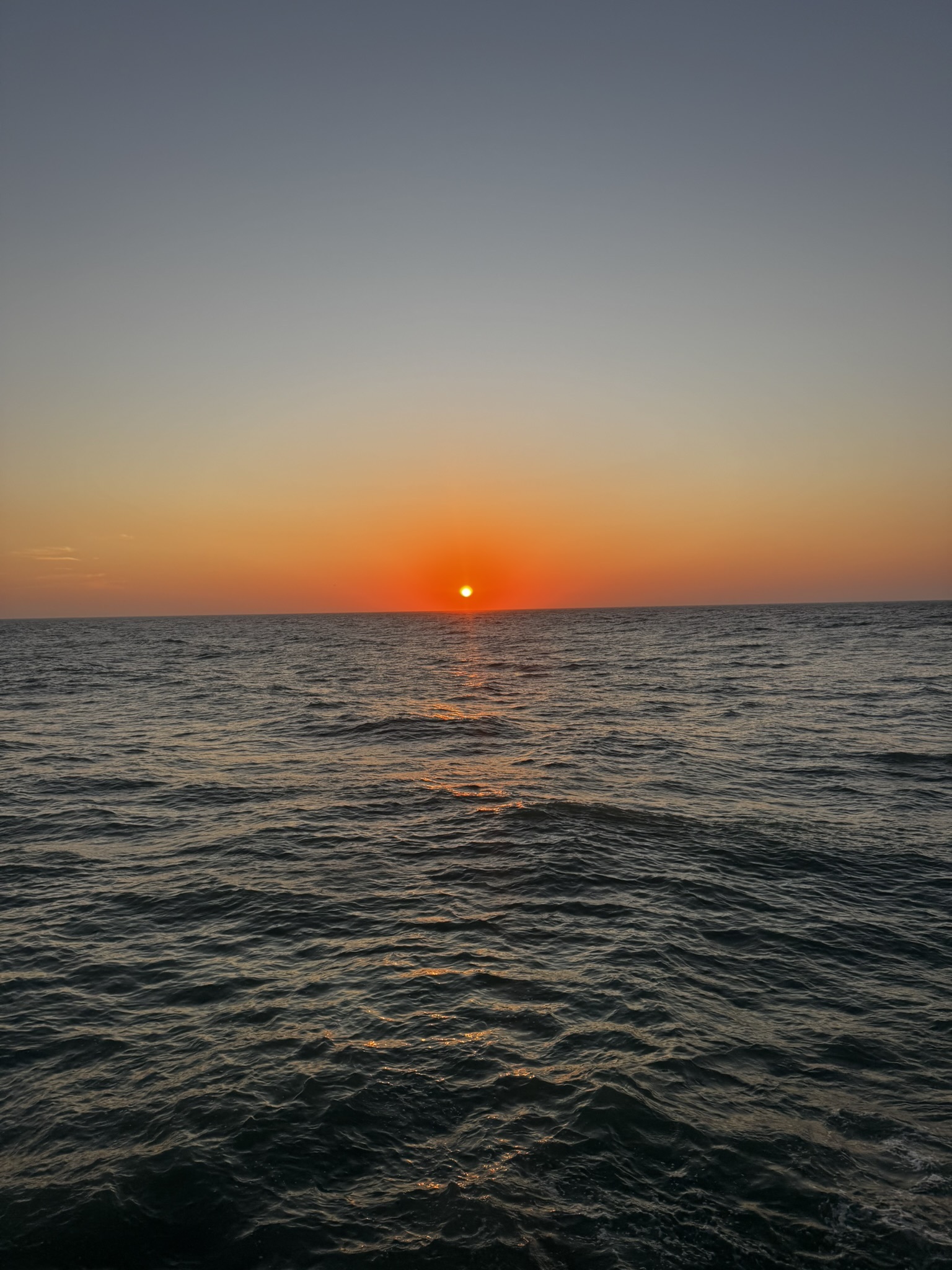
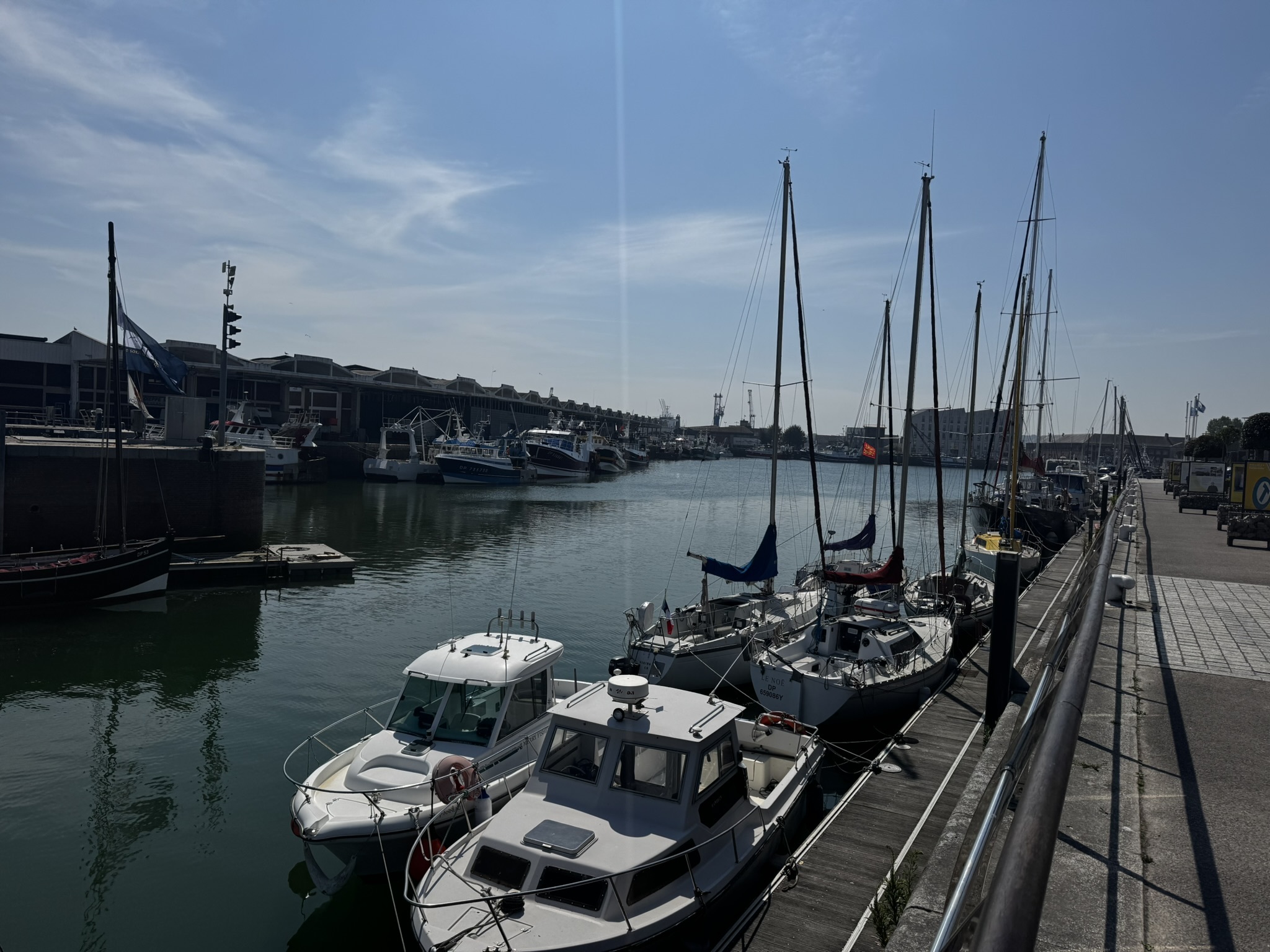
We reached Dover in good time, and at quarter to eight the ship’s whistle sounded and we were away.
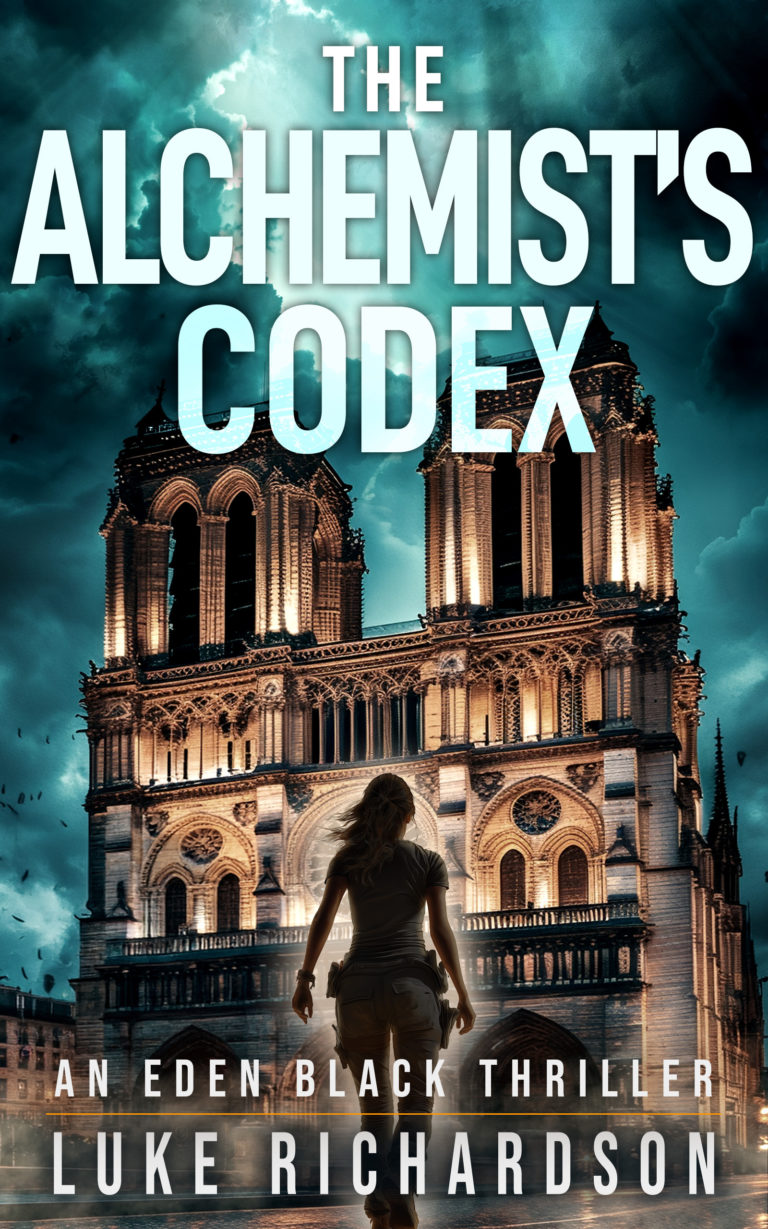
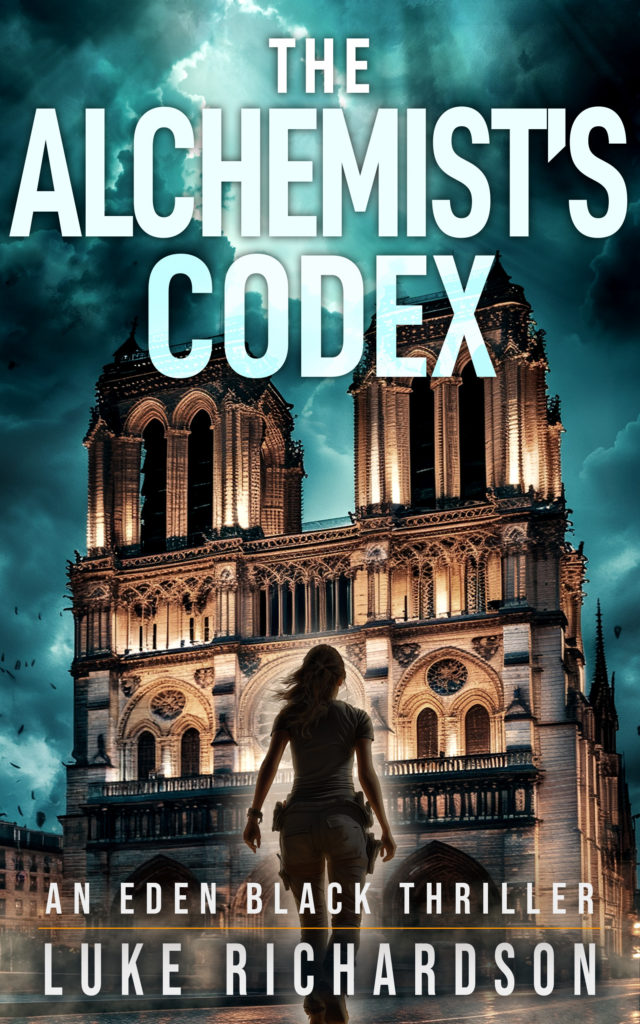
That’s how it started: four weeks on the road through France, researching my upcoming book, The Alchemist’s Codex, eating a great deal of bread and cheese, drinking a fair amount of wine and beer, and rediscovering a country I’d somehow lost touch with.
I’ve been to France many times, but most of those visits were as a child. I grew up in Hastings, on the south coast. We were close enough that when you tuned the radio you’d sometimes find a French station sitting between the English ones. And yet, separated by thirty miles of water, the two countries are different in all sorts of ways.
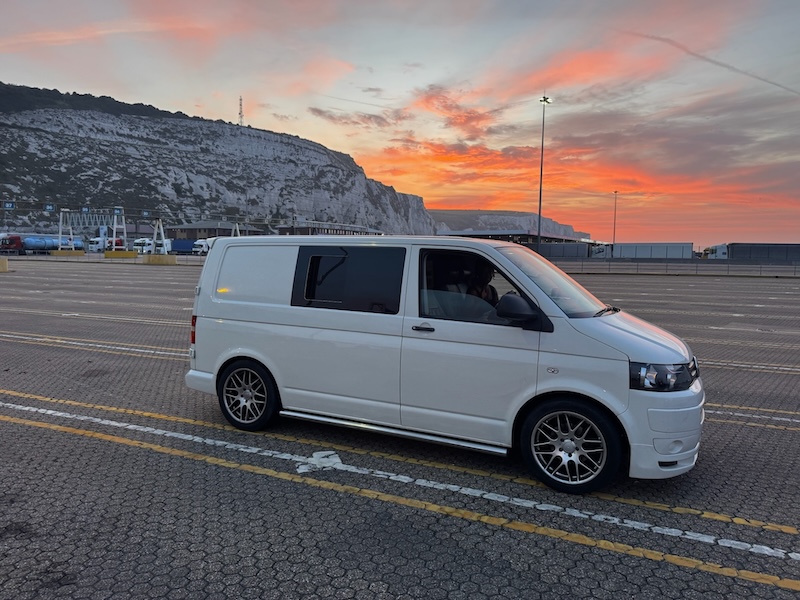
Now, thirty years on, I’m setting a book there, so we loaded up the van and went to have a proper look. The van, incidentally, is a 2008 VW T5, and we’ve owned it for almost a year. It was a fortieth birthday present to myself and beyond a few short weekend trips this would be its first real outing, and we were packed, excited and ready to go.
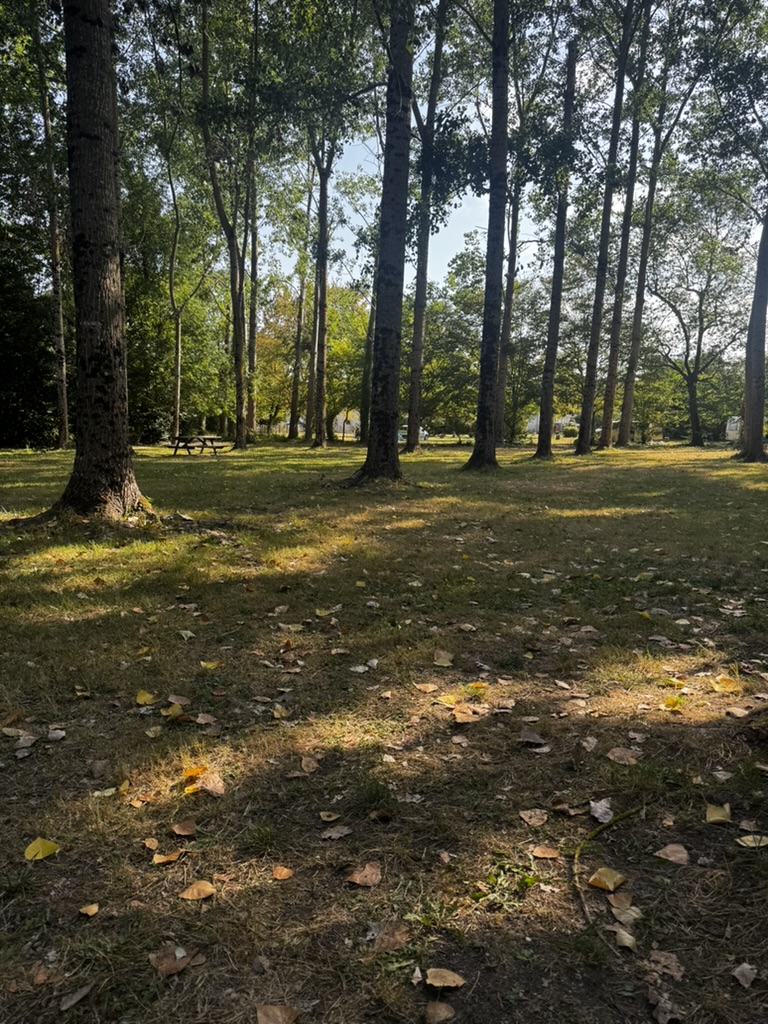
We came off the ferry at Dunkirk, drove on the right, which is to say the wrong side, for the first time, and pulled into a secluded woodland to rest for a couple of hours. It was boiling, so we threw open all the doors and let the wind move through the van.
For me, that feels like the moment the adventure began. Ten miles or so from the Belgian border, tucked into a patch of forest in northern France, sitting with a coffee listening to the wind and the birds, I thought: yes. This is exactly what I imagined a campervan adventure should be.
It wasn’t always going to be like that, of course. There would be sweltering nights, long drives, and mornings that started far earlier than any reasonable person would choose. But that first one set the tone, and the tone held. Mrs R and I were heading south and then east, chasing down the locations for The Alchemist’s Codex and, as usually happens, finding a good deal we hadn’t gone looking for.
Getting Started in Dieppe
The first night we’d arranged to see family friends in a small village near Lille, and they treated us like royalty, with local drinks pressed into our hands the moment we arrived and more food than any two people could reasonably eat. It was exactly the right start.
The next morning we hit the road and headed for Dieppe.
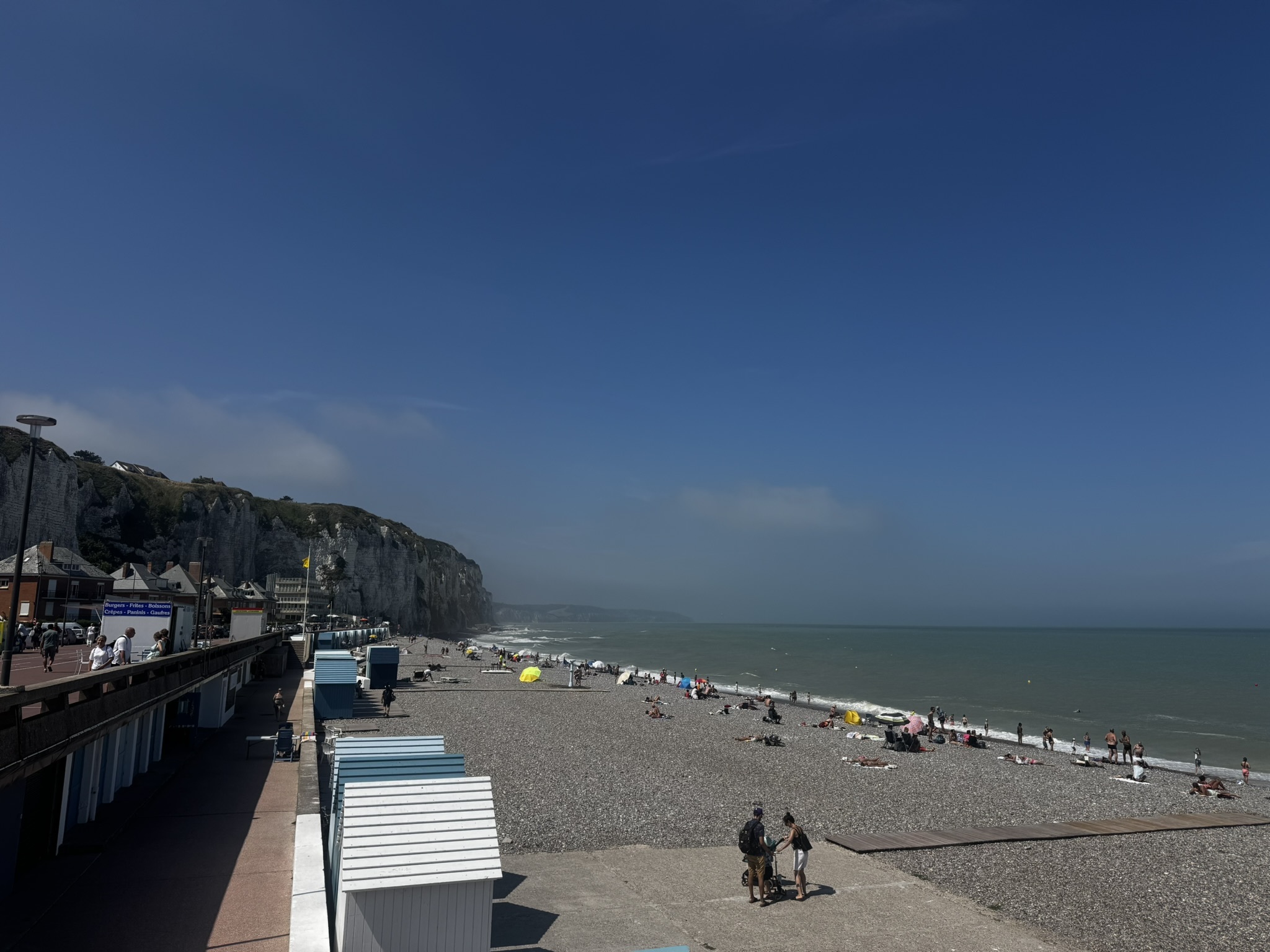
Dieppe sits in a gap in the chalk cliffs, with white walls rising on either side of the harbour and a mile and a half of pebble beach running along the front. It was France’s very first seaside resort, since the original bathing establishment opened in 1822, and the town became a magnet for aristocrats and later for artists and writers.

Having grown up in a seaside town with a faded Victorian elegance to it, I found Dieppe strangely homely. It is almost the mirror image of Hastings, Eastbourne or Brighton, which I know well from the south coast of England.
One part of its history fascinated me more than any other, and that part is maps. For about a generation in the middle of the sixteenth century, some of the most extraordinary maps in the world were produced here.
The Dieppe school flourished from roughly the 1540s to the 1560s, and its cartographers worked in enormous hand-drawn detail on vellum, commissioned for royal and noble patrons. These were vast, gorgeous, politically loaded objects, decorated with sea monsters and wind heads and illustrations of distant peoples, produced by a port town that was at that moment right at the centre of French exploration.
This is where Eden could get involved. A number of these Dieppe maps show a large landmass in the southern ocean, east of Java, labelled Java la Grande. Researchers have argued for decades about whether this represents the coast of Australia, mapped by Portuguese navigators and then passed to the mapmakers of Dieppe more than two centuries before Cook ever went there. We will never know for certain, but it is a great story.
The Alabaster Coast: Fécamp and Yport
The next morning we drove west along the Alabaster Coast to Fécamp, and straight into the first setback of the trip, because the campsite was full.
A note on this: we had decided not to book any campsites in advance so that we could move whenever we felt like it. Of course that comes with risks, but I think they’re well worth taking.
We drove ten minutes further down the coast to the village of Yport, found a site there instead, and it turned out to be great. We positioned ourselves up on the cliffs, with a fine view of the sea and the town beneath us, and bedded in for a couple of days.
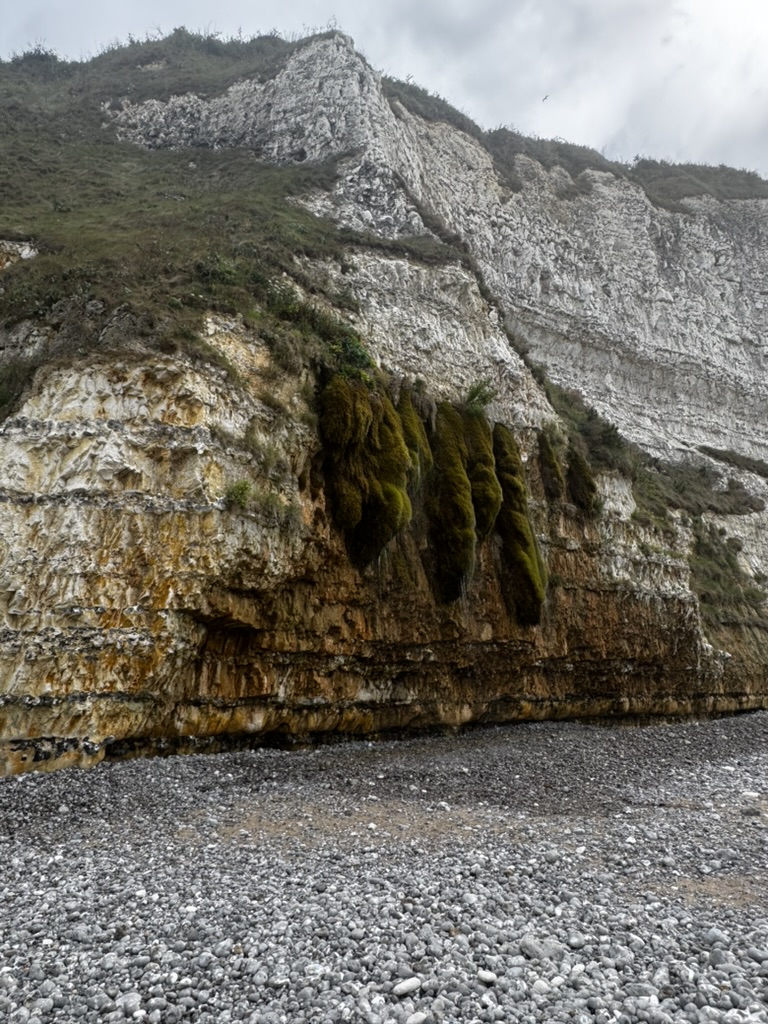
Yport sits in a narrow gap in the vast white walls of chalk.

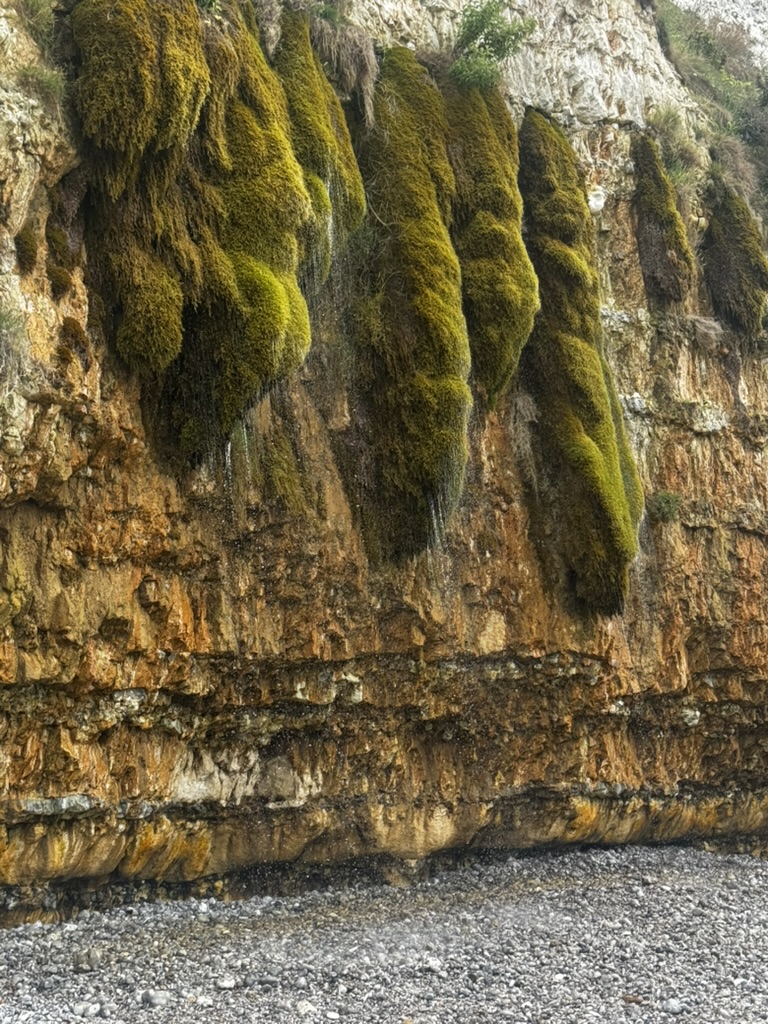
The cliffs are, in a rather alarming way, still very much a work in progress. They erode constantly, and landslides here are common enough that every path carries a warning about it, so every collapse brings down more of what’s inside. They are dramatic and, I think, slightly sinister, given that they would crush anything standing beneath them. Their beauty is added to by the waterfalls that spout down onto the beach, which look as though they were designed purely to be photographed.

Concrete Relics
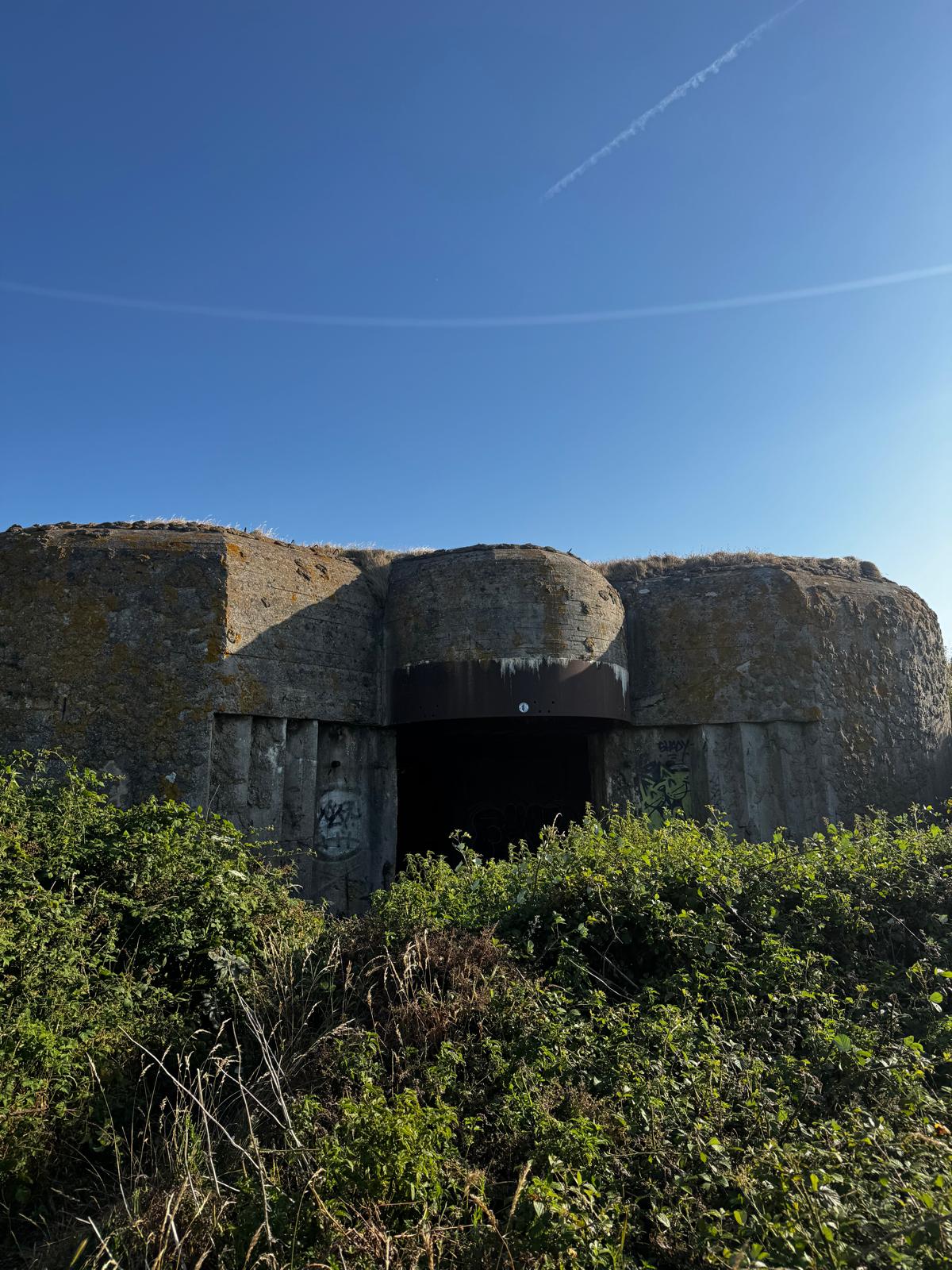
The mood changes on the headland above the town, where the concrete shells of Hitler’s Atlantic Wall fortifications still dot the clifftop.
These weren’t the first, of course, because this has been an important strategic place for thousands of years and successive generations have left their own fortifications behind. These blocks are simply the most recent.
This part of France was occupied by German forces from June 1940 to September 1944, and in 1942 it was built into the Atlantic Wall, Hitler’s chain of fortifications along the coast of occupied Europe. After Le Havre and Dieppe, Fécamp became the third most heavily fortified port on this stretch of Normandy coast, with a dozen or so separate strongpoints, gun casemates spread across the hillsides, and a major radar installation on the clifftop to spot ships and aircraft and direct artillery fire.
We walked into one of the husks. They’re squat, blank, brutally functional things, and standing inside one, cold and dark, with the concrete streaked with damp and a rectangle of bright sea visible through the door, it’s impossible not to think about the men who sat there watching that same view, waiting for something to come out of it.
It’s a sharp reminder that this idyllic stretch of coast, with its fossil beaches and its waterfalls and its holiday campsites, has not always been either idyllic or peaceful. That’s true of most of the beautiful places I’ve been. It’s just that here, somebody left the evidence lying around.
The Blood in the Fig Tree
I love to read about the places I’m visiting, and this one is incredible. The Abbey of the Holy Trinity in Fécamp is enormous, about the same size as Notre-Dame de Paris, and it’s that size for one reason, which is the relic it was built to house.
The legend goes that after the crucifixion, drops of Christ’s blood were gathered and sealed into two small lead vials. The vials were hidden inside the hollow trunk of a fig tree, and the trunk was cast into the sea. It drifted from the Holy Land across the Mediterranean and out into the Atlantic, and eventually washed ashore here, on the Norman coast, at Fécamp. What are the chances of that?
The story was told in this form around 1120. Then, on a very convenient day in July 1171, workmen carrying out renovations at the monastery discovered two lead containers, exactly as described.
This led to Fécamp becoming one of the great pilgrimage sites of France, and the abbey became the richest in Normandy.
But that’s not where the story ends.
In June 2022, someone broke into the abbey church two weeks before the annual Mass of the Precious Blood and stole the reliquary, along with other valuables. The police investigated and, of course, got nowhere. Then, a few weeks later, a Dutch art detective named Arthur Brand, known in the press as the Indiana Jones of the art world, opened his front door in Amsterdam late at night to find a cardboard box sitting on his step. Inside it was the reliquary. The thieves, it seems, had got cold feet, and an anonymous email told Brand they were handing it back because the blood of Christ came with a curse.
The following day we moved down the coast to Étretat, to see the formations everyone comes here for.
There are three of them, and they’re extraordinary: three vast natural arches punched through the chalk by the sea, with a shingle beach and a small town wedged into the gap between them. To the south-west stands the Porte d’Aval, with a free-standing spike of rock called the Aiguille, or the Needle, rising offshore in front of it. Beyond that, out of sight from the beach, sits the Manneporte, the largest of the three, which Maupassant reckoned a ship could sail through with all its sails up. To the north-east lies the Porte d’Amont.
You can climb up to all of them. It’s 180 steps to the top of the Aval side and 263 up the Amont, and the views from either are worth every one.
Mont Saint-Michel: An Island That Writes Its Own Thrillers
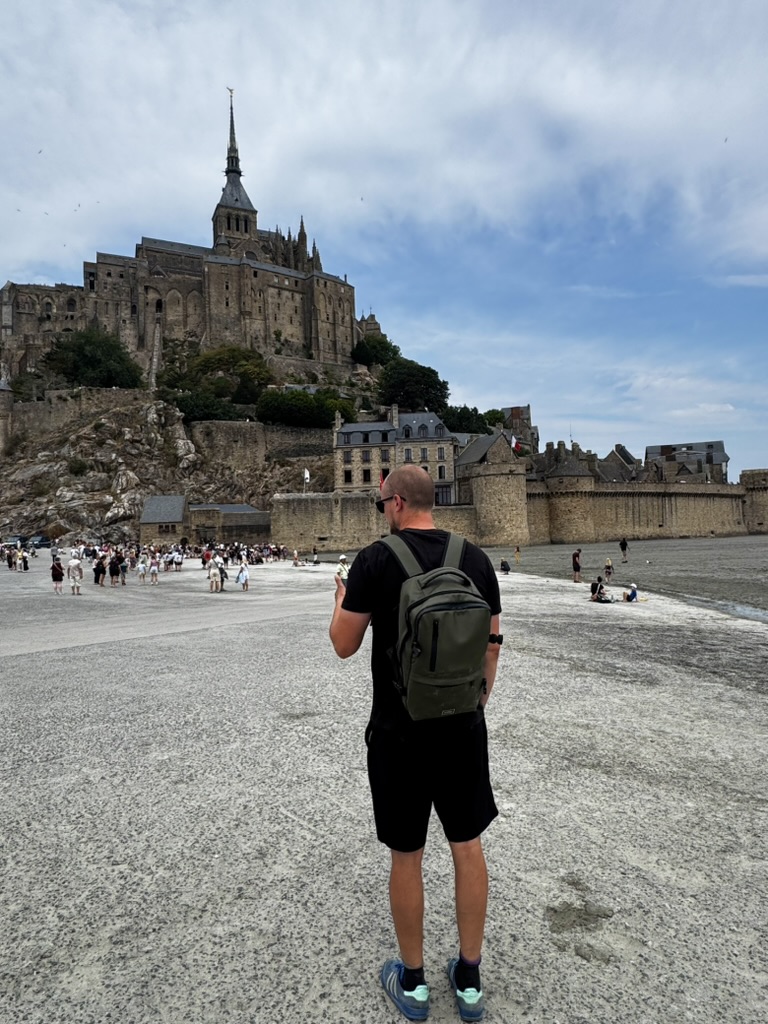
After a few days on the road, it was time to do some miles and start our journey south. And what a place to head for: a thousand-year-old abbey standing on a tidal island off the coast of Normandy, its spire clawing at the sky.
If that sounds like the opening of one of my novels, you’d be right.

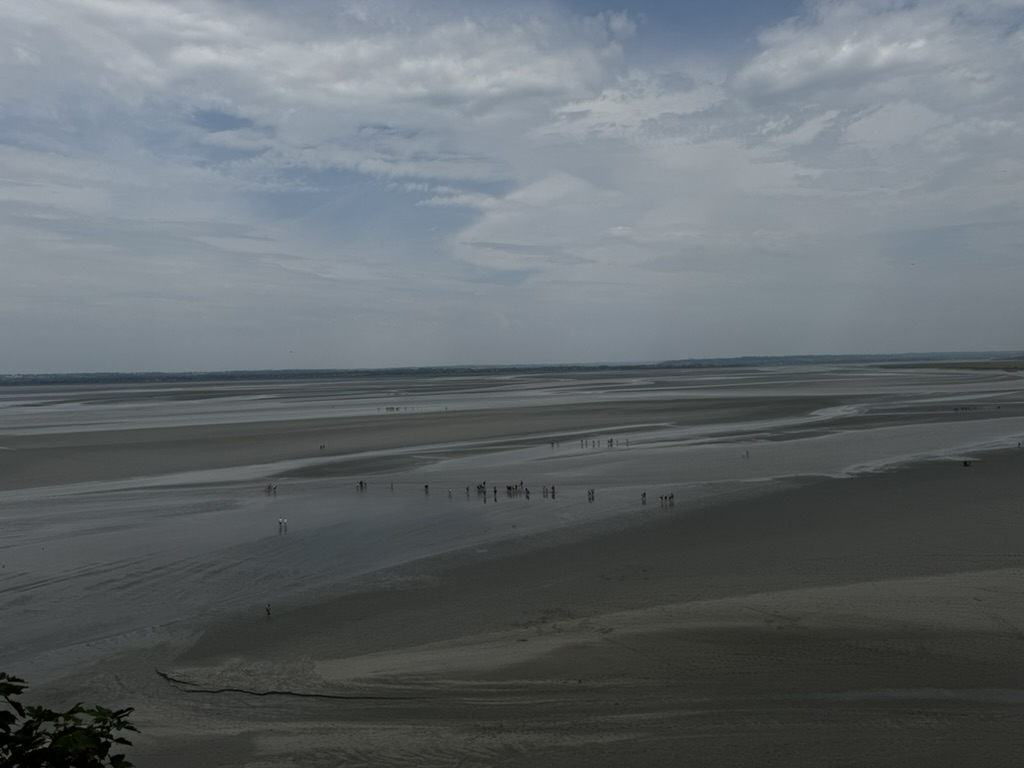
Getting to Mont Saint-Michel feels like stepping into another world before you’ve even arrived. You walk several hundred feet across a bridge spanning the tidal waters of the bay, a bay with some of the highest tidal ranges in Europe and stretches of quicksand that have swallowed the unwary for centuries. The island doesn’t invite you in easily, although now the bridge and the shuttle buses make it a little less dangerous. That’s the march of capitalism, I suppose.
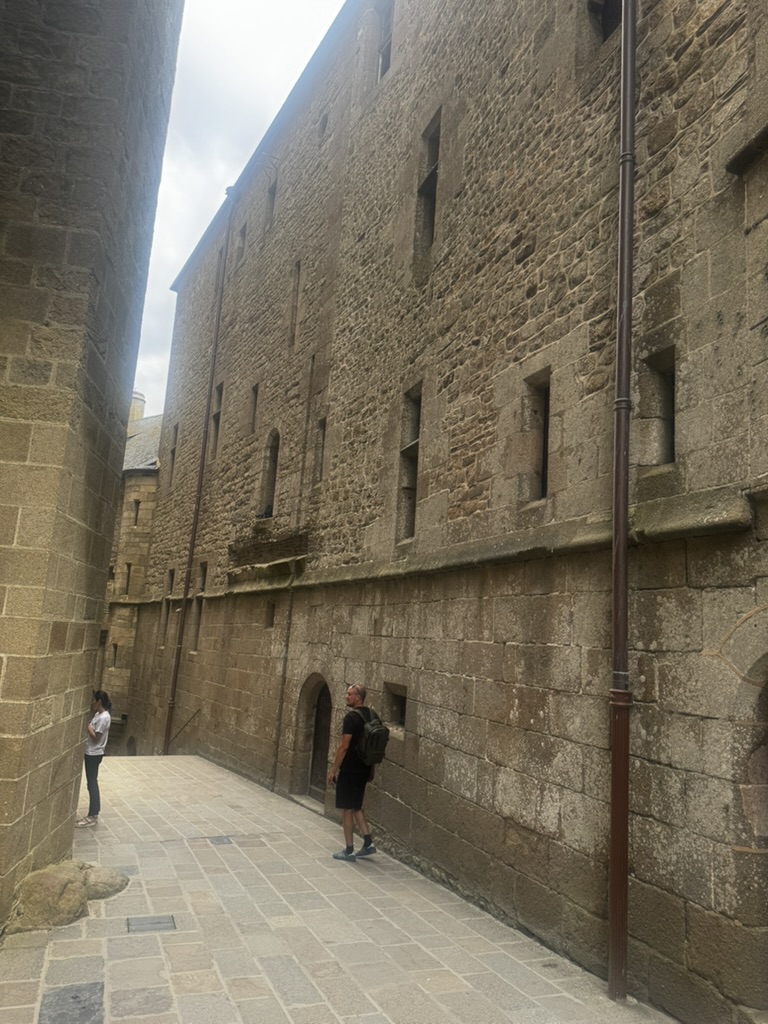
Then you pass through the battlements. These walls held off English forces for thirty years during the Hundred Years’ War, earning Mont Saint-Michel the only fortification in northern France never to fall. Once you’re through, you find yourself in narrow cobbled streets that feel entirely unchanged since the Middle Ages. The noise of the modern world drops away and the abbey pulls your gaze to the sky.

For a thriller writer, the place is almost unfair. You have an island completely cut off at high tide, a maze of medieval streets, secret passages, and fortified levels climbing towards a church at the summit, with a thousand years of monks, kings and soldiers having moved through the same corridors.

Above all of it, the tides provide constant, almost theatrical drama, as the bay empties and fills around you and the island emerges from and dissolves back into the sea.
The trouble is that Mont Saint-Michel doesn’t lend itself naturally to alchemy, so forcing it into The Alchemist’s Codex would have been a stretch. I could invent something to make it fit, but that isn’t how I like to work. In my books the settings are characters in their own right, and in a way they dictate what the story ought to be about.
So I’m leaving it, and I’ve come to think that’s the right call, because travel doesn’t always inspire in the ways you expect. Sometimes I visit a place with one book in mind and it sparks something else entirely, whether that’s a different story, a different character, or a scene I hadn’t imagined yet.
What I’m certain of is that this extraordinary island will end up in one of my stories eventually. Exactly how, I haven’t worked out, and honestly, that’s the excitement of it.
Dampierre-sur-Boutonne: Ninety-Three Puzzles in Stone
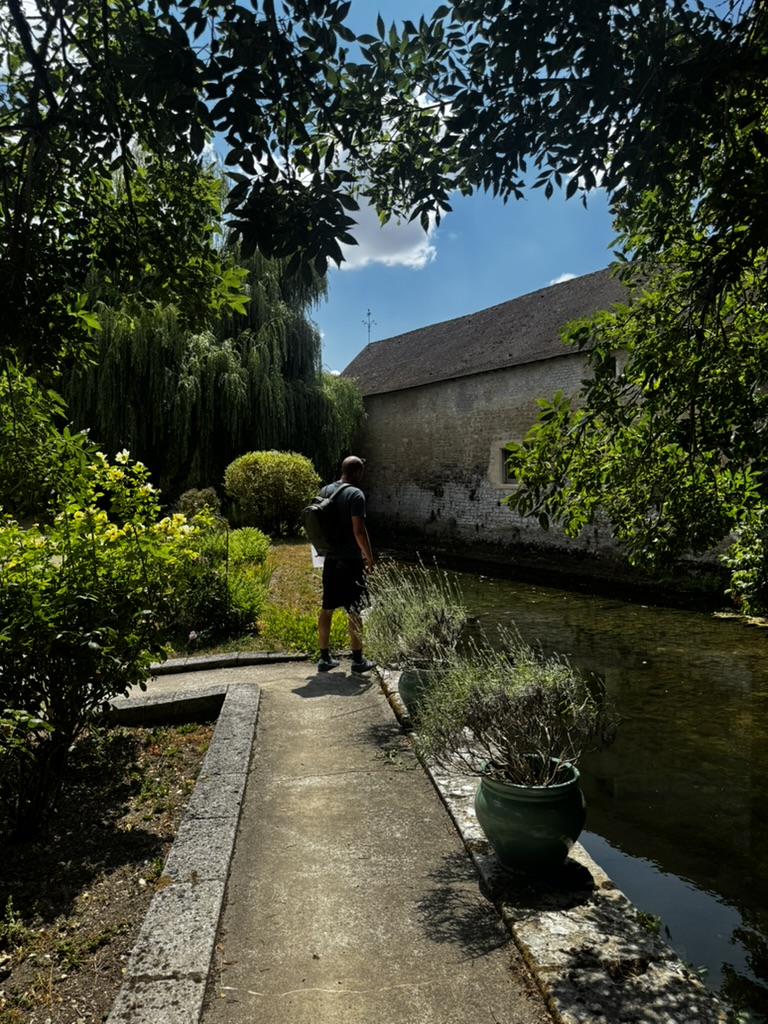
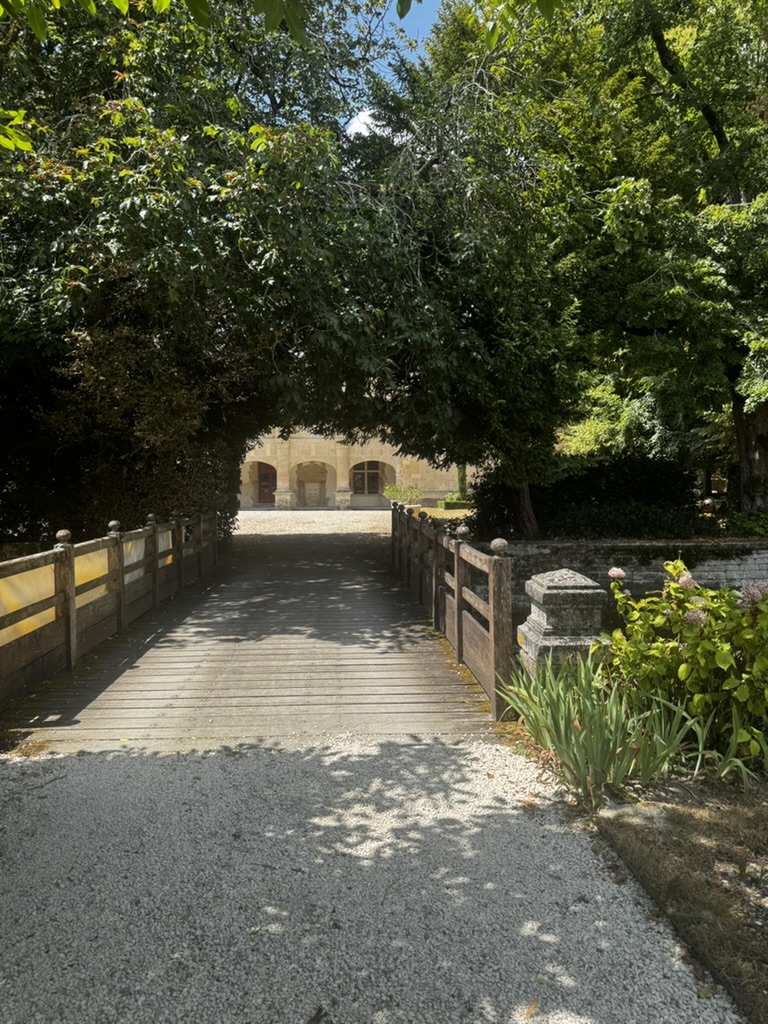
We moved on again, pushing south to a gem that does feature in the pages of The Alchemist’s Codex. Hidden amongst the fields and forests of south-west France, Dampierre-sur-Boutonne is a small collection of limestone buildings nestled between the strands of the Boutonne river. It’s a postcard of a village, the sort of place we could easily have spent weeks in, sipping the local wine and swimming in the river.

But we weren’t there to laze around. We were there to discover the secrets of the château, or at least try.

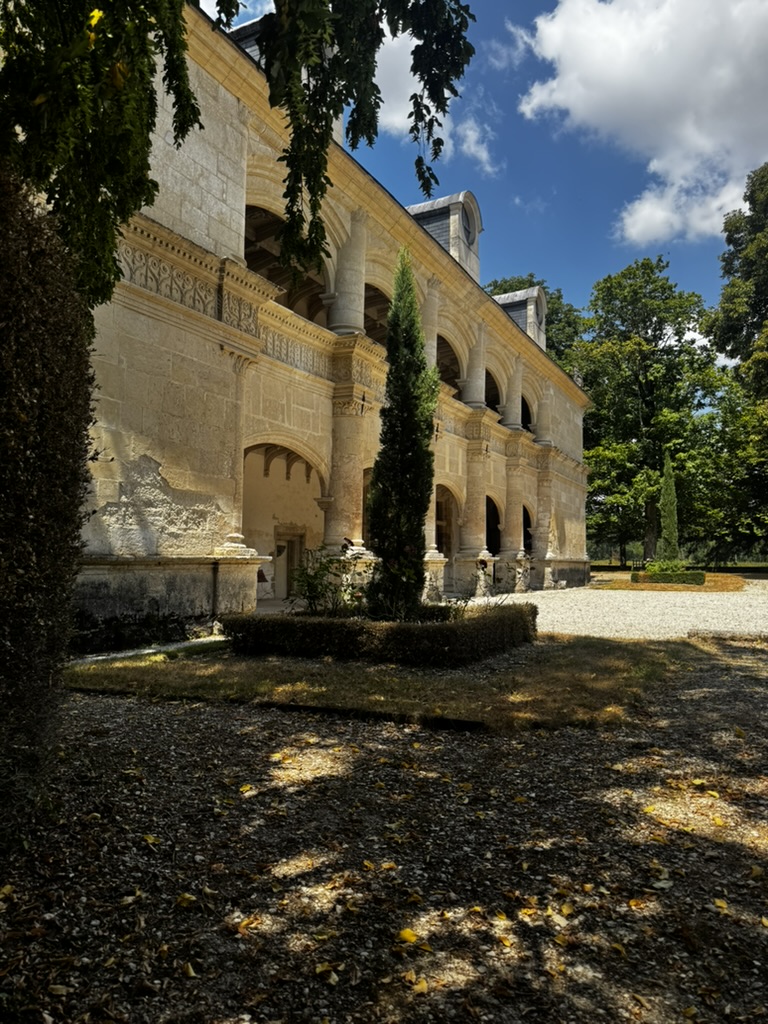
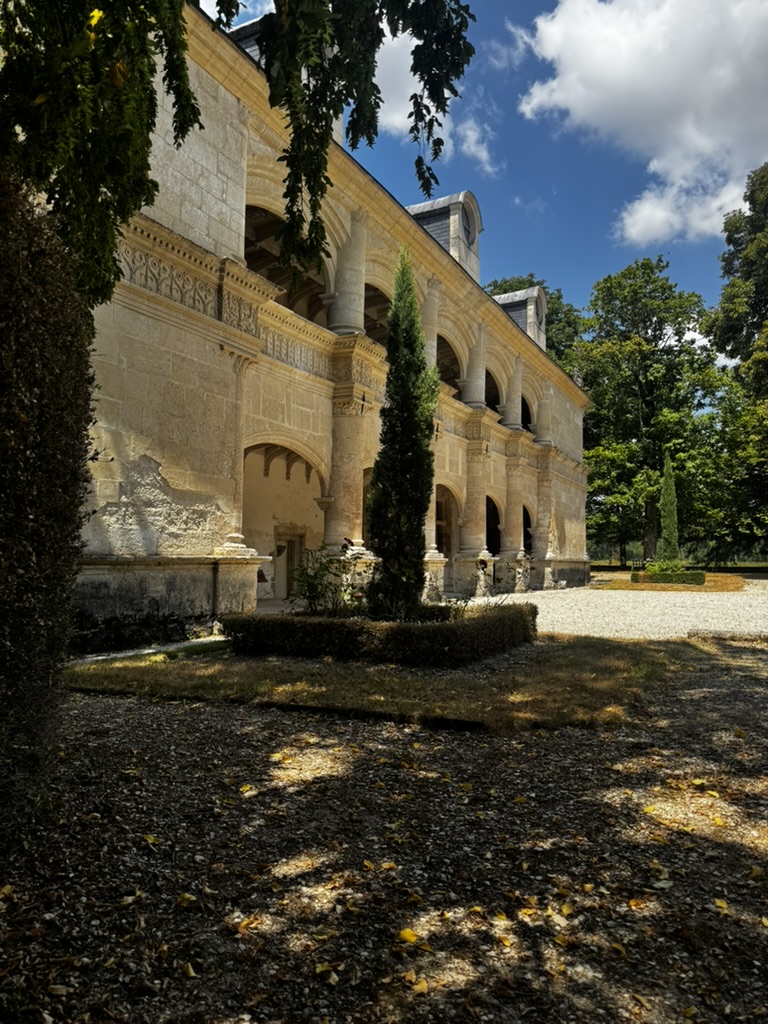
Built on the foundations of a Templar house in the Renaissance style, with towers and turrets, it’s a building that commands attention. It isn’t the house itself that’s most interesting, though. It’s the ceiling.

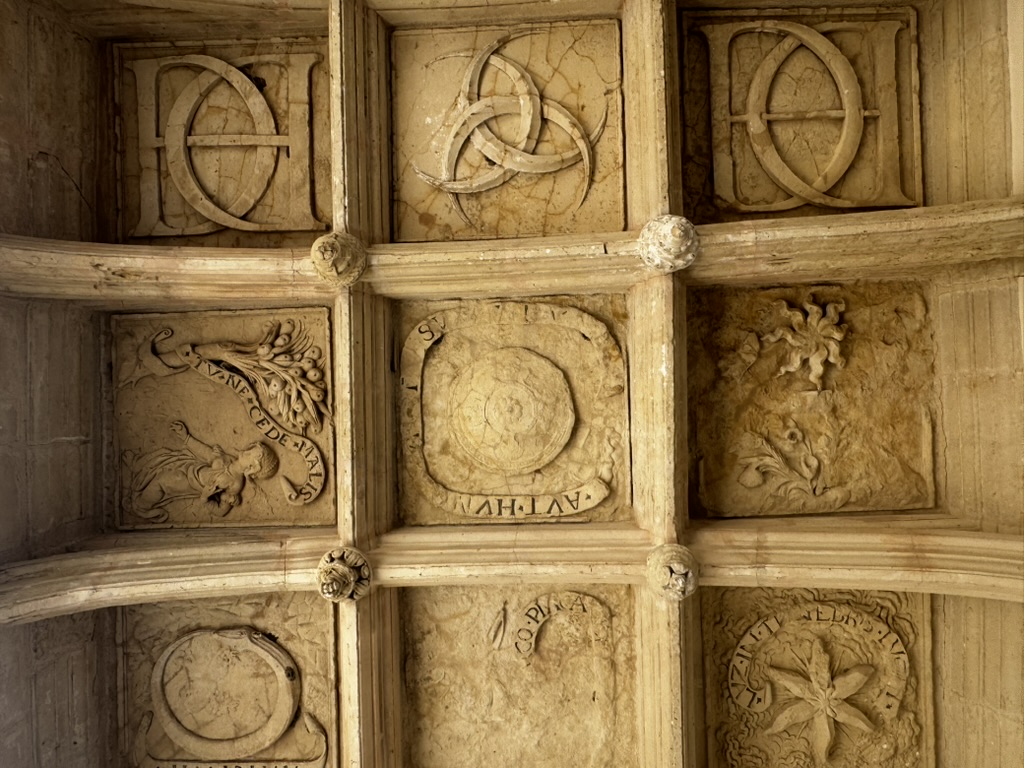
Stretching the full length of the first-floor gallery is a coffered stone ceiling carved between 1545 and 1550, with ninety-three panels in all, each one a puzzle box in miniature. One shows a serpent coiling around a caduceus, another a philosopher’s egg, and others a labyrinth, a hand, a tower and a tomb. Behind each of them, I’m now convinced, lies a meaning that only certain people were ever meant to understand.
To deepen the mystery, nobody knows who designed them. They were almost certainly commissioned by the Clermont-Vivonne family, who owned the château in the sixteenth century and moved in the highest circles of the French Renaissance court. But why they created this programme of symbols, and what it all means, has never been settled.
This is where a mysterious Parisian alchemist called Fulcanelli enters the story.
His book Les Demeures Philosophales, or The Dwellings of the Philosophers, was published in 1930 and devoted half of its second volume to Dampierre, describing it as the marvellous grimoire of the château. He spent over two hundred pages interpreting the coffers one by one, seeing in them as the secrets of philosophy encoded in stone: the four elements, the great work, and the transformation of base matter into something transcendent.
Nobody knows who Fulcanelli was, or indeed is. But his reading of Dampierre drew a particular kind of pilgrim to this small village in rural France, including scholars, seekers, researchers, and now, us.
And, in the pages of The Alchemist’s Codex, it draws Eden Black and her crew.
Montségur: The Mountain Where the Cathars Burned
After two days in Dampierre, we hit the road again for our longest journey yet. As we drove, I was aware of how much we were missing, with whole regions we didn’t have time to stop at. This trip has also demonstrated how vast France is. We’d been on the road almost a week and had only covered a few stops on the northern coast, so it’s going to take several more trips to do it justice, and of that I’m certain. Now, though, we headed south, far enough that the road signs started listing cities in Spain, for one very imposing reason.

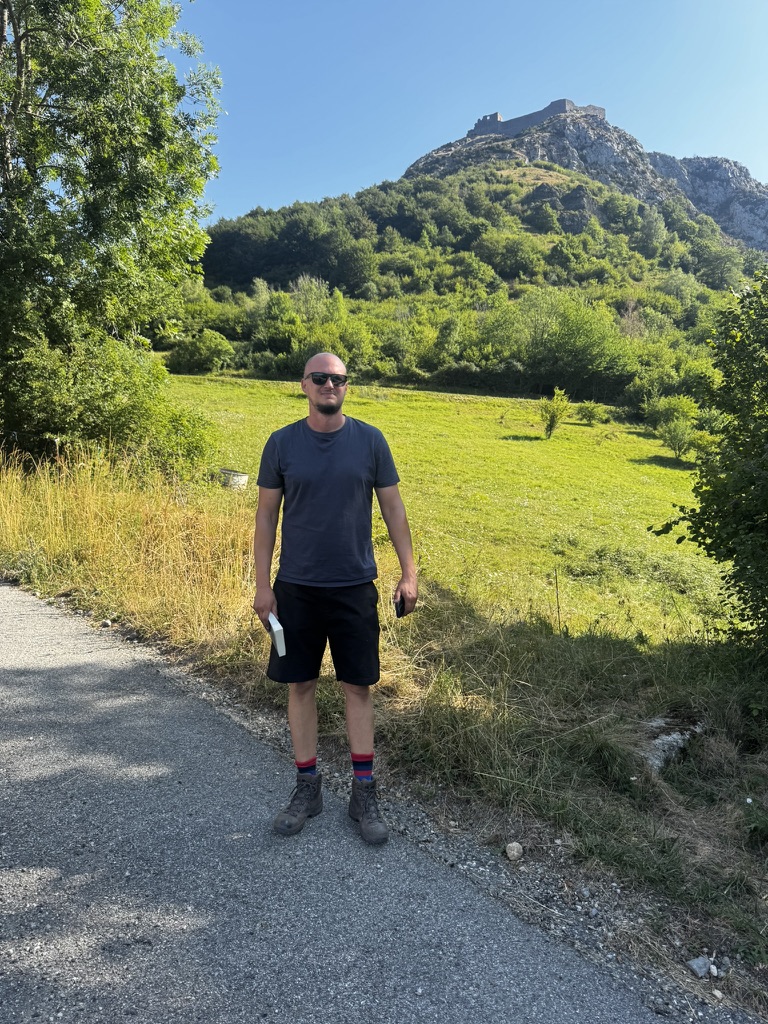
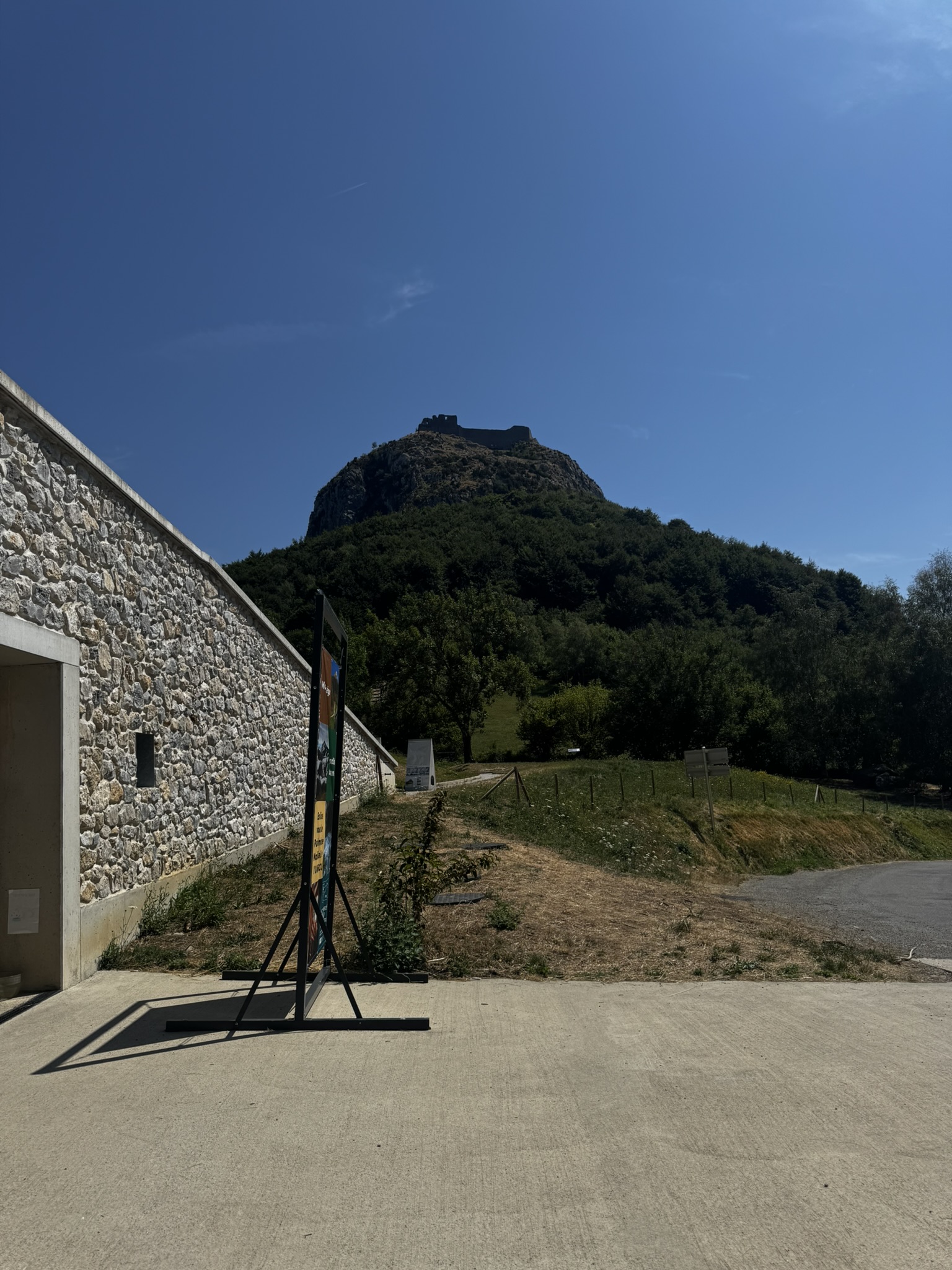
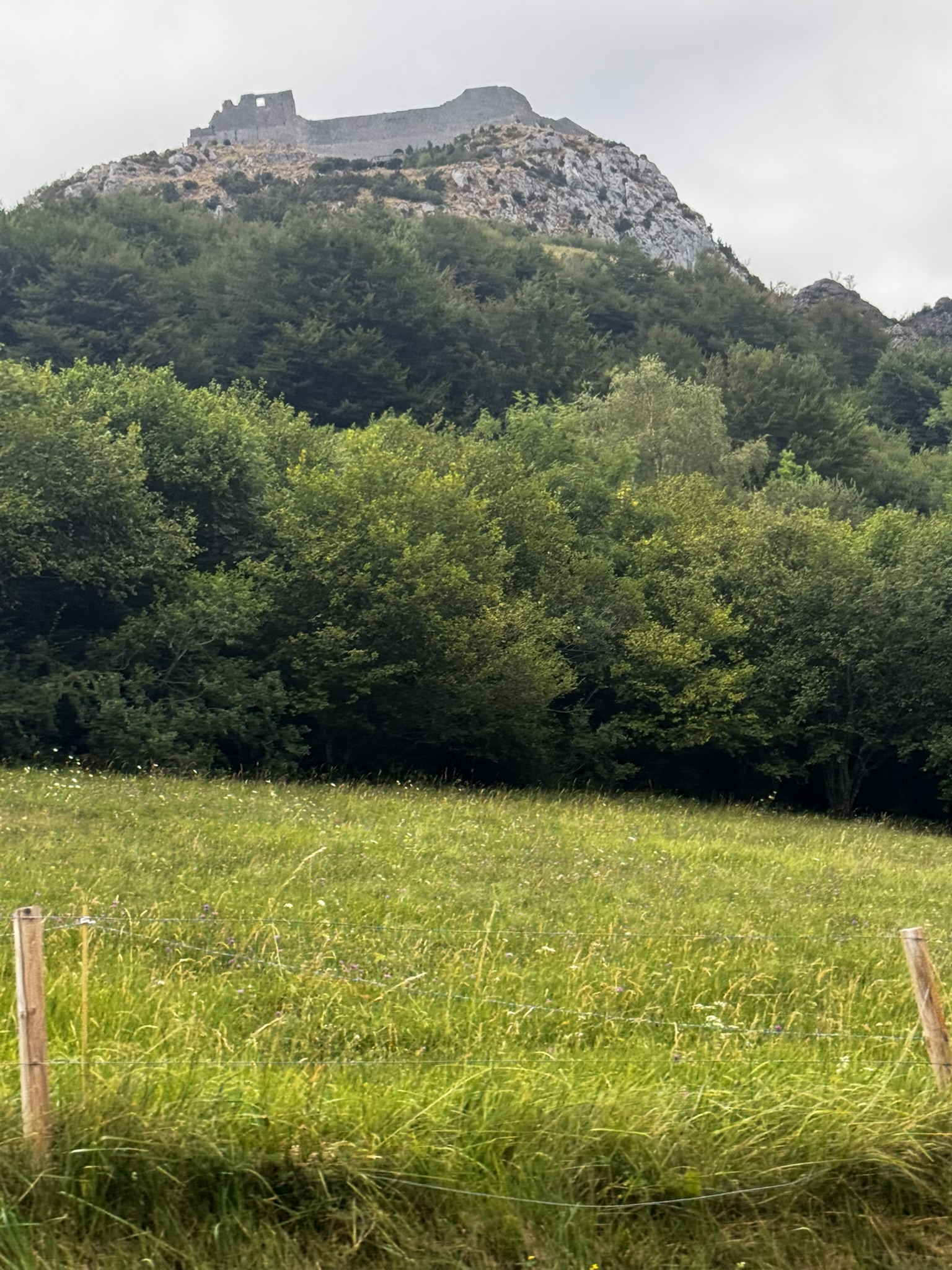
When I was looking for somewhere to continue the action of The Alchemist’s Codex, I read about a great fist of rock rising a thousand feet from the valley floor with a castle balanced on top of it. Then I read about the Albigensian Crusade and the siege that took place there. That was that, and Montségur had to be in the book.
The short version goes like this. In 1209, Pope Innocent III launched a crusade, not against a distant enemy but against the Cathars, a dualist Christian sect that had taken deep root across the Languedoc. Years of savage warfare followed, and by the 1240s there was really only one place left where the Cathars could still gather in the open, and that place was Montségur.

In 1243, royal forces arrived at the foot of the mountain and settled in. On the summit were a few hundred defenders, and beneath them were several thousand men. The siege lasted nine months and ended only when the attackers found a way up the eastern ridge in the dark, took the outlying tower, and hauled a siege engine into range of the walls.
In March 1244 the terms of surrender were set, and they were simple: renounce your faith and walk free. More than two hundred people chose the fire instead, in a field at the foot of the mountain still known today as the Prat dels Cremats, the Field of the Burned.
But there’s more, and this is the part that made my ears prick up. Legend has it that in the nights before the surrender, four men climbed down the cliff face carrying the treasure of the Cathar church. Nobody has ever established what exactly that treasure was. It may have been sacred texts containing lost knowledge, which is my link to alchemy, or it may have been relics, or perhaps even the Holy Grail itself.
The Grail connection was popularised by a tragic German writer named Otto Rahn, who came here in the 1930s convinced he would find it. When he couldn’t produce what he’d promised to some very bad men indeed, things didn’t go at all well for him.
I came down off that mountain with a head full of scenes, and I can’t wait to put them into words when we get back.
Rennes-le-Château: The Village That Built a Genre
Our next journey was a short one, barely an hour along winding roads to the hilltop village of Rennes-le-Château.

It’s a small place, with a couple of hundred people at most, a church, a few narrow streets, and a view out across the Aude valley that goes on forever. You could drive past the turning and never think about it again.
And yet this village might have something very interesting hidden inside it.
The Priest Who Got Rich
The story starts in 1885, when a young priest named Bérenger Saunière was posted here. It was not a good posting. Rennes-le-Château was poor, remote and dwindling, the church was falling apart, and the salary was next to nothing.
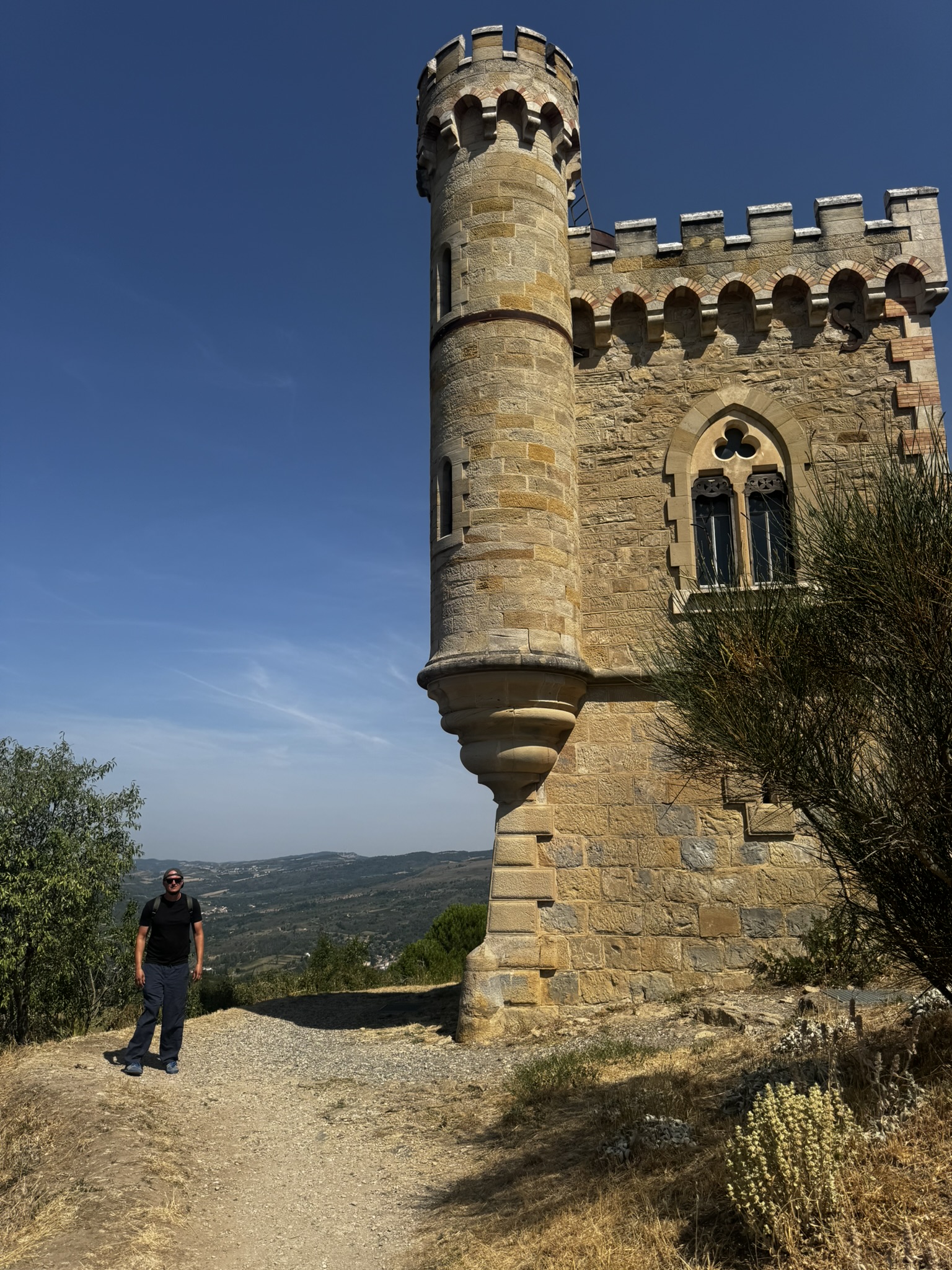
Then, from around 1891, Saunière started spending money, and not a little of it. He restored the church, built a villa and an ornamental tower on the edge of the ridge, and laid out gardens and a belvedere and an orangery. The total spend has been estimated at well over a million pounds in today’s terms, and all of it by a country priest in a village of a few dozen souls.
The church itself really is intriguing. It’s dedicated to Mary Magdalene and inside, crouching under the holy water bowl, is a painted statue of a demon. The whole place is full of other interesting details that have led people, for over a century, to argue about what meanings he’s hidden inside.
But in the 1950s the story goes deeper still. A local hotel owner told a newspaper that Saunière had funded all the building and restoration work by discovering a fabulous medieval treasure. The paper ran it across three instalments. Treasure hunters arrived and the hotel filled up.
Of course, sceptics say the hotel owner made the whole thing up to generate business. And maybe that’s true, or maybe not.
The story continues, some people suggesting it finally inspired Dan Brown’s Da Vinci Code, which sold something like eighty million copies.
The village now receives a hundred thousand visitors a year. Nor did it stop us climbing back up there for a look around one very hot afternoon.
And while there, seeing something we really hadn’t expected.
The Zimbabwean Sculptures of Rennes-le-Château
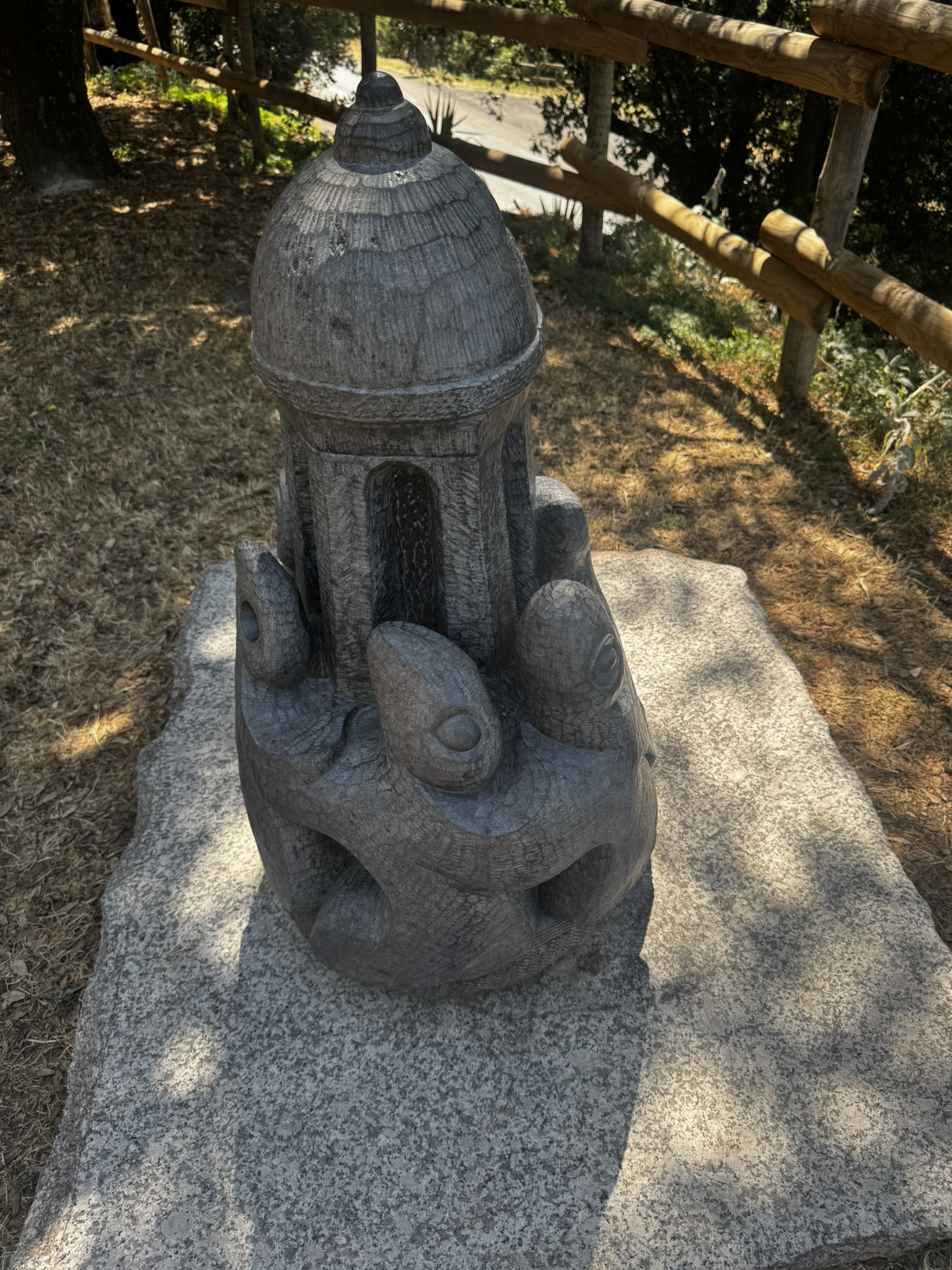
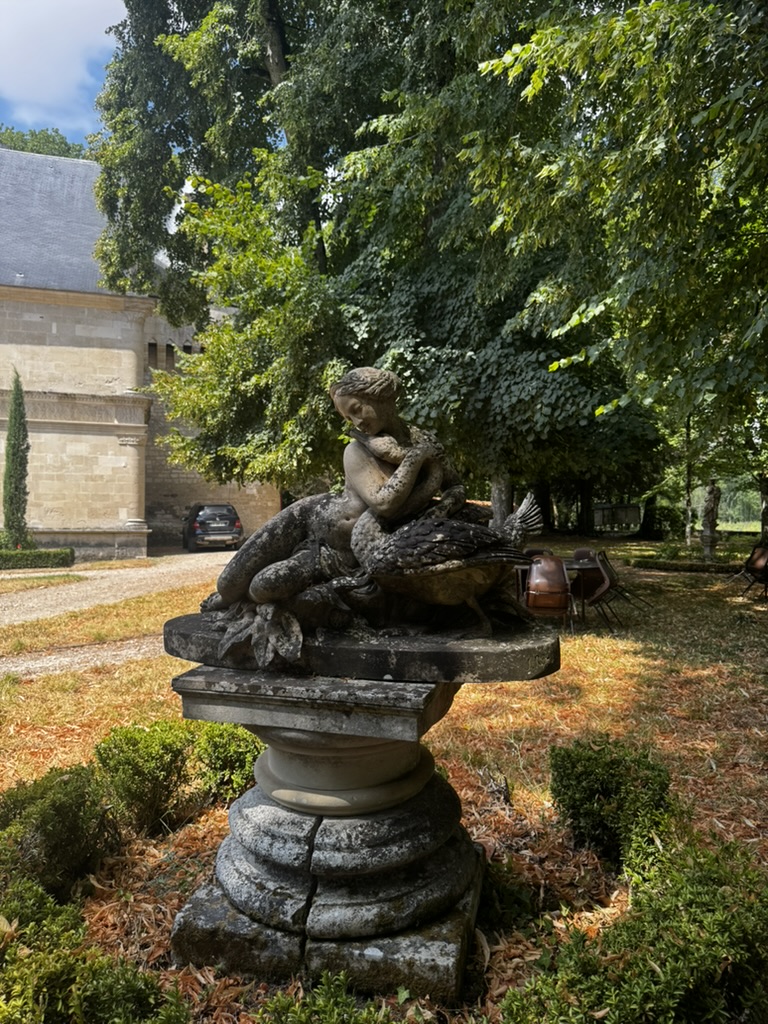
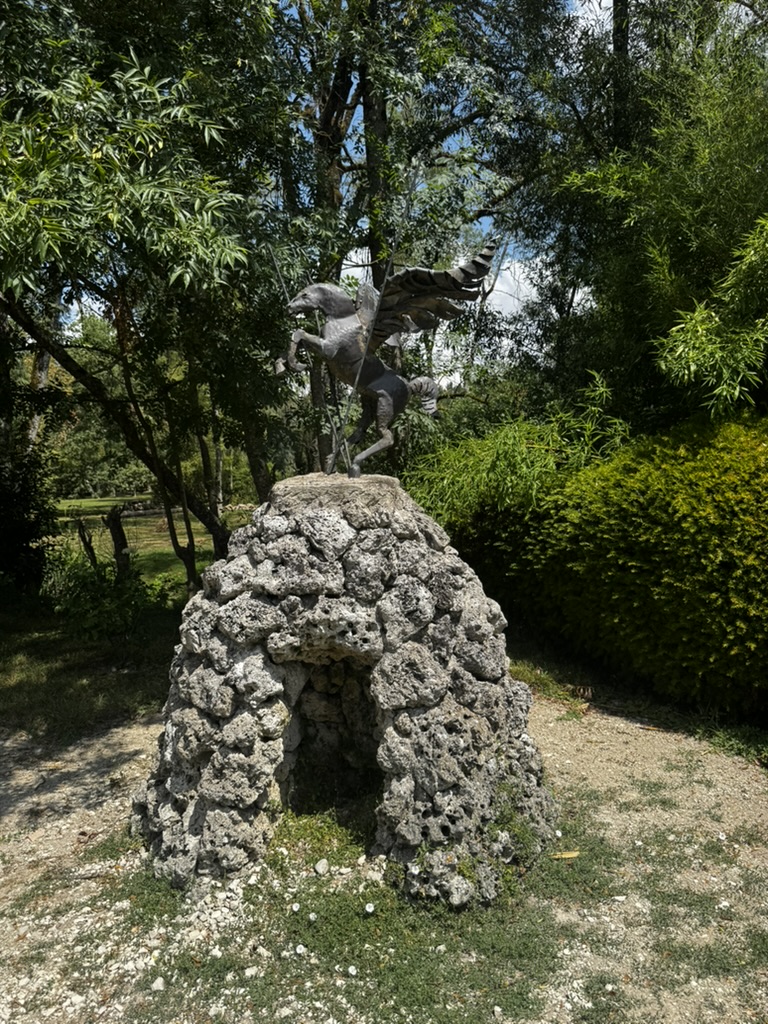
Let me go back a year. Twelve months ago we visited Mrs R’s homeland, Zimbabwe, and it was a great trip, very different to this one but inspiring in its own way. Scattered around Rennes-le-Château we saw statues that looked remarkably like the ones we had seen on the streets and in the markets of Zimbabwe. Once again we looked into it, and we found that the link was a Swiss sculptor named Urs Zimmermann.

Zimmermann was born in Zurich in 1954 and trained at the Zurich School of Art and then at the Academy of Sculpture in Budapest, starting out in wood before moving to stone, which he refined working the Etruscan quarries around Viterbo and in Sicily.
And then he went to Zimbabwe. He spent time at Tengenenge, in the north of the country, learning to carve serpentine from the sculptors working there, and the commune’s own account describes it as one of the defining periods of his life.
Tengenenge is a village about 150 kilometres north of Harare, and one we will certainly visit next time we’re out there. It began in the 1960s on a tobacco farm belonging to a man named Tom Blomefield. When international sanctions following Rhodesia’s declaration of independence wrecked the tobacco market, Blomefield discovered his land was sitting on deep deposits of serpentine, a soft, richly coloured stone that carves beautifully, and he turned his workforce to sculpture instead.
What came out of it was one of the most significant art movements of the twentieth century. The approach, at its core, is that the sculptor doesn’t impose a design on the stone, they work without sketches, and finds what’s already in them.
Zimmermann carried that back with him. He settled at Rennes-le-Château in 1990, and worked here for the rest of his life. Locally they called him the seer of stones, because of the way he talked about sensing what was inside a piece before he touched it.
And so you have this village, which draws a hundred thousand visitors a year hunting for a treasure that was invented by a hotelier who needed the business, and which has had sitting quietly in its streets the entire time thirty pieces of genuine work made by a man who learned his craft in a small village in Zimbabwe, just a few hours’ drive from where we had been exactly a year to the day.
Carcassonne: A Medieval City Invented in the Nineteenth Century
Our next stop was an absolute gem, and one we didn’t see coming, because it tied together two of the locations already in The Alchemist’s Codex in a way I couldn’t have predicted.
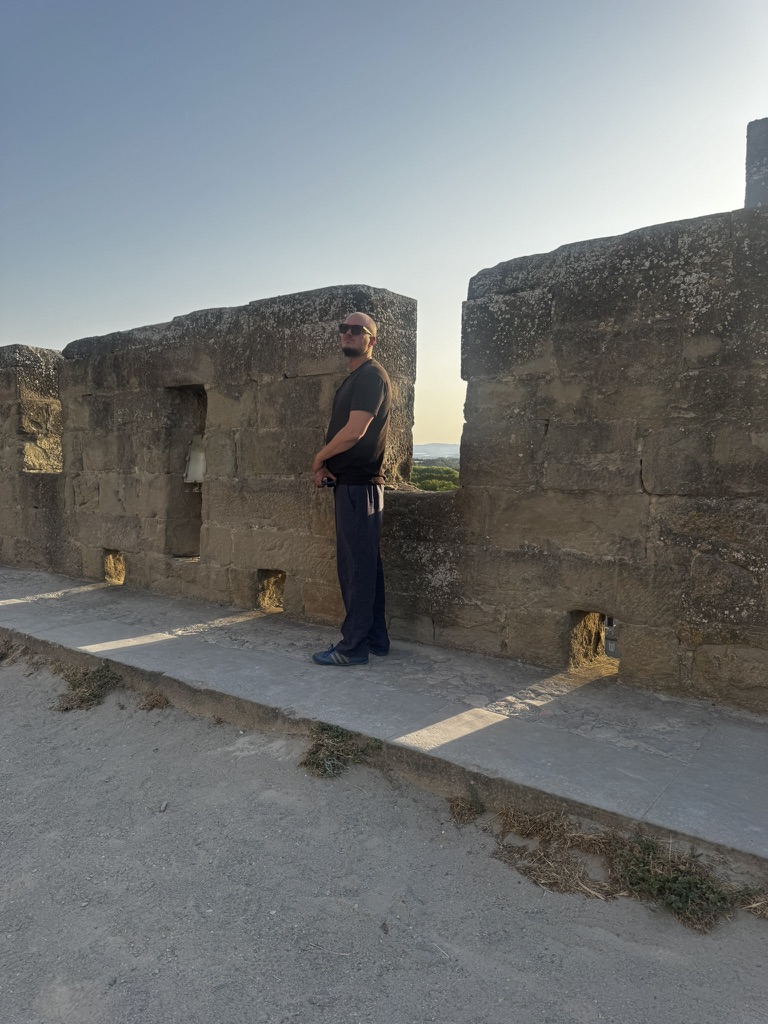
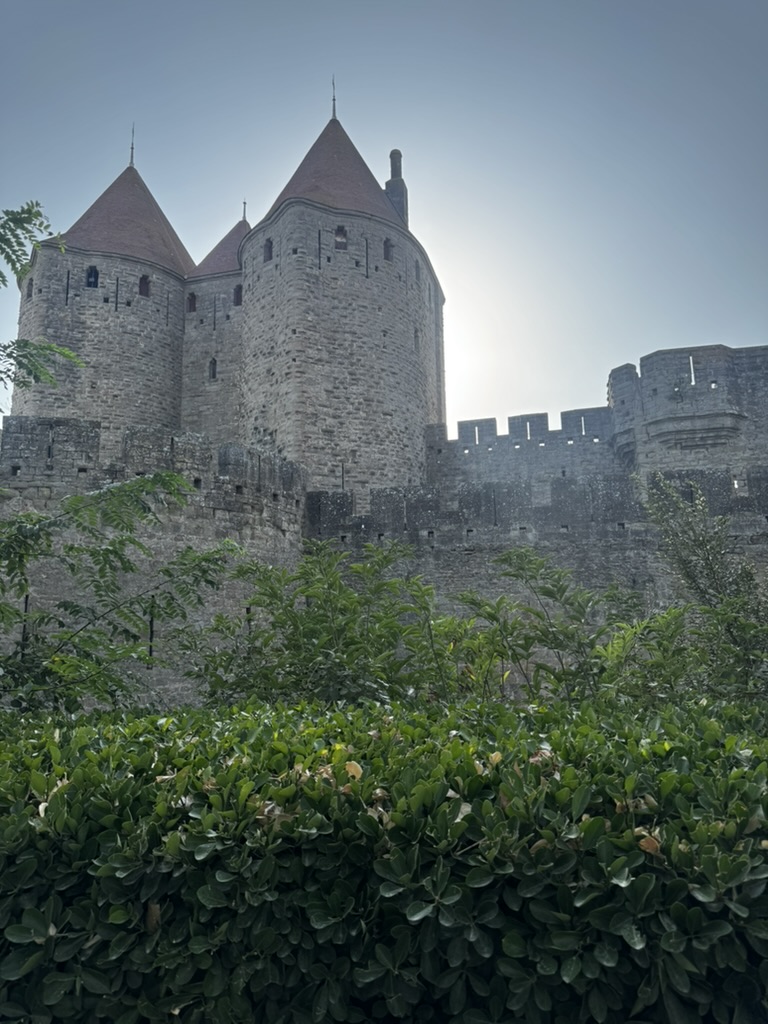
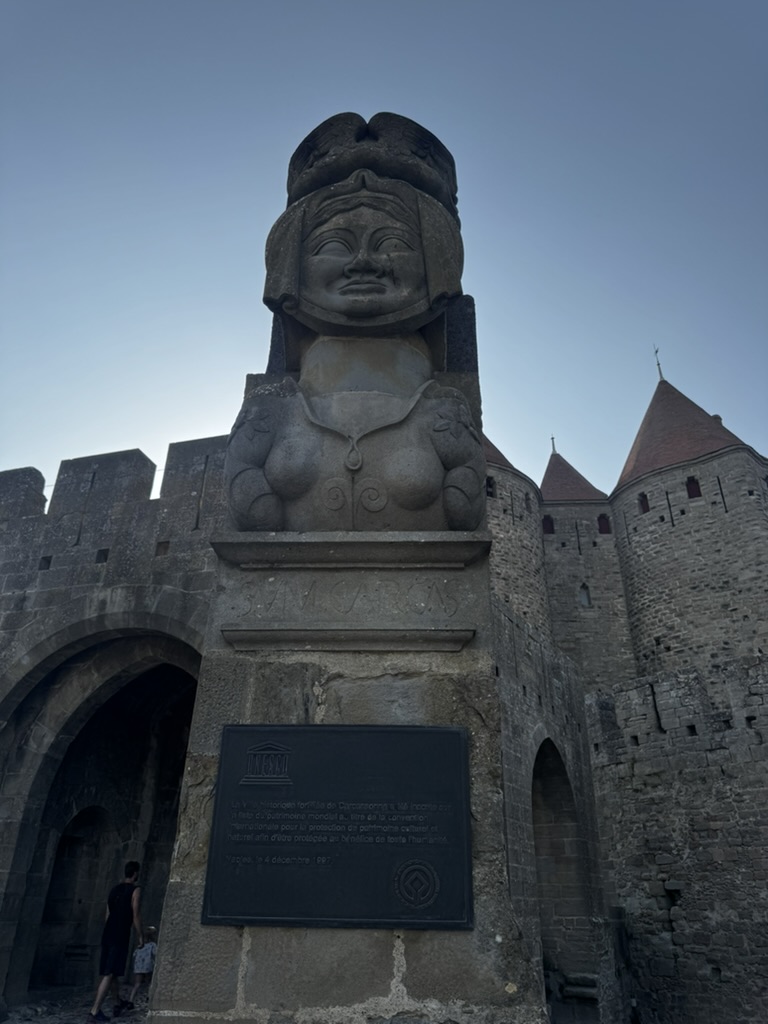
Carcassonne is an old walled city that sits above the River Aude, ringed by roughly two miles of ramparts in a double wall, with fifty-two fairytale towers. The history is a layer cake spanning two thousand years, from the Romans who fortified the hilltop in the first century BC up to the medieval castle built in the twelfth.
It featured in the Albigensian Crusade too, the same war that ended at Montségur. Carcassonne was sheltering Cathars, and when the crusader army arrived it cut off the city’s water supply. The place held out for about two weeks before thirst did what the siege engines couldn’t. Raymond-Roger Trencavel, the young viscount, went out to negotiate and was seized. He died that November in a dungeon beneath his own castle, aged twenty-four.

Simon de Montfort took the city, and it eventually passed to the French crown. Louis IX added the outer wall, that second ring, and pushed the townspeople out across the river to found the lower town, the Bastide Saint-Louis, which is still there today.
Then, in 1659, the Treaty of the Pyrenees moved the Spanish border south and Carcassonne stopped mattering overnight. The greatest fortress in the Languedoc became a stone quarry. By the 1840s it was slums, and the government signed a decree to demolish it.
But in a twist of fate, the whole ancient town was saved by a local antiquarian named Jean-Pierre Cros-Mayrevieille. He campaigned relentlessly until he won the backing of Prosper Mérimée, Inspector of Historical Monuments and the man who wrote Carmen. In 1853 the restoration was handed to Eugène Viollet-le-Duc, who worked on it until his death in 1879.
Here’s the link, though. Viollet-le-Duc is the same architect who restored Notre-Dame, and the spire that burned in 2019 was his design. So the man who gave Paris its most famous silhouette also gave Carcassonne those pointed slate roofs on the towers, and they’re the most argued-about feature of the place, because slate cones are a northern French idea and the Languedoc would almost certainly have used flatter terracotta tiles. Which means that what everyone photographs there today is really a nineteenth-century idea of what the Middle Ages might have looked like.
With The Alchemist’s Codex already spanning Notre-Dame and Montségur, this stop felt like it was meant to happen.
The Ardèche and the Templars Who Probably Weren’t
From there we spent a few days in the Ardèche with family. On our way out we drove the length of the road that winds along the top of the gorge.

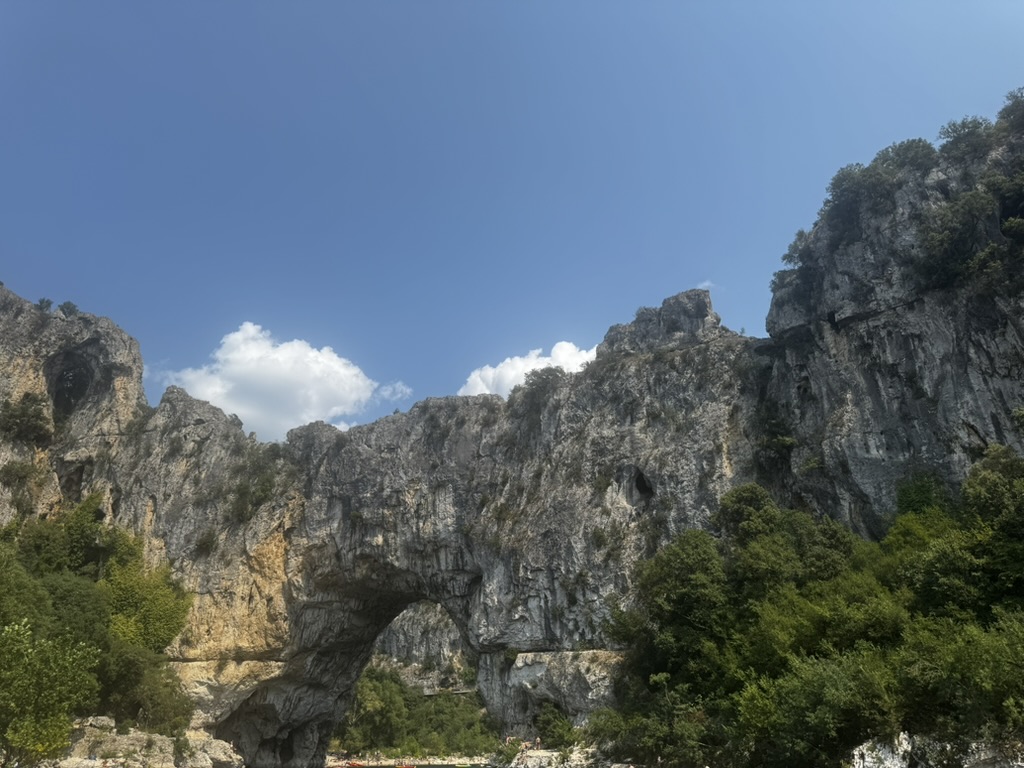
It passes views of the river, snakes through forests and beneath cliffs, and offers great views of the majestic Pont d’Arc, a natural arch of rock spanning the water.
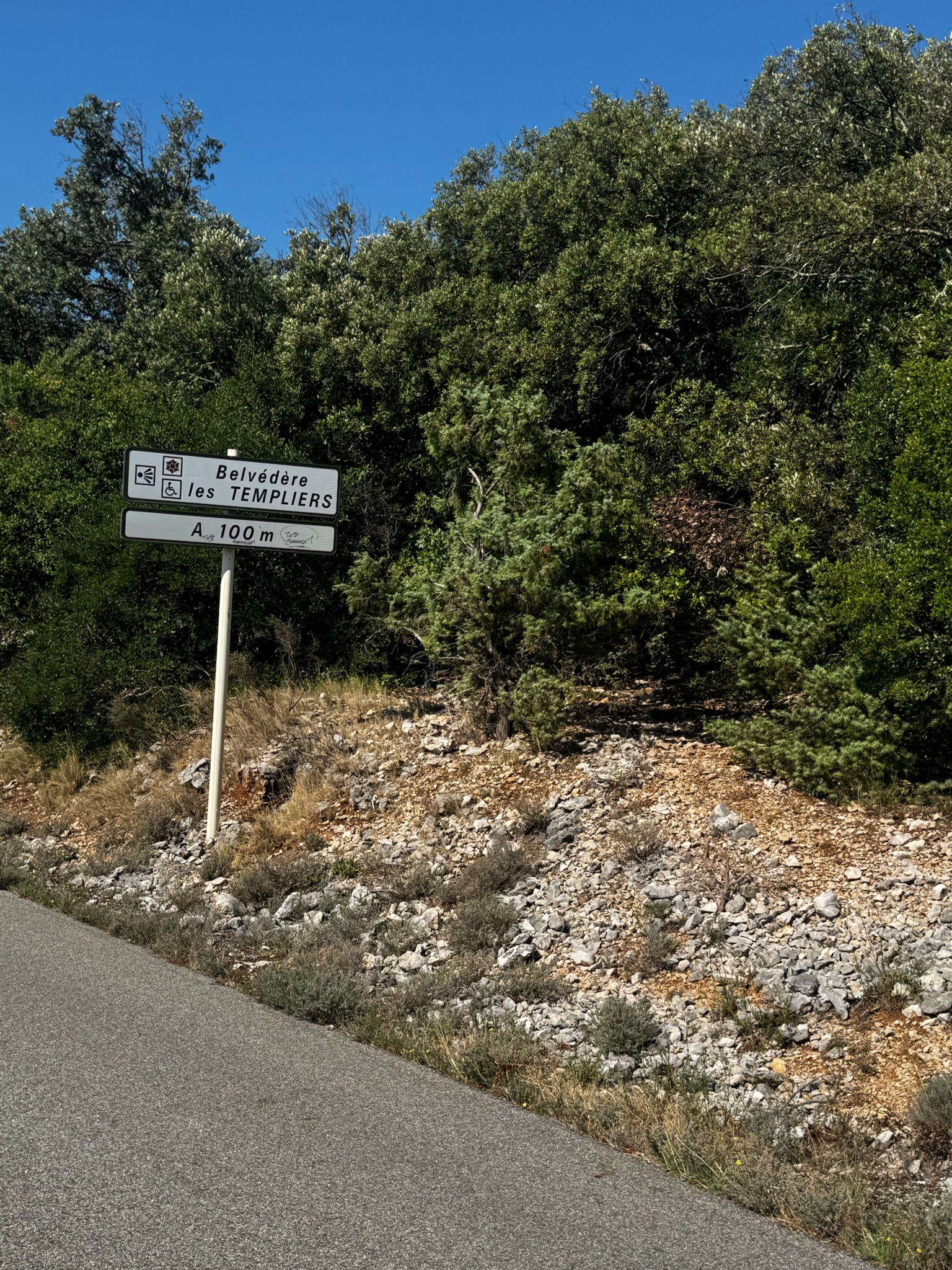
Around half way along we saw a sign for a viewpoint called the Belvédère des Templiers, the Viewpoint of the Templars, and of course we had to stop.

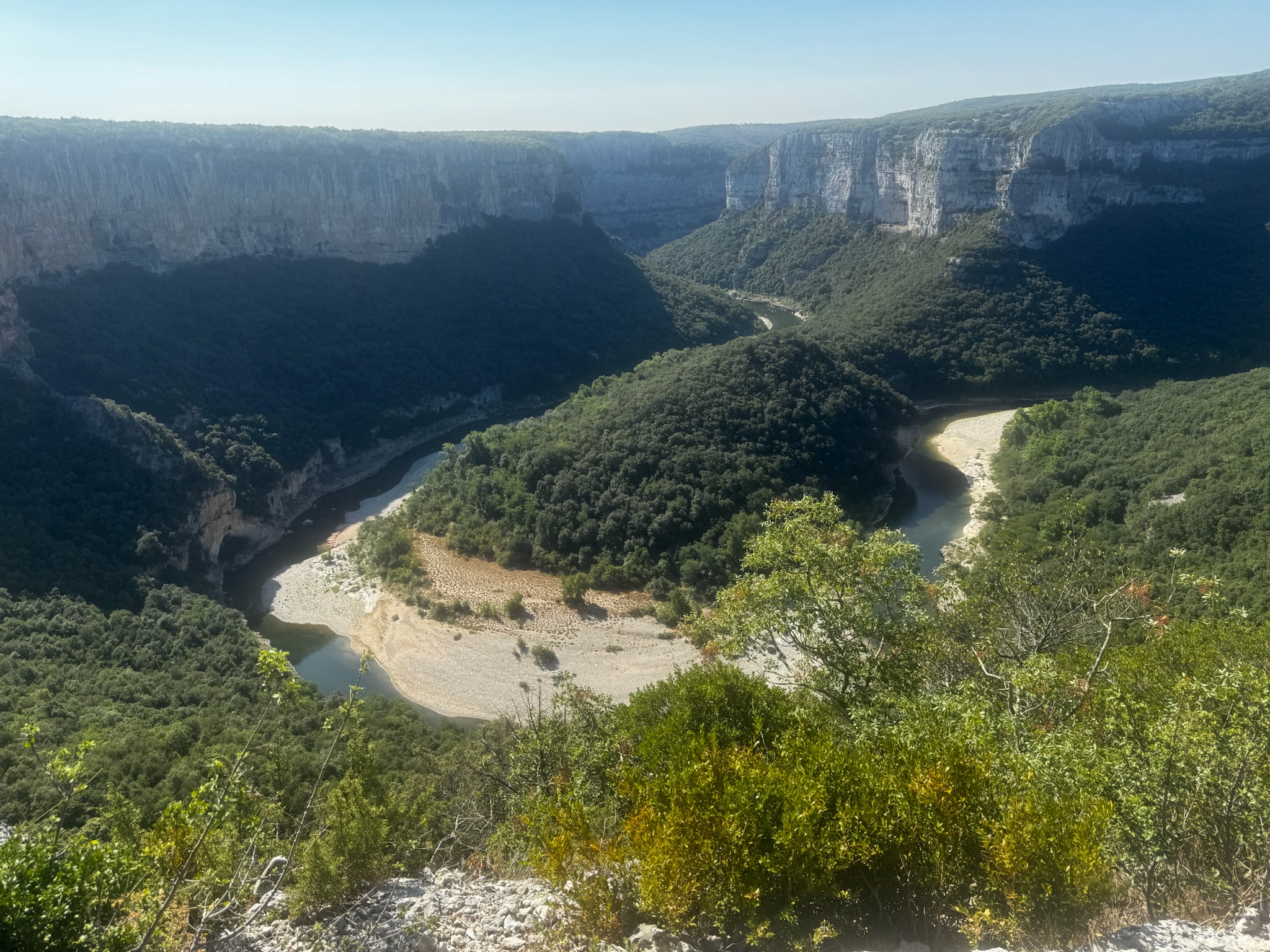
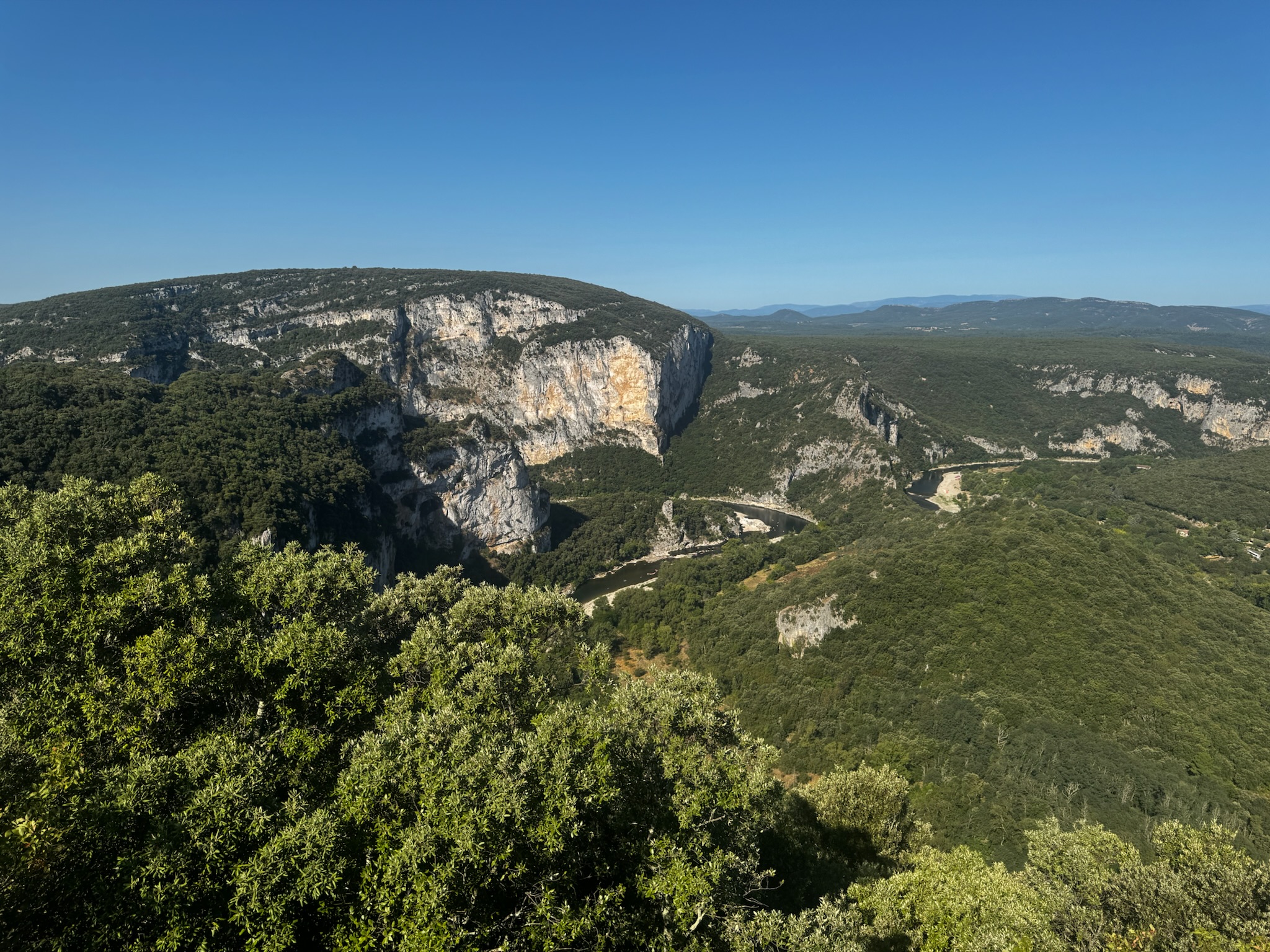
The view alone justified it. Below us the Ardèche swung round in an enormous horseshoe bend, the Cirque de la Madeleine, with the cliffs dropping more than two hundred metres to a river the colour of green glass. But there was nothing down there that I could see linking the place to our favourite medieval brotherhood, so I couldn’t work out where the name had come from.

So I did some research. It turns out that amid the trees at the centre of that bend, so overgrown now as to be virtually invisible, there are ruins. Locally they’ve been known for generations as the Maladrerie des Templiers, the Templars’ leper house, and the story attached to them is a good one. When Philip IV of France had the Templars arrested in 1307, and the Pope dissolved the Order five years later, a few knights are said to have slipped away south and hidden themselves here, on a wooded shelf of rock you can still only reach on foot or by boat.
Persecution, escape and a secret refuge in a canyon make it practically an Eden Black chapter outline.
The deeper I dug, though, the more the legend came apart. Excavations between 2013 and 2015 found that people were living on that ledge from around the eleventh century right through to the seventeenth, which is far longer and far earlier than the Templar story allows. The bones in the burial ground showed no trace of leprosy at all, and they belonged to adults who had done hard physical work. As things stand there isn’t a single document or object linking the place to the Temple. The knights, it seems, were added by nineteenth-century scholars who liked the sound of them.
So perhaps it wasn’t the Templars after all. But somebody built there, and rebuilt, and buried their dead there for six hundred years, in one of the most inaccessible spots in the gorge, and we still don’t really know who, or why.
What I love about this is that a single road sign sent me tumbling down a research rabbit hole I’d never have found otherwise. When you travel somewhere new, you’ve no idea what’s waiting, much the same as opening a new book, I suppose. The adventure is always there, just around the corner.
Lake Annecy: The Venice of the Alps
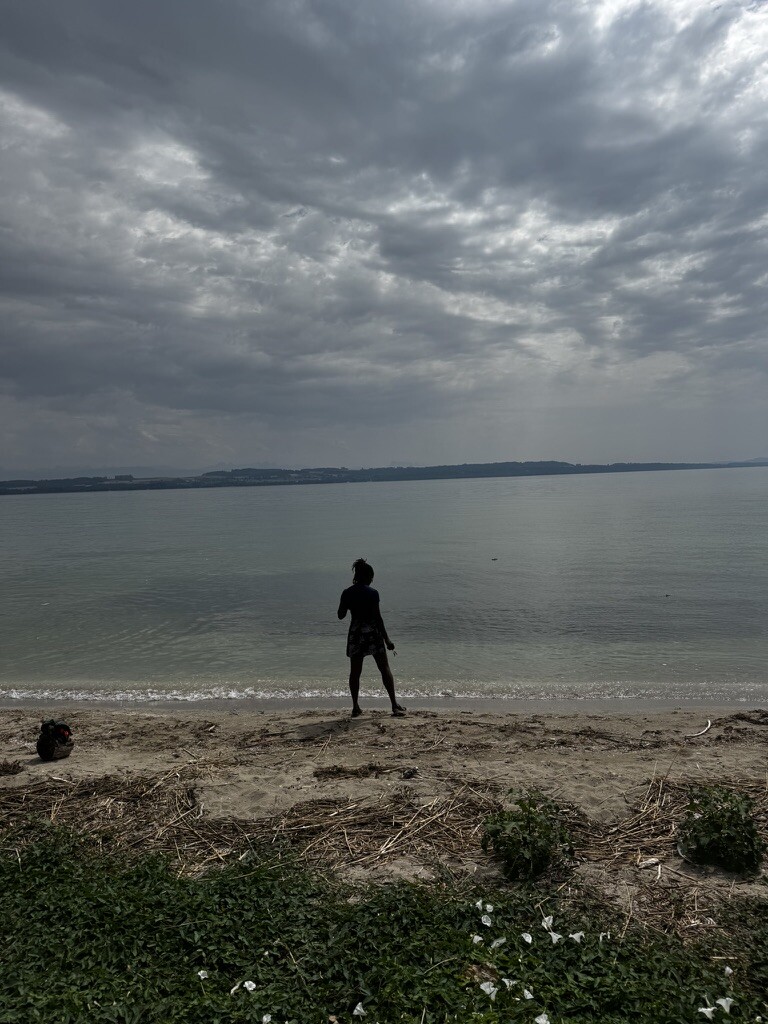
After a hard day’s drive up from the Ardèche, we arrived on the shore of Lake Annecy, barely half an hour from Geneva, and it is a beautiful place.
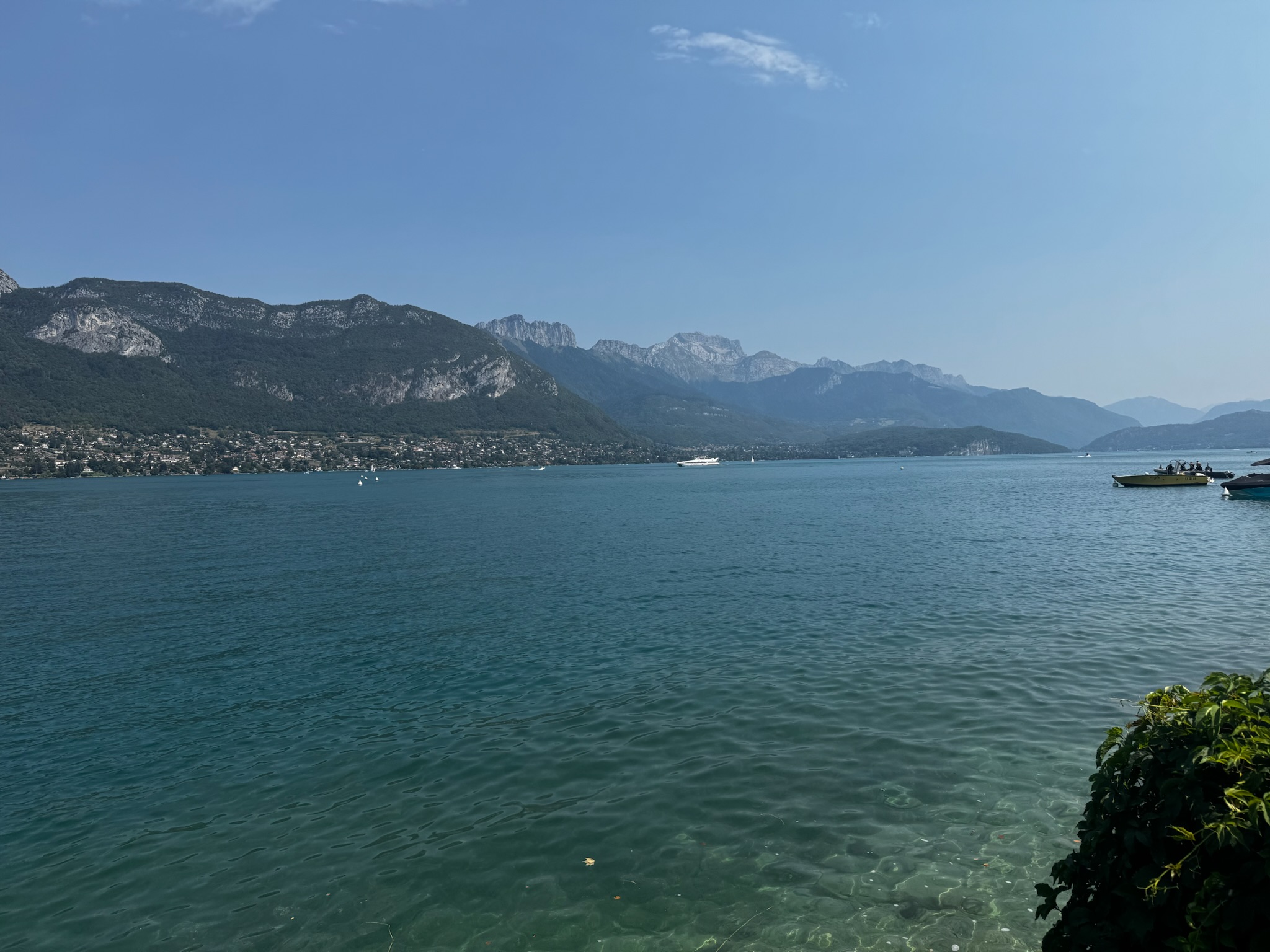
The lake is about fifteen kilometres long, lying roughly north to south, and it sits in a trough gouged out by a glacier at the end of the last Ice Age. What that glacier left behind is a body of water hemmed in on both sides by mountains, and the effect when you come down to the shore is theatrical. To the east rise the Bornes, with the Dents de Lanfon, a row of pointed rock teeth above the treeline, and behind them La Tournette, at 2,351 metres the highest thing visible from anywhere on the water.

So you have this arrangement of hard grey rock at the top, dense forest in the middle, and then, at the bottom, the water.
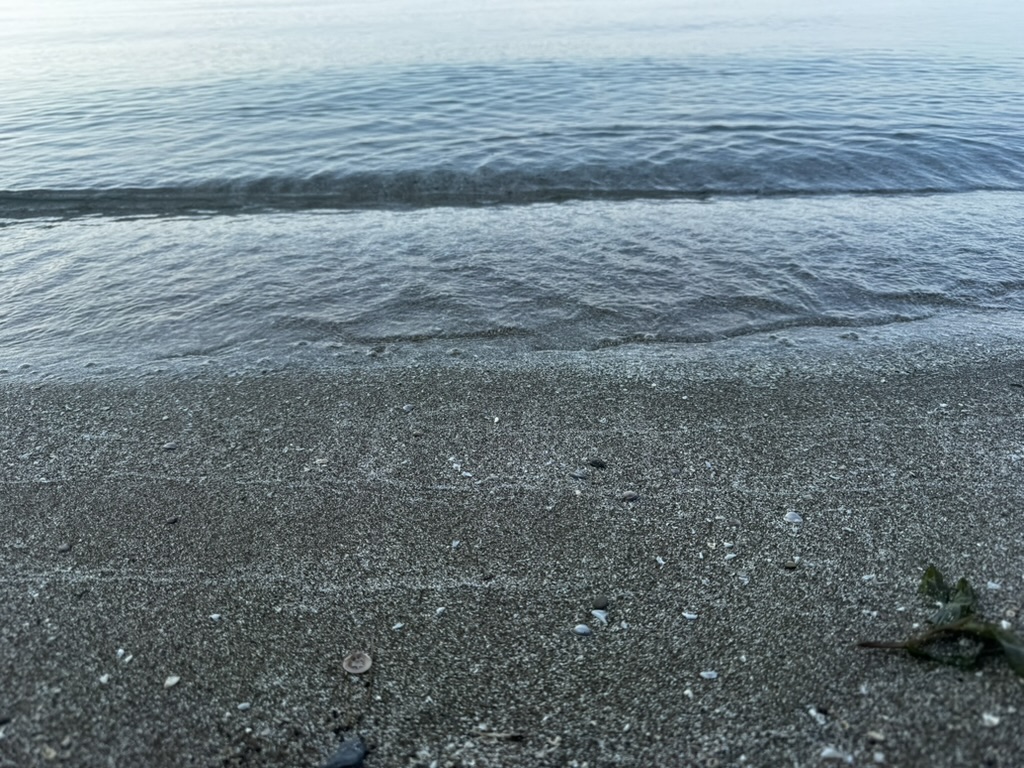
And the water really is the thing. It’s the deep saturated blue-green you normally only get in a photograph that’s been meddled with, and it goes down a long way, to over eighty metres at the deepest point. Standing on the shore in the shallows you can see individual stones several metres out and several metres down, in focus, as though the lake were empty and you were looking at a dry riverbed.
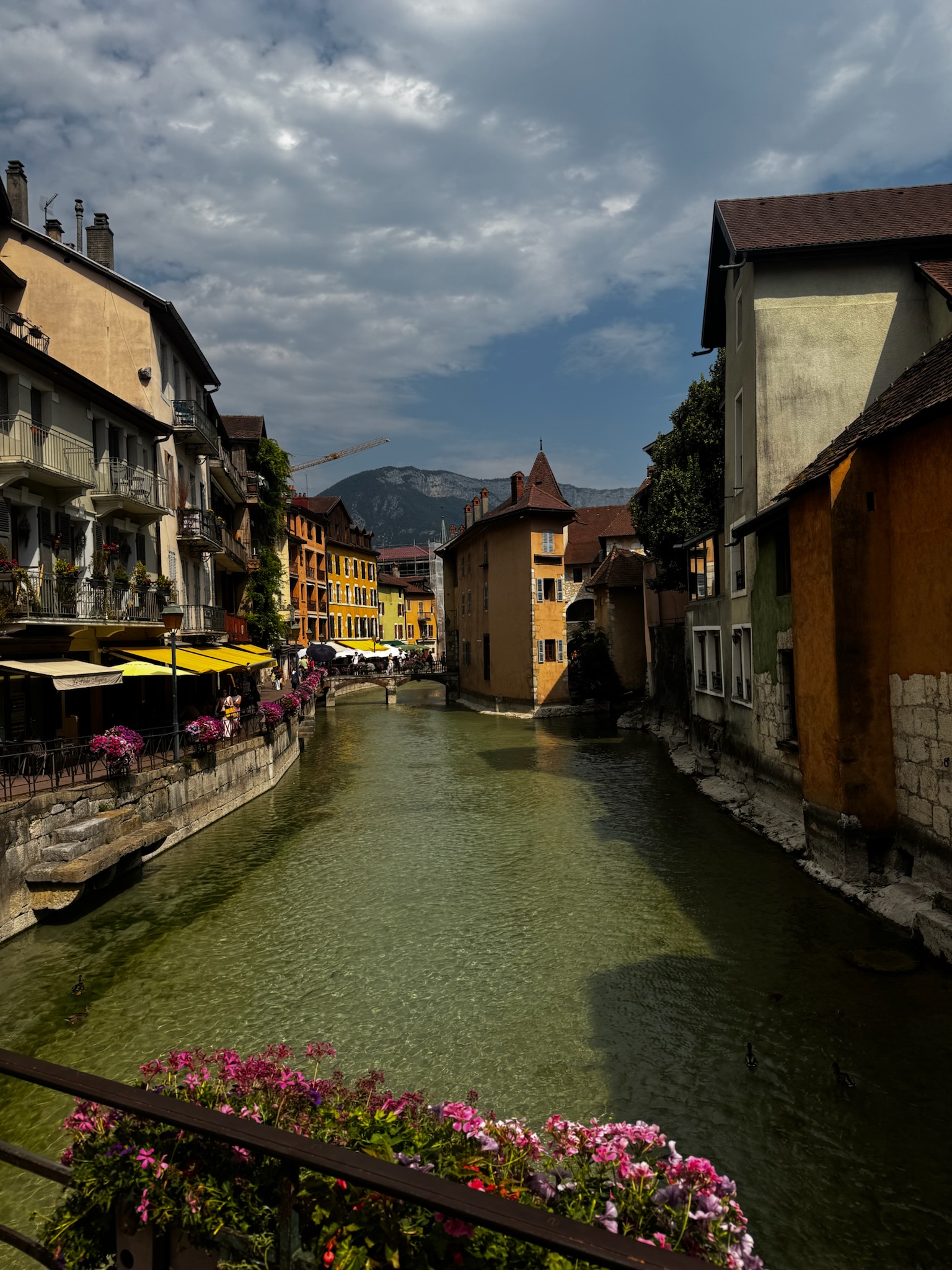
One afternoon we wandered into the old town, which people call the Venice of the Alps, and it’s a nickname that’s well earned. The whole place is threaded with narrow canals, all of them fed by the lake.

Pastel houses lean over the water, every bridge blooms with flowers, and sitting in the middle of it, on a wedge of island shaped like the prow of a ship, is the Palais de l’Isle.
Chamonix: A Mountain Made of Water
Then we turned east, and the ground started going up.
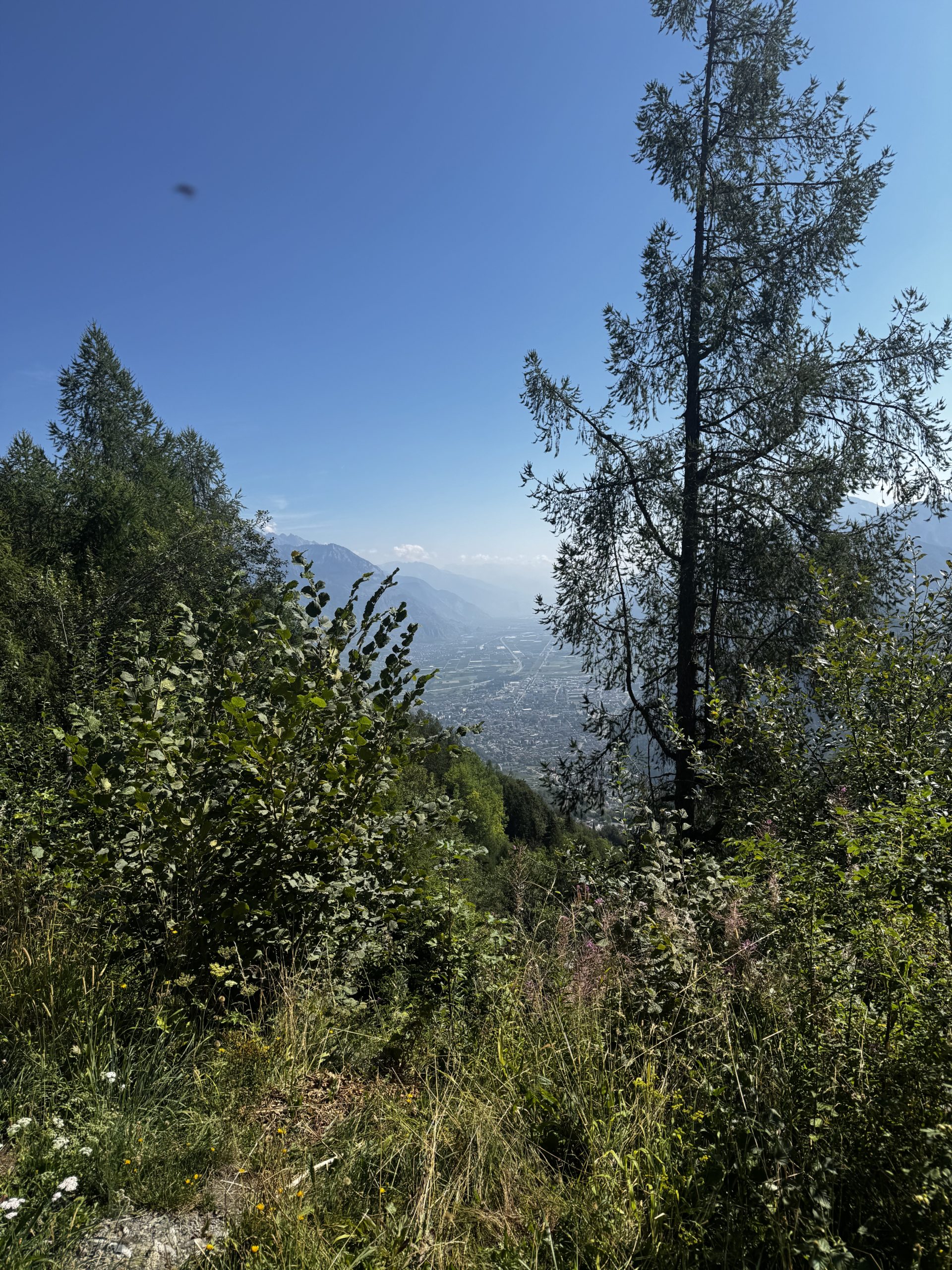
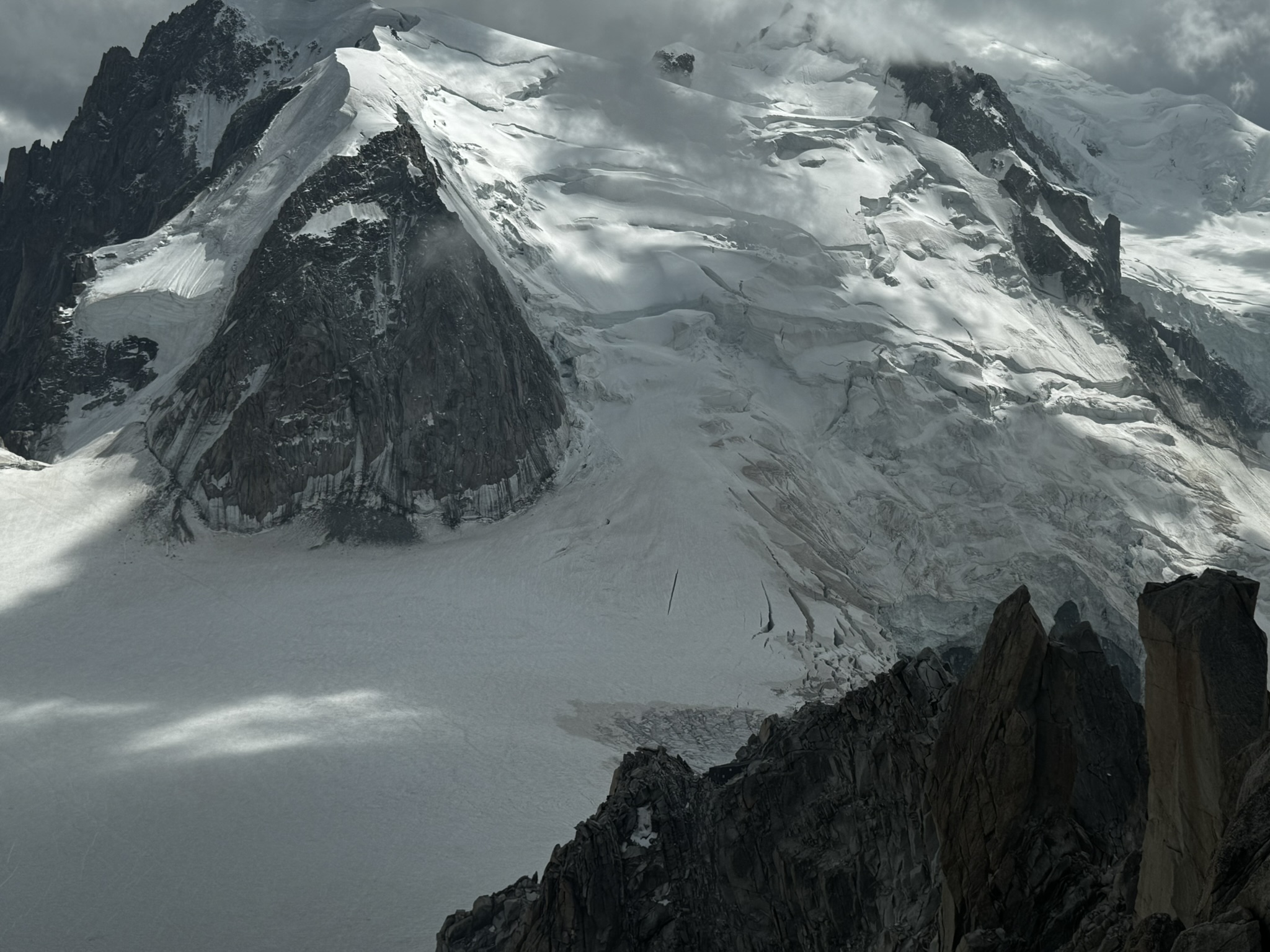
We parked at the foot of Mont Blanc, the highest peak in western Europe. Right above the van, thousands of feet up, my eyes kept being drawn to a frozen expanse of snow and ice that seemed to hang there, ready to slip at any moment.
Then again, I’m a thriller writer, so seeing threat in everything is probably part of the job.
Being a lover of research, I did some reading, and the first thing I learned is that the top of the mountain isn’t really solid at all. The actual rock summit sits at 4,792 metres. But when surveyors climbed up and measured it in 2023 they came back with 4,805, and every one of those extra thirteen metres is snow and ice. They measure it again every two years and the number keeps moving. It’s down from a record of 4,810, set back in 2007.

So the summit of Mont Blanc is, in a very literal sense, water.
And my fear of it sliding down on top of us turns out to be less far-fetched than it sounds. On the night of 11 July 1892, a hidden pocket of meltwater inside the nearby Tête Rousse glacier ruptured and sent 200,000 cubic metres of water, ice, mud and boulders down onto Saint-Gervais-les-Bains, a village around fifteen kilometres from where we were parked. It killed 175 people and left behind 800,000 cubic metres of sediment.
A new water cavity was found inside the same glacier in 2007. Since 2010 it’s been monitored with radar and borehole sensors and drained repeatedly to stop it happening again. The first pumping operation cost nearly two million euros, but it keeps every town below it safe.

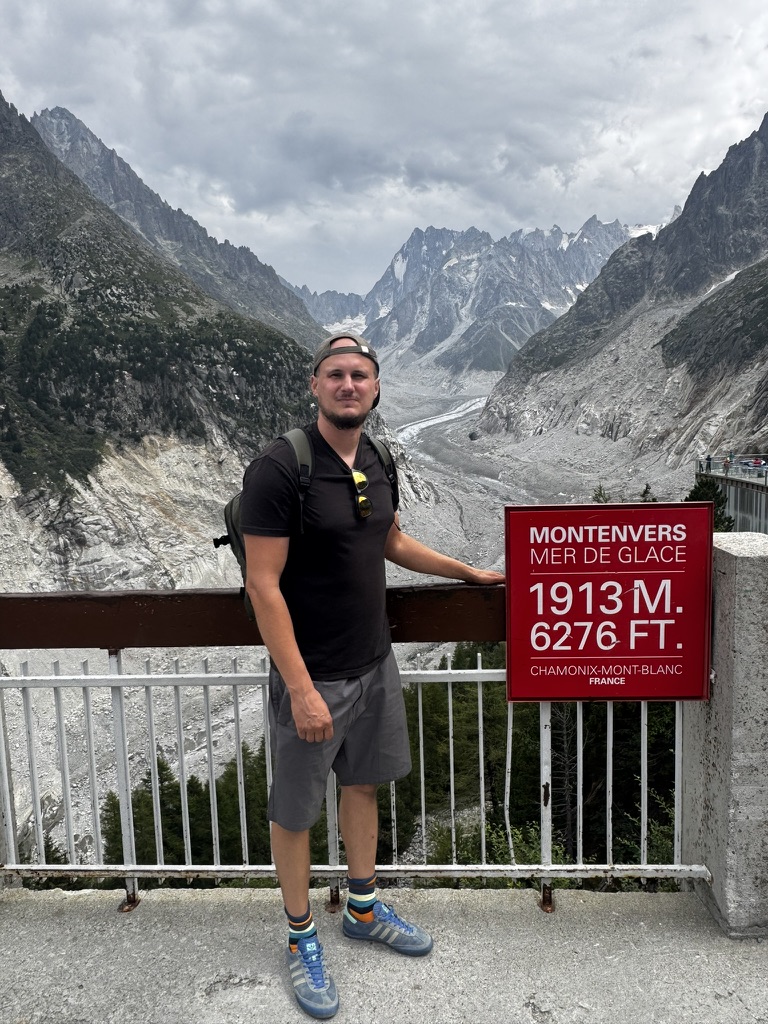
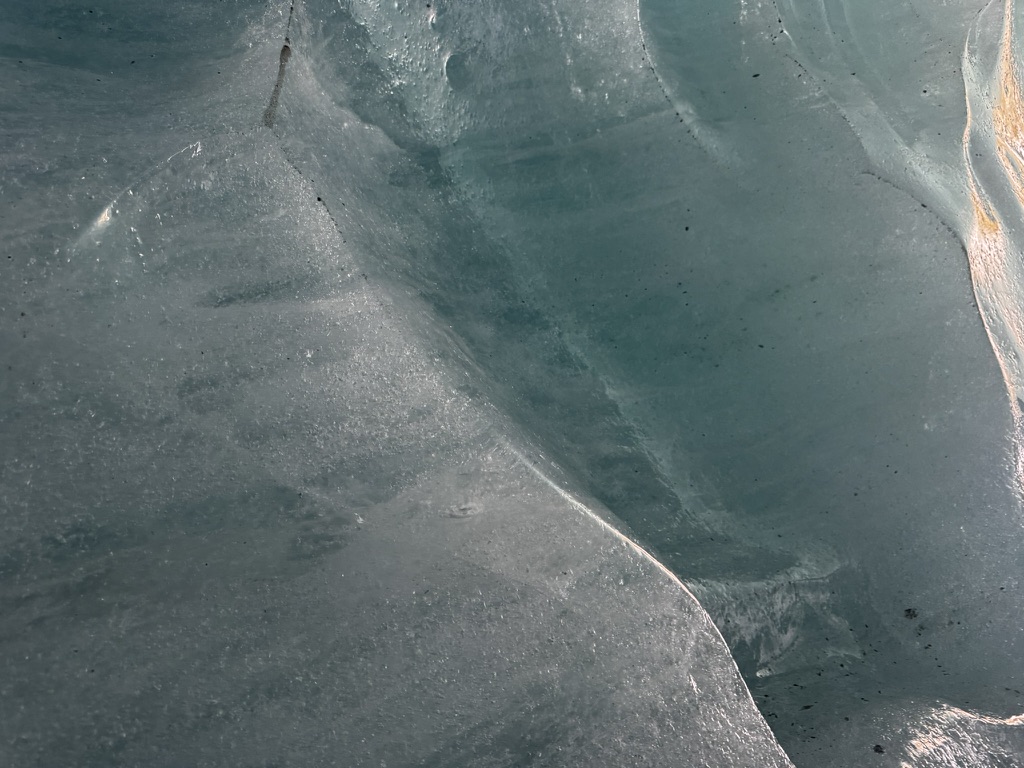
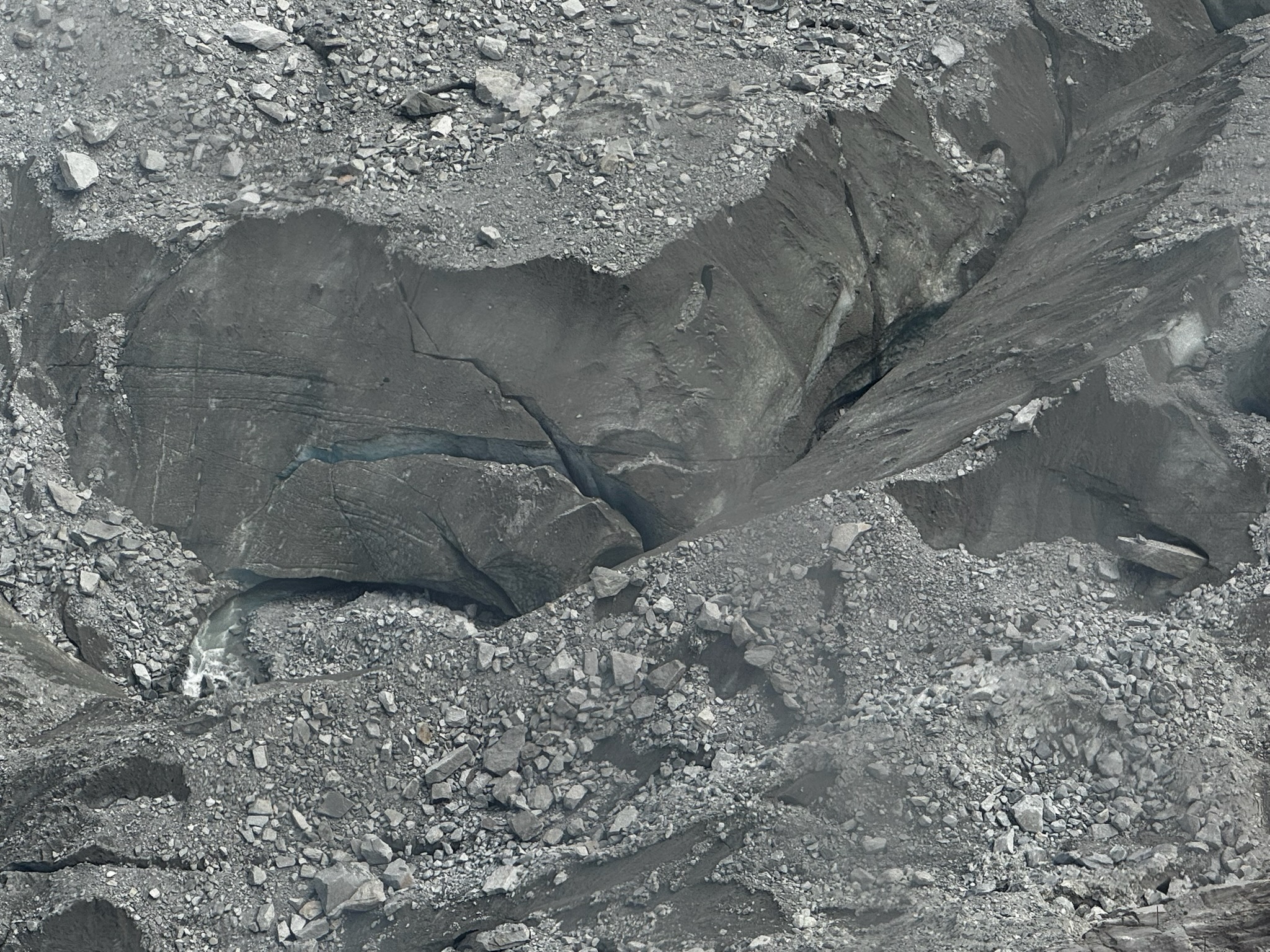
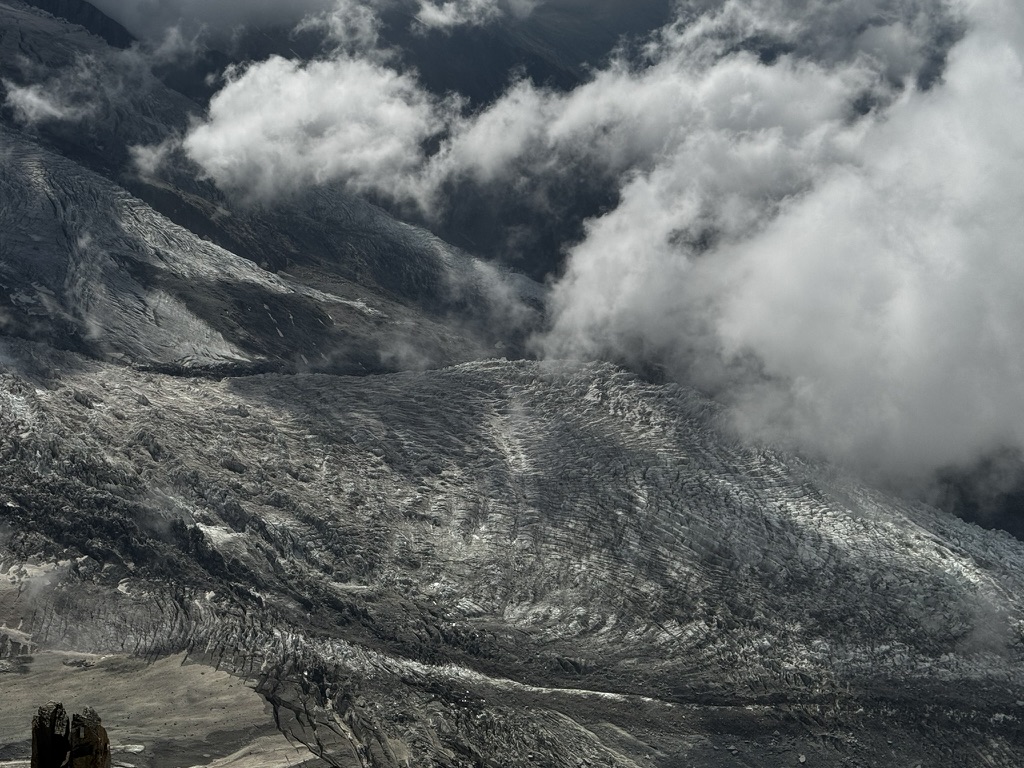
While we were there, we rode the little red cog train up to Montenvers, at the edge of the Mer de Glace, and went into a cave carved right into the ice. What struck me most was the old photographs and the markers painted on the rock, showing how much the glacier has shrunk. When the railway opened in 1908, the ice came almost up to the station. Now there’s a cable car to get you down to it, and then around 580 steps, and they add more steps every year, because every year the surface of the glacier is lower. In the last twenty-five years alone it has retreated over 800 metres.
It’s genuinely shocking to see the climate changing in front of you like that. In another hundred years, maybe that glacier will be gone altogether.
It’s also extraordinary to think what the ice might be holding onto, given that some of it is hundreds of years old. My book The Titanic Deception opens with climbers finding a well-preserved body inside a glacier near the Matterhorn, so this is a thought I’ve had before.
This valley has inspired countless writers. Mary Shelley came here in 1816 and set the confrontation between Frankenstein and his creature out on the Mer de Glace, the same ice we walked into.
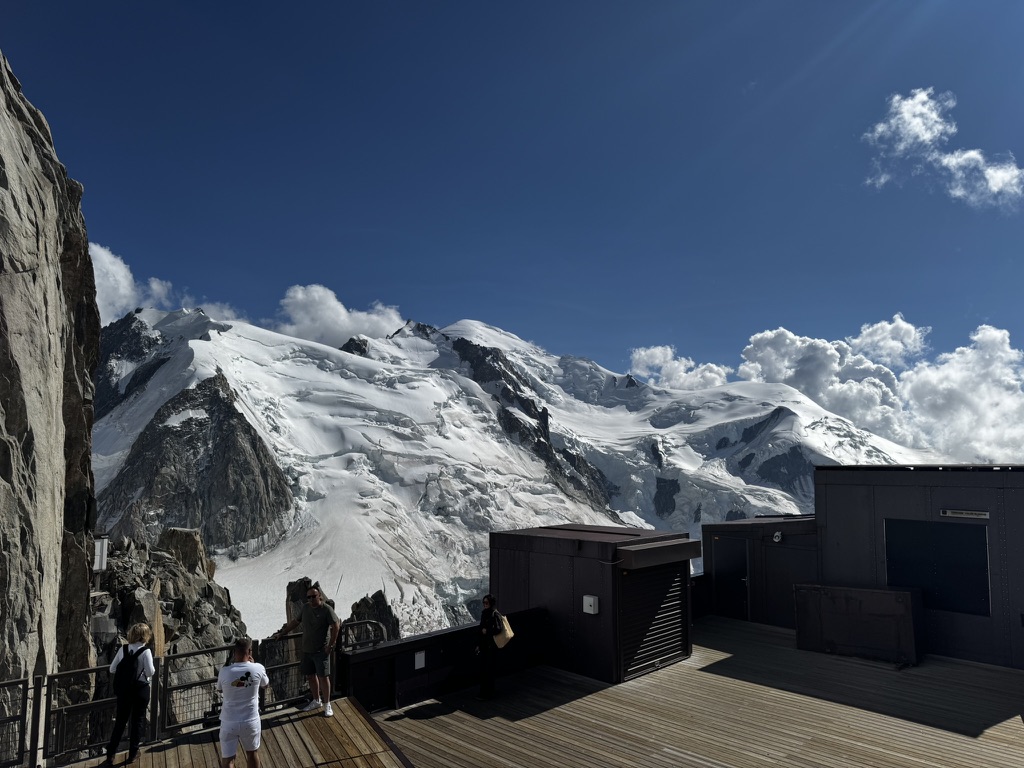
We also took the cable car up to the Aiguille du Midi, the great spike of rock beside Mont Blanc.

At 3,842 metres it gives you astonishing views up at the summit, down onto the glaciers, and across to the peaks of Italy. Now, I don’t really like heights. I wouldn’t say I’m afraid, exactly, but I just don’t go seeking them out. This was worth every second, though, and standing there, looking out at the uninterrupted, sublime beauty of the mountainside, was genuinely inspiring.
I don’t have a story in mind for this place yet, but you never know. These things have a habit of coming back when I least expect them.
Through Switzerland: Lake Neuchâtel and La Tène
Heading north, we decided to take the route through Switzerland. I’d heard the landscape was beautiful and I’d never been to the country before, which struck me as two good reasons to go that way.

We stopped for two nights on the shore of Lake Neuchâtel, in the centre of the country. We needed a couple of days at a slower tempo, and this was perfect for it, with a long, calm sheet of water, the Jura rising behind it and vineyards running down to the shore.
What I didn’t know, until I looked at a map properly, is that I’d parked at one of the most significant archaeological sites in Europe.
At the north-eastern tip of the lake, where the water shallows out and the little river Thielle runs off towards Lake Biel, there’s a bay called La Tène. The name comes from a Latin root meaning shallow, which is all it was, being a thin patch of water at the end of a big lake.
Then, in November 1857, the level dropped.
A fisherman hunting antiquities for a local collector spotted timbers standing proud of the shallows, stopped to look, and within an hour had pulled out forty-odd objects, including swords and spearheads. What made everyone sit up was the metal, because every other lake site was producing bronze and these were iron.
Excavations went on for decades and brought up thousands more. Many of the weapons had never been sharpened, and many had been deliberately bent or broken before going into the water, which is what people do to an object when they’re giving it to a god rather than losing it.

Whether it was a settlement, an armoury or a sacrificial site has been argued over ever since. But the finds were distinctive enough to define an entire period, the La Tène culture, the label now used for Celtic Europe from Ireland to Anatolia, and it is named after a shallow corner of a Swiss lake where a fisherman stopped for a look.
We walked to the archaeological museum nearby to find out more, and found it closed, so that’s another reason to come back.
Strasbourg
Then a night in Strasbourg broke our journey north. A few hours was just enough to make me realise it’s a place, and a region, I badly want to come back to.

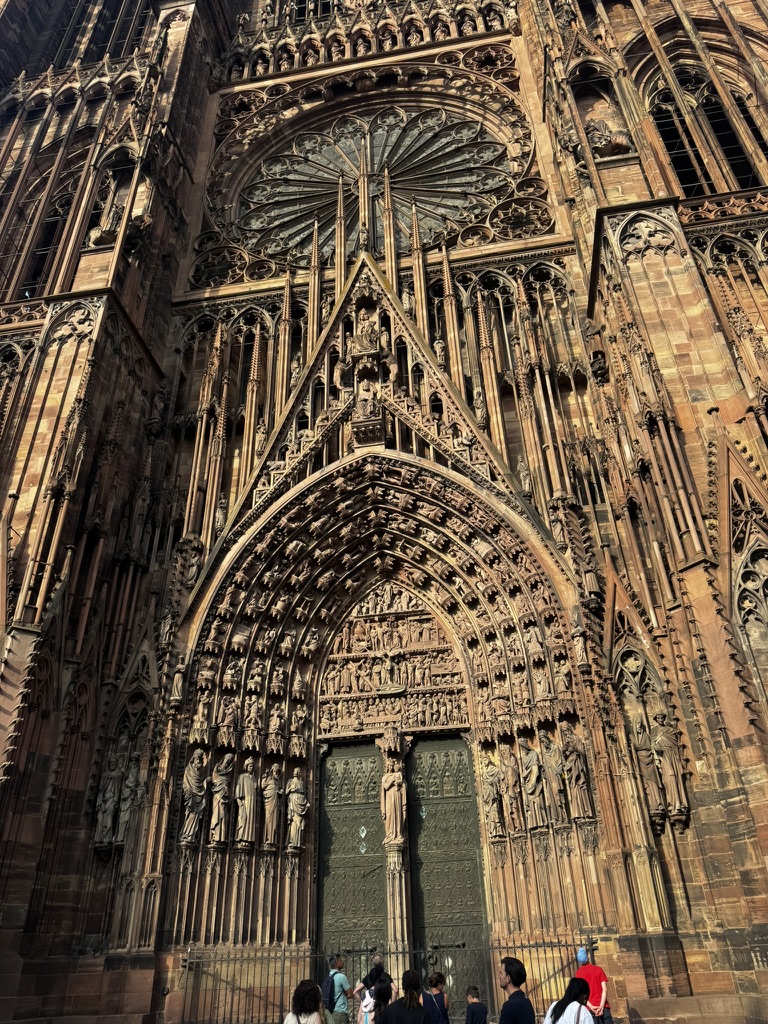
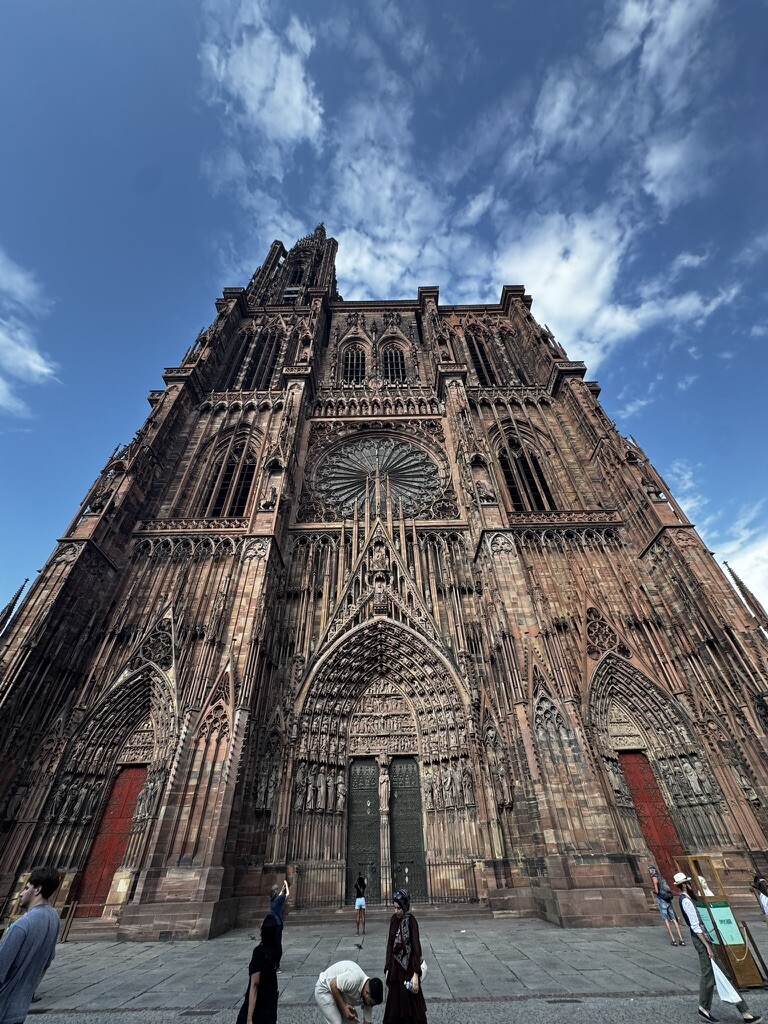
We walked into the old town in the evening and looked up at the cathedral, which is an experience I’d recommend to anyone. It’s built from pink sandstone, so at the end of the day the whole west front goes the colour of raw salmon, and it is absolutely covered, with every surface carved and every niche filled, and the stonework so fine in places that it looks less built than grown.

It’s also lopsided, and that’s the best thing about it. Construction began in the twelfth century and finished in 1439, by which time the money and the will had run out, so only the north tower was ever completed. The result is a vast symmetrical façade with a single spire shooting off one side of it, just over 140 metres up.
One last thought struck me as we headed for the motorway.
Strasbourg sits on the Rhine, and between the seventeenth century and the twentieth it changed hands repeatedly. It was French under Louis XIV, German after 1871, French again in 1918, German again in 1940, and French once more in 1944. Families here have lived under both flags without ever leaving the house.
And it is precisely because of that history that the city was chosen, after the war, as the seat of the Council of Europe, the European Court of Human Rights and the European Parliament. The most fought-over city on the continent was handed the job of making sure that stopped.
Whatever you think about how it’s gone since, I find the gesture rather magnificent.
Heading Home
Now, looking back at the whole adventure, what strikes me most is how little of France we actually saw.
We roamed from the flat lands of the north down to the foothills of the Pyrenees, across to the Alps, along beaches and through gorges, covering four weeks and a few thousand miles, and I came away with the strong sense of having barely scratched it. There’s a whole Atlantic coast we didn’t touch. There’s Brittany. There’s Provence, and Burgundy, and about forty other places people have since told me we absolutely must go, which is, I suppose, the best possible outcome. You want to finish a trip with a longer list than you started with.
I went to France with a list of locations for The Alchemist’s Codex, and I found most of them. I found Dampierre’s impossible ceiling, Montségur’s mountain, and Carcassonne closing a loop I hadn’t known was open.
But the moments that have stayed with me hardest are the ones I never went looking for. There was a road sign in the Ardèche that sent me down that research hole, a tidal island in Normandy that I now have to save for a book I haven’t thought of yet, and a glacier retreating faster than anyone can build steps down to it.
That’s the thing about travelling this way, I think. In a van, with the doors open, you’re permeable, and things get in.
And now, as I’m reminded frequently, I’ve got a book to finish, and that is top of the list the moment we’re home.