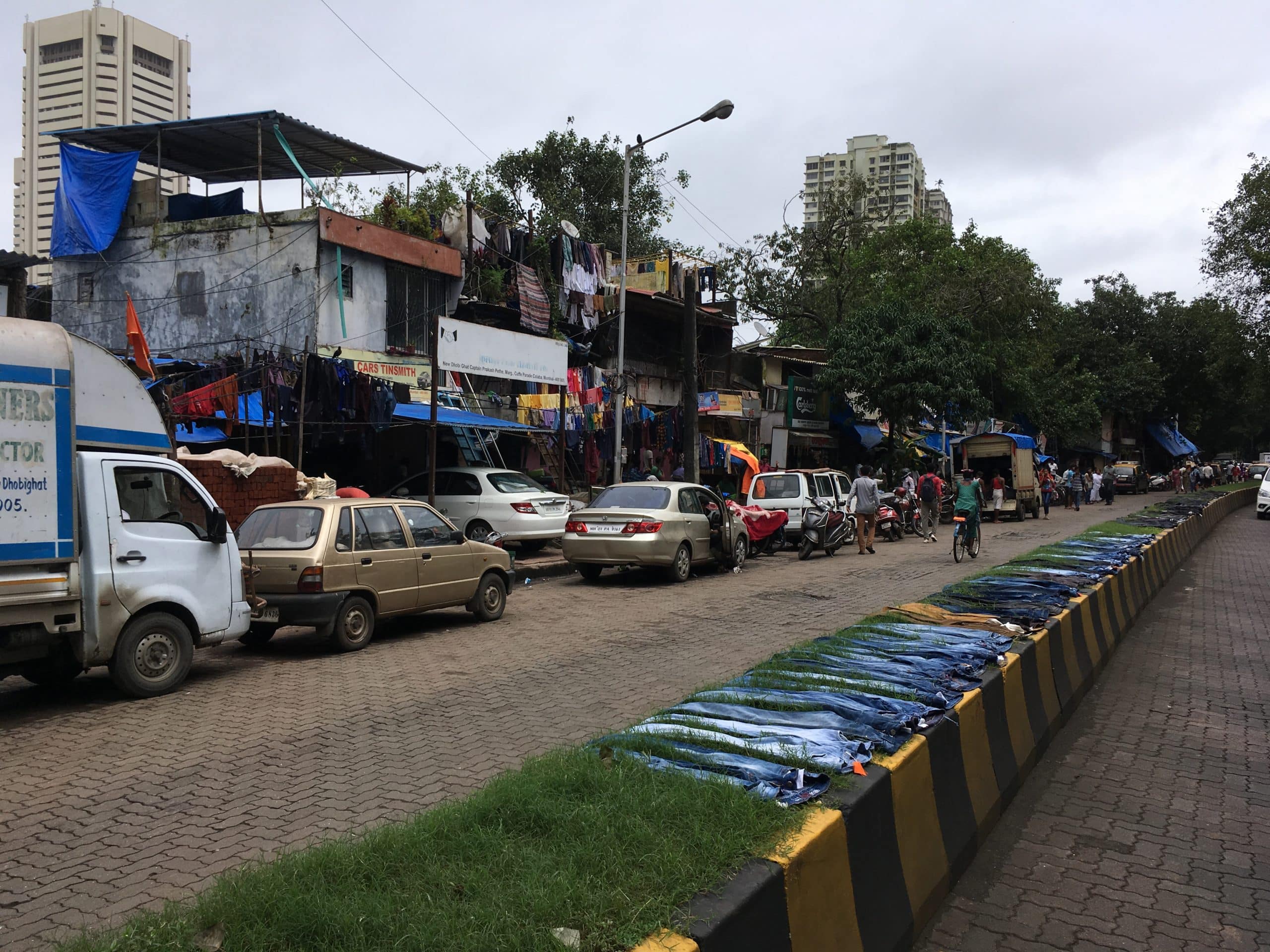
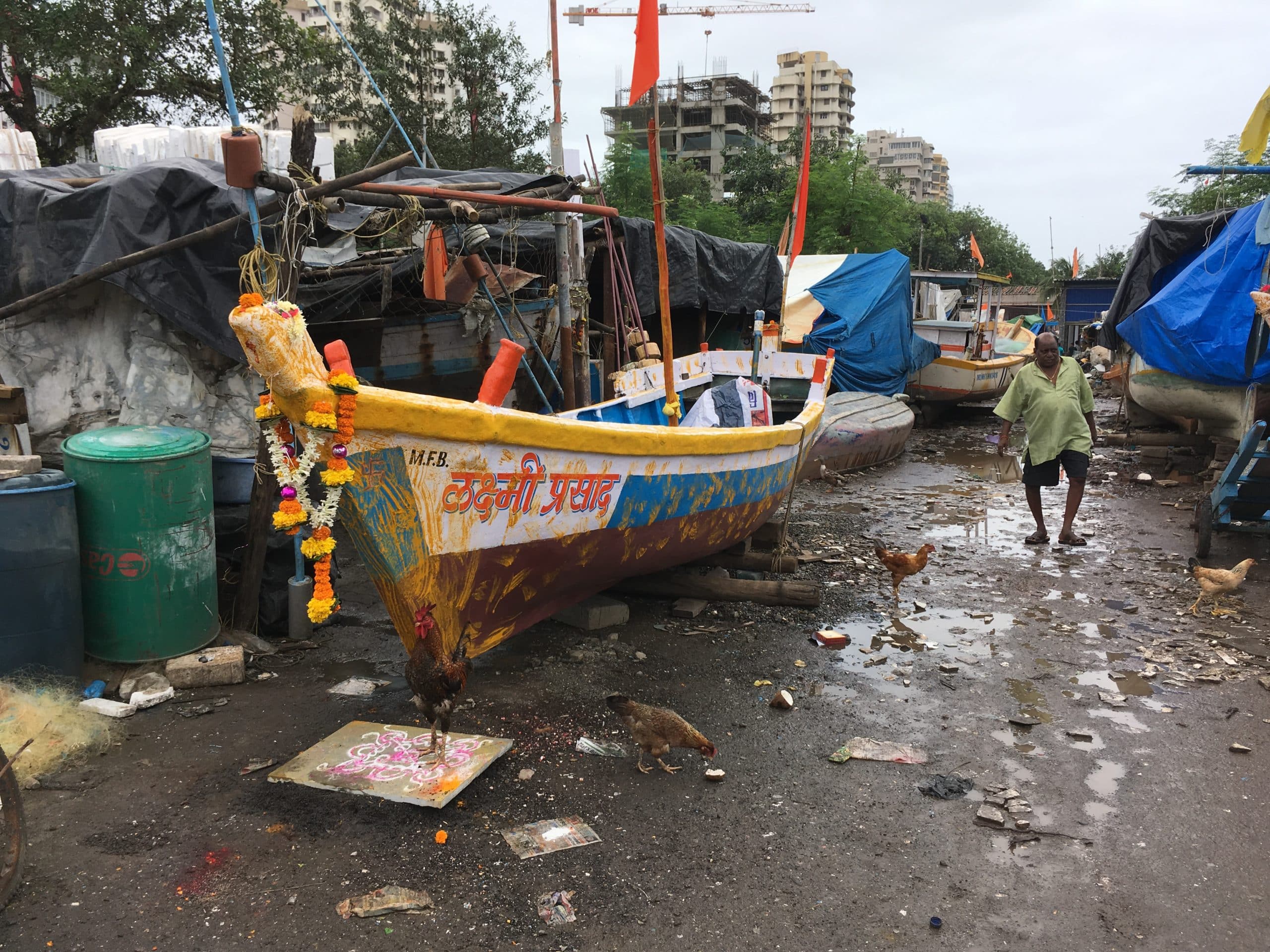
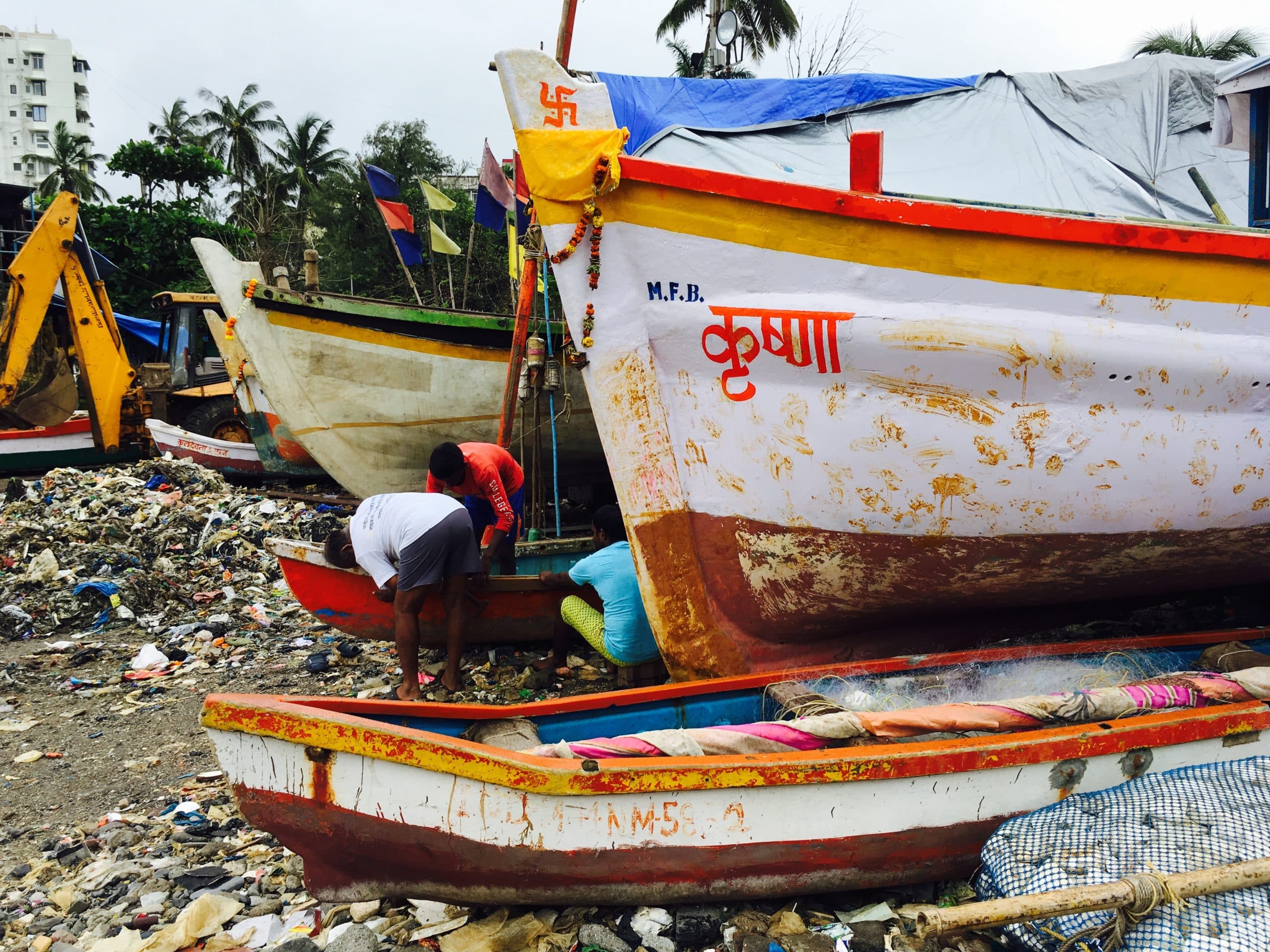
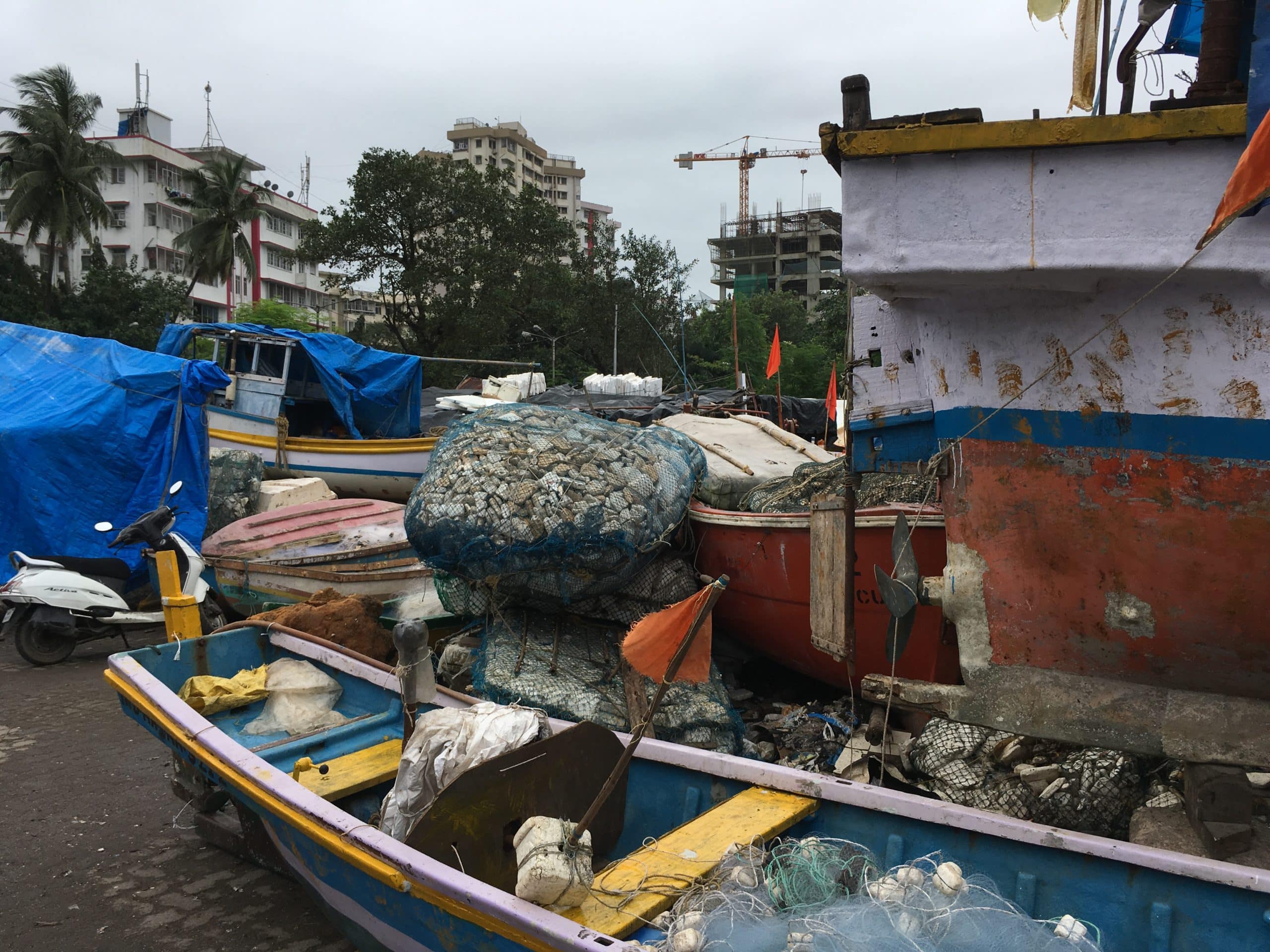
I truly believe that I wouldn’t have become a writer if I hadn’t visited India for the first time in 2011. The sun was rising as we flew across the blue tarpaulin roofs of the slums to land at Mumbai airport. We pushed through the scrum of people and out into the wet heat of the Indian summer.
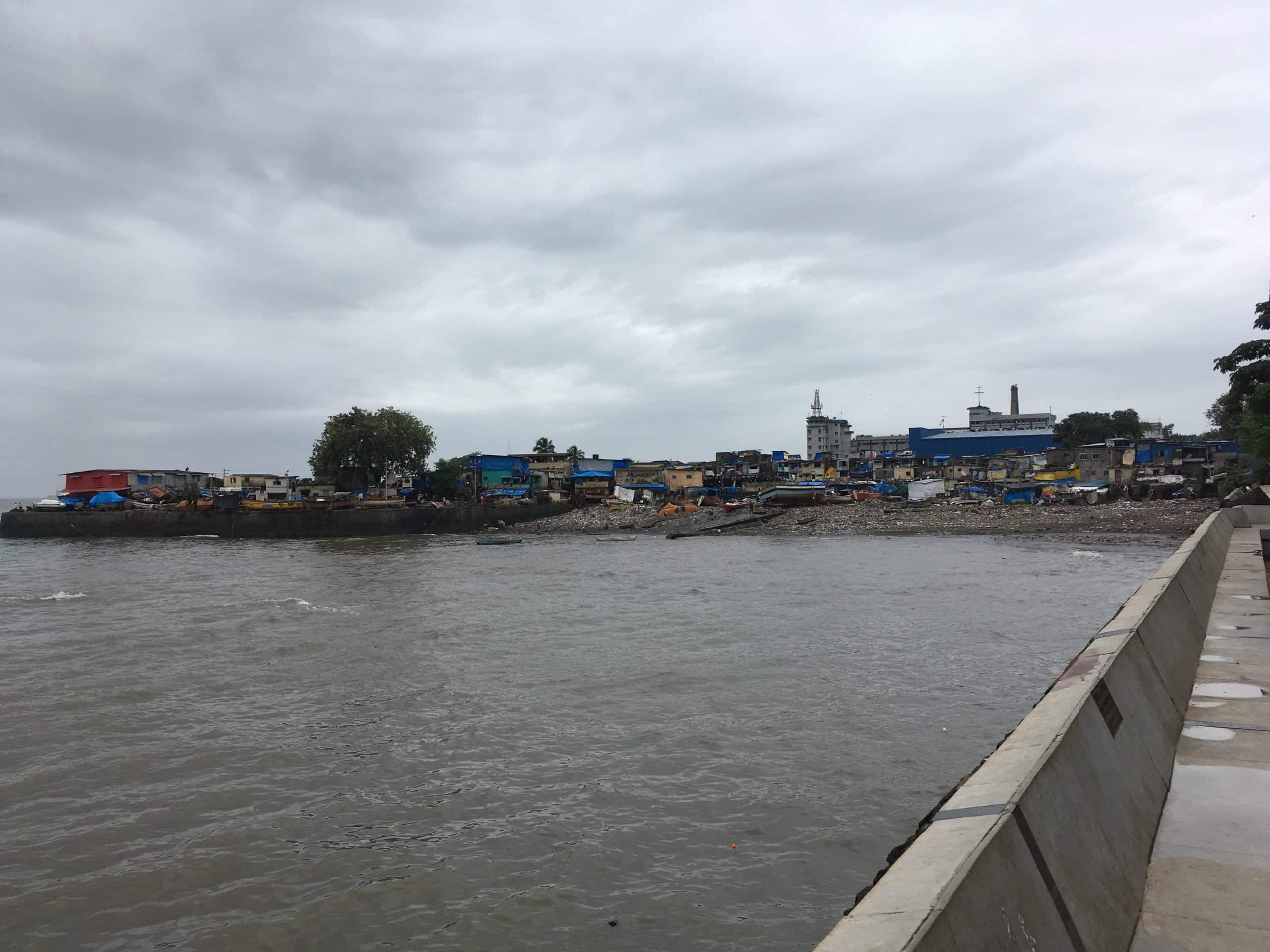
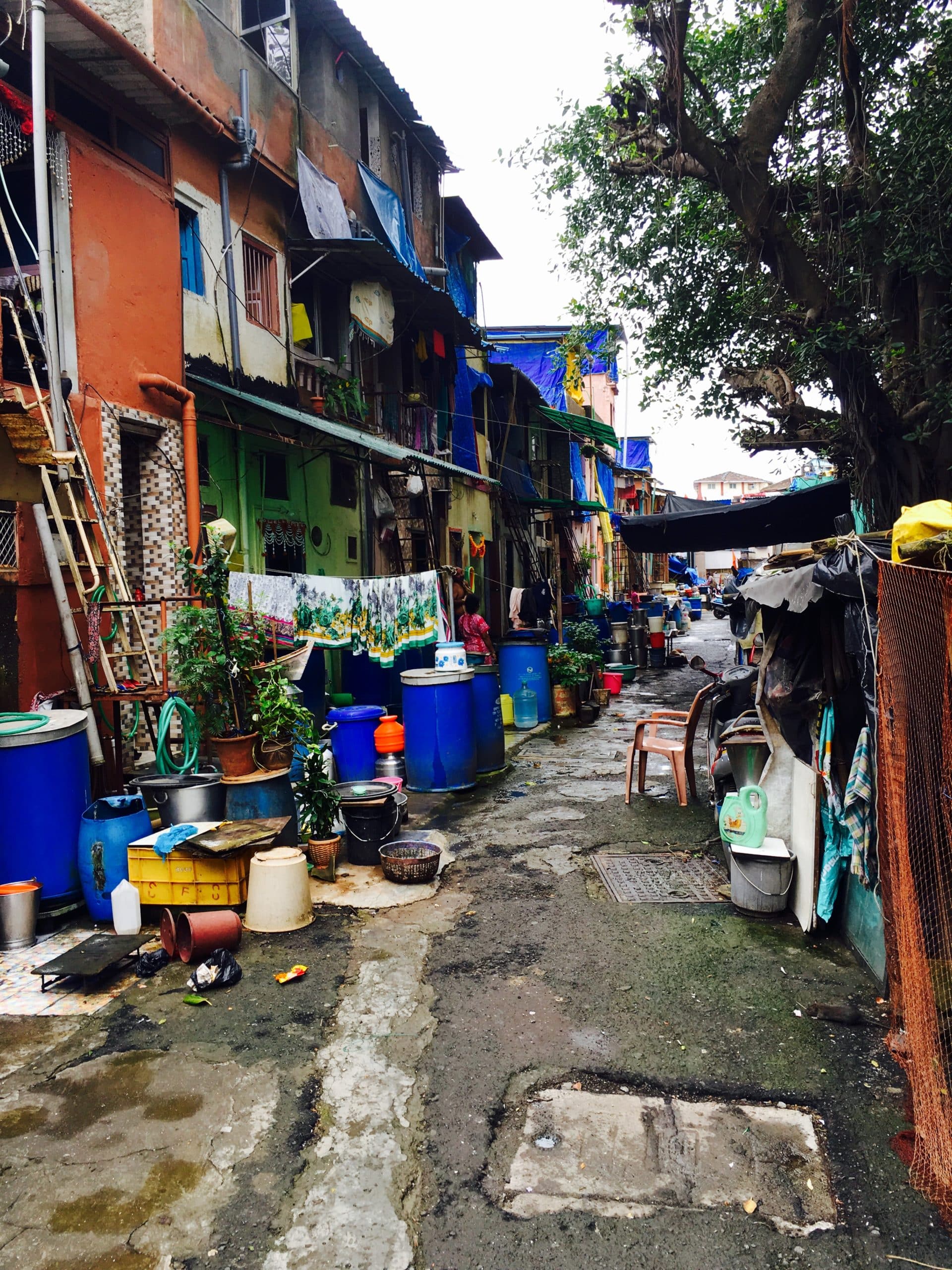
That taxi ride from the airport, I now realise, changed my life. Sprawling slums of colourful, crumbling shacks flanked the road on both sides. Groups of women dressed in iridescent saris wandered beside the speeding traffic, their smiles broad and their eyes bright.
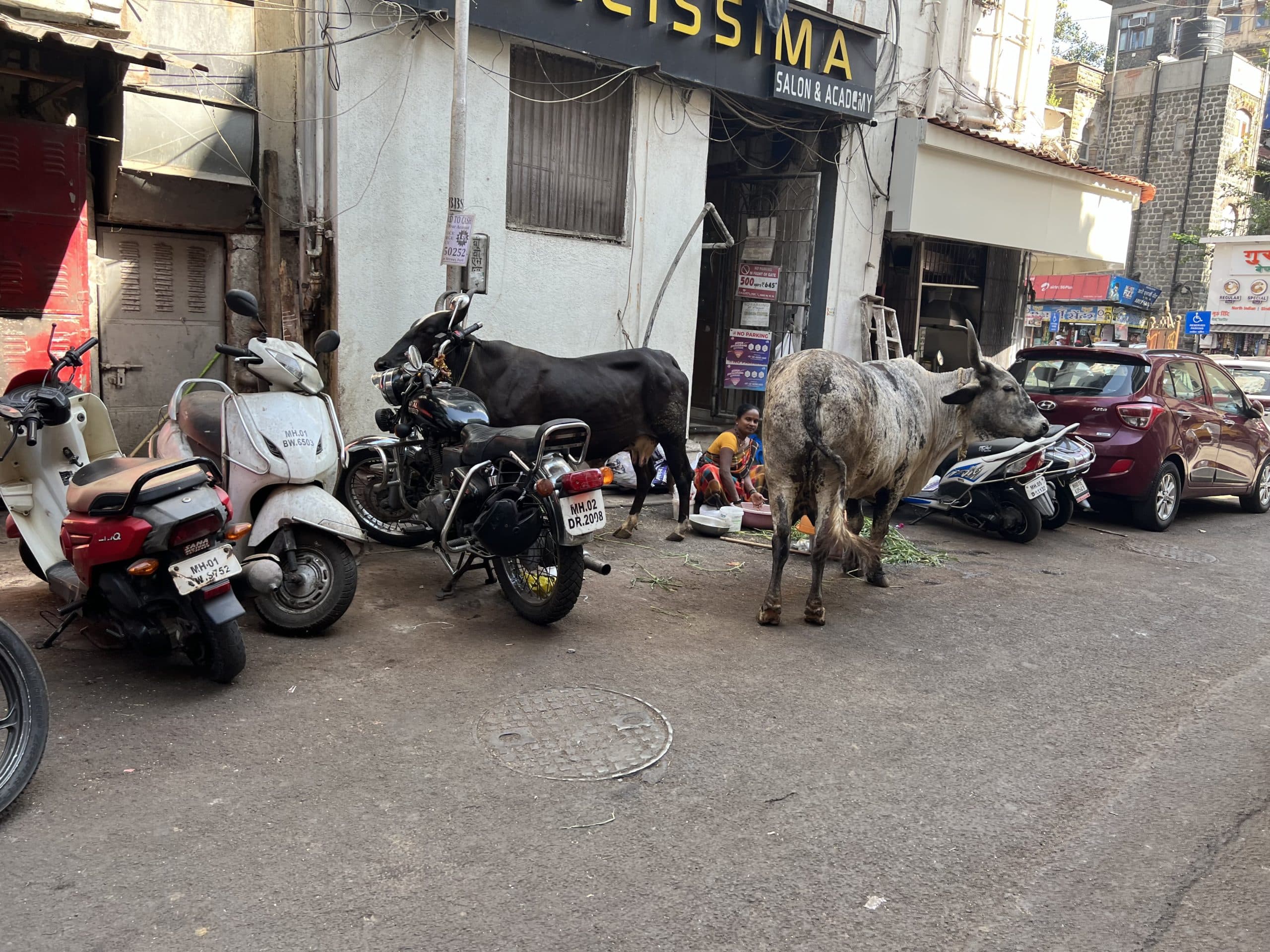
A series of wildly disconnected images flashed past: pollution-belching trucks, cars held together with duct tape and roofless sports cars. There were decrepit, garishly adorned buses jammed to bursting. There were men working and others sleeping, women chasing away stray dogs with sticks, and children playing with rubbish while animals tried to eat the same rubbish.

This was my first taste of India, and my first experience of travel in Asia. I loved it, and I know it’s a trip I’ll never forget. It was a place so different from my own, and it opened my mind to new worlds that I knew I needed to share.
That journey is described in my first book, Kathmandu Killers. Without it, I wouldn’t be the writer I am today.
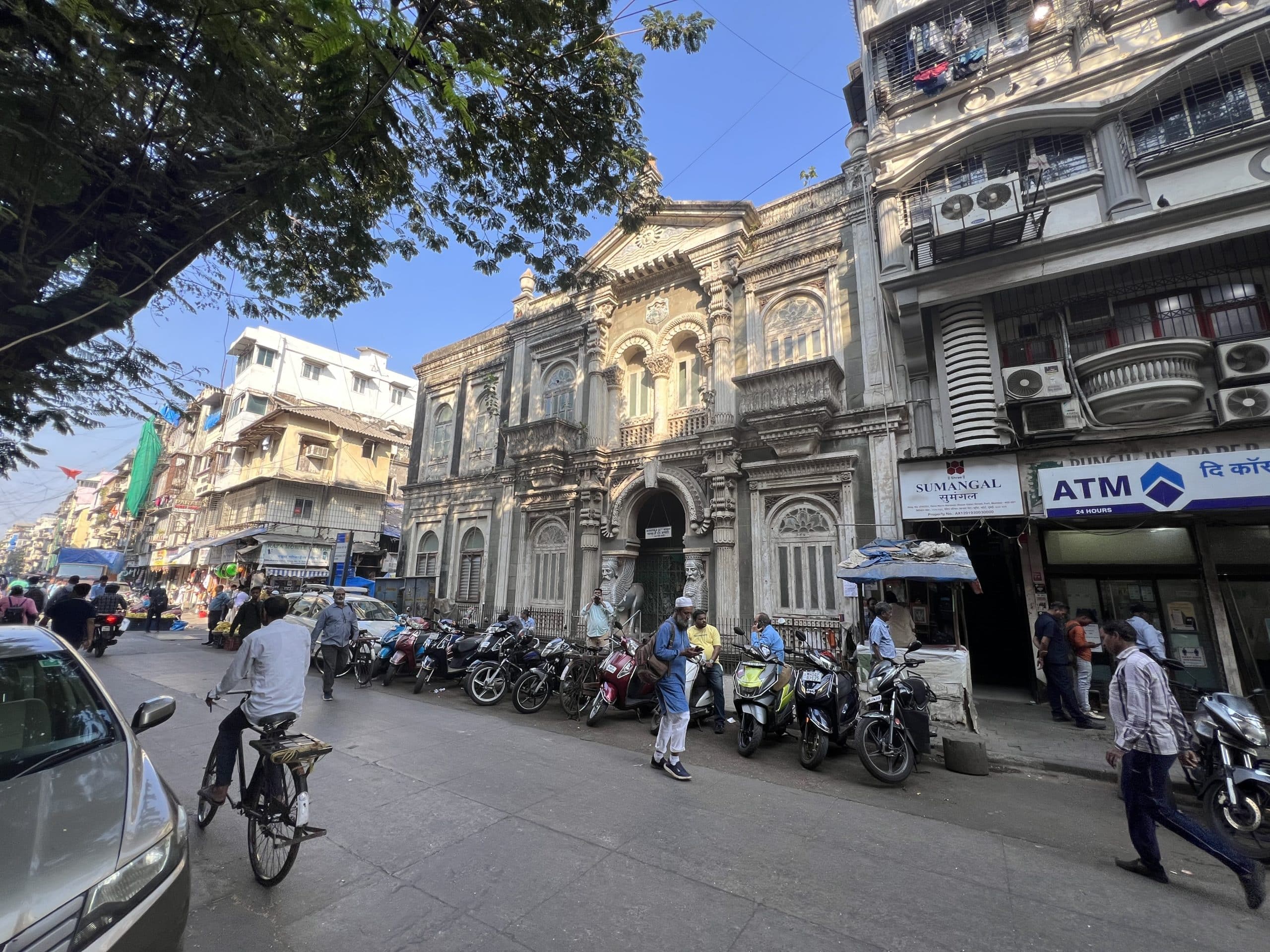
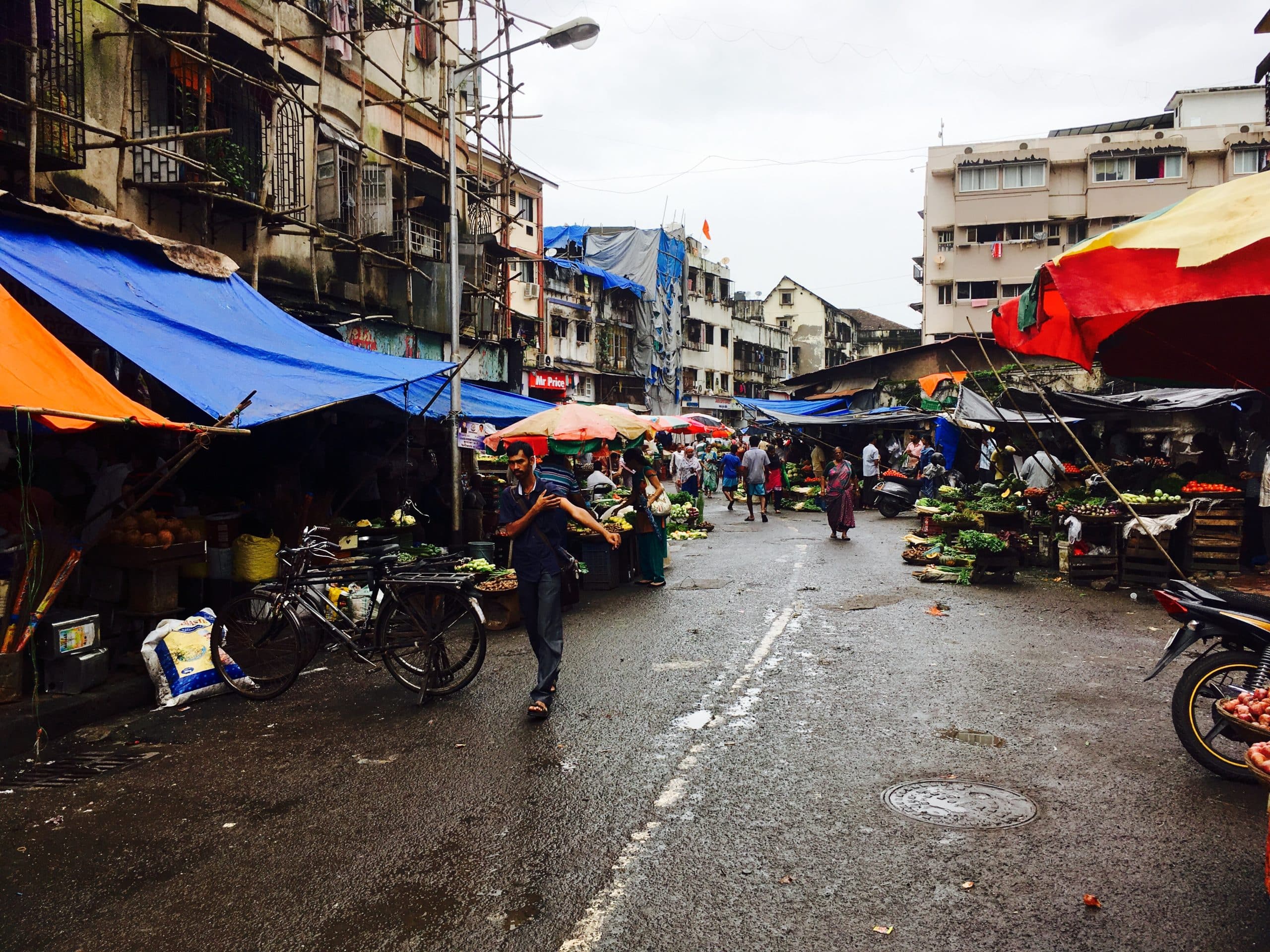
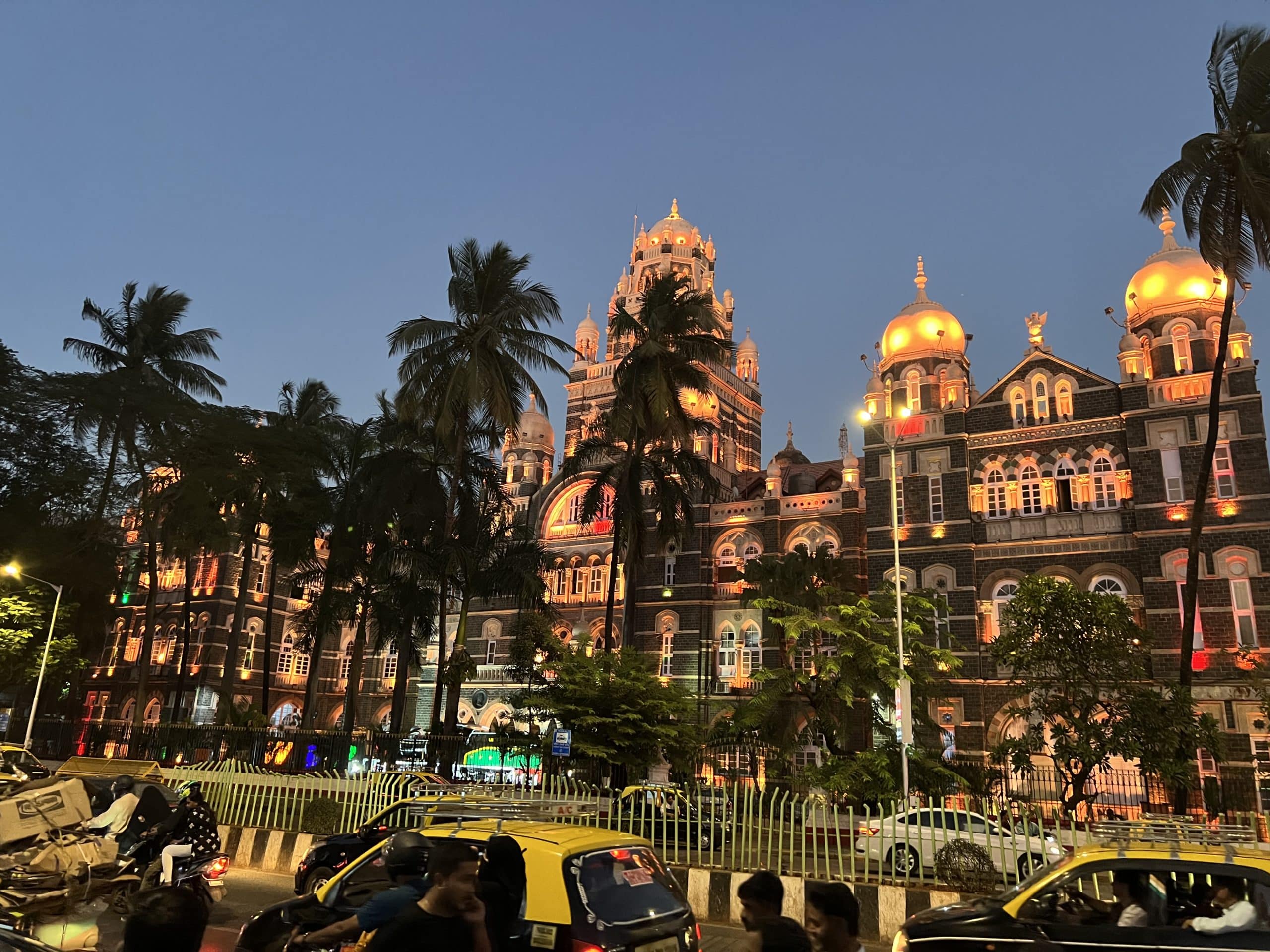
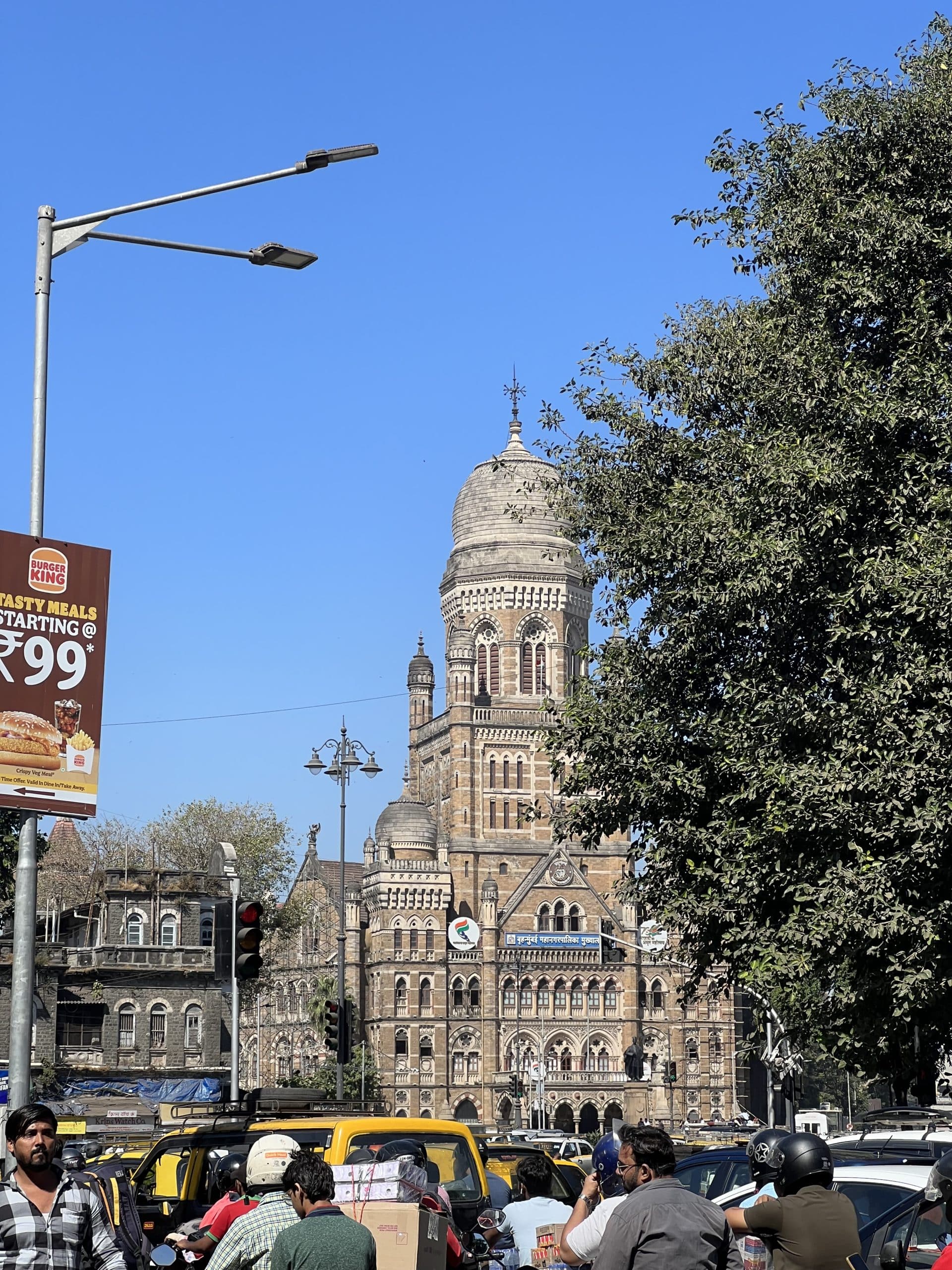
Back then, Mumbai was crazy, chaotic, misunderstood, scary and different, but it was beautiful, too. When I went back to Mumbai in 2024, I was so pleased to see that the city is as beautiful and crazy as it always was.
As always, it’s important to say that whilst I’ve now visited India several times, I’ve only seen a small part of the country. It’s a vast place with over a billion people, stretching from the Himalayan foothills in the north to the beaches of the south. I hope this article does it justice, as I have truly loved my experiences there. When I return, as I surely will soon, I’ll update it to include anywhere else I discover!
Things to Do in Mumbai
Almost all of my Indian trips have started in Mumbai. Every time I go, I feel as though I’m chasing those first moments, hoping to recapture the same sense of excitement I felt back in 2011. Of course, every trip is exciting, but none has ever quite matched that first one.
There are several places in Mumbai that I return to time and time again. It’s a busy, noisy and frantic city, though, so a few days there is usually enough for me. If you’re short on time, this full-day Mumbai sightseeing tour is a good way to see many of the highlights in one go, including the Gateway of India, Marine Drive and Chhatrapati Shivaji Maharaj Terminus, with hotel pickup and a local guide.
Where to Stay in Mumbai
In the past, I’ve always stayed in Colaba. This is the area right at the southern tip of the Mumbai peninsula. It’s pretty much tourist central and is home to many of the places I’ll mention in this article. That said, when I visited in 2024, I took a trip up to Bandra West to see the fort and the beach nearby, and I really liked the area. It’s much more laid-back, the traffic is less crazy, and it’s far closer to the airport. If I were staying in Mumbai a little longer, or wanted a more relaxed experience, I’d stay there instead.

The Gateway of India and the Taj Mahal Palace Hotel
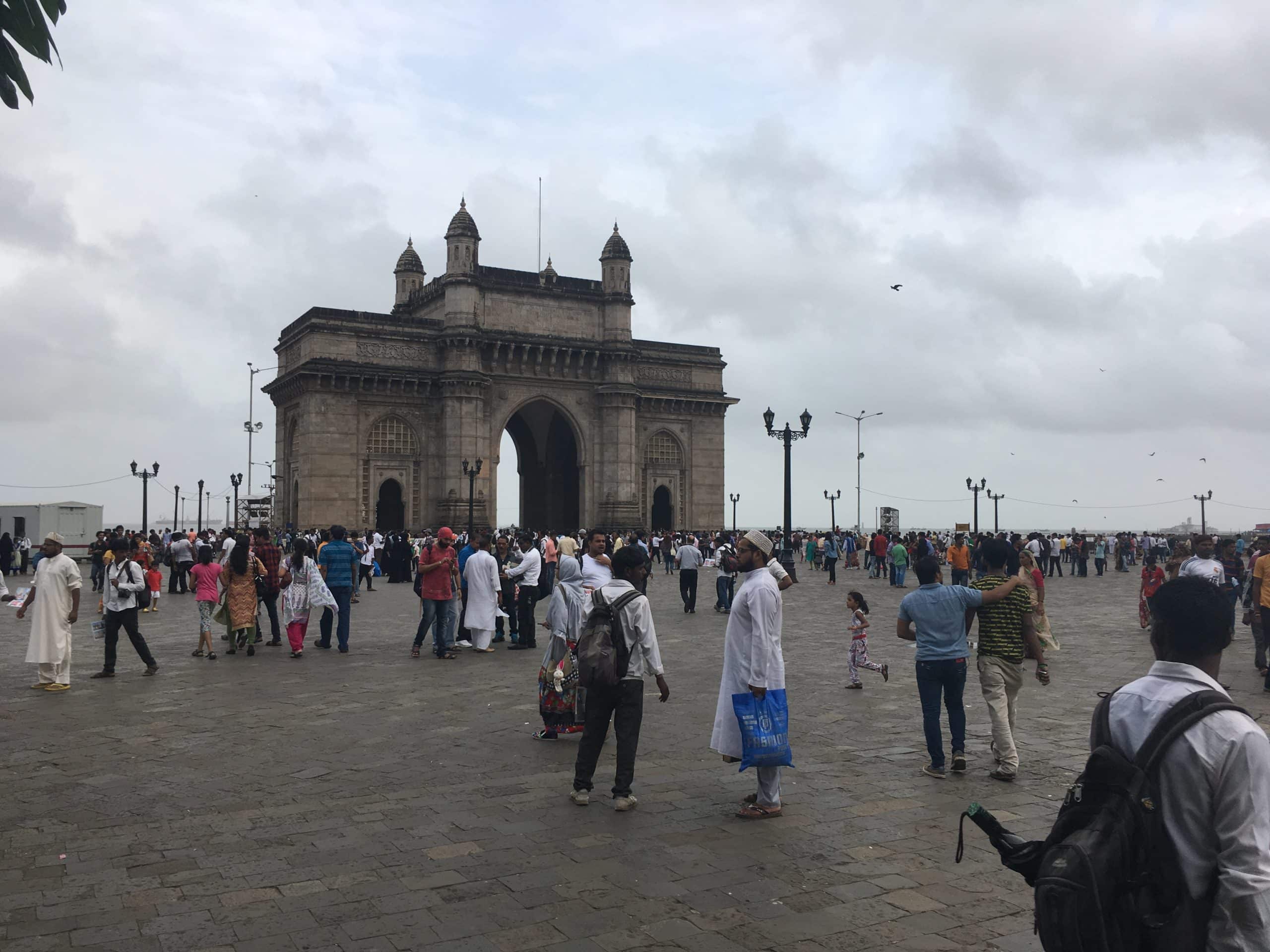
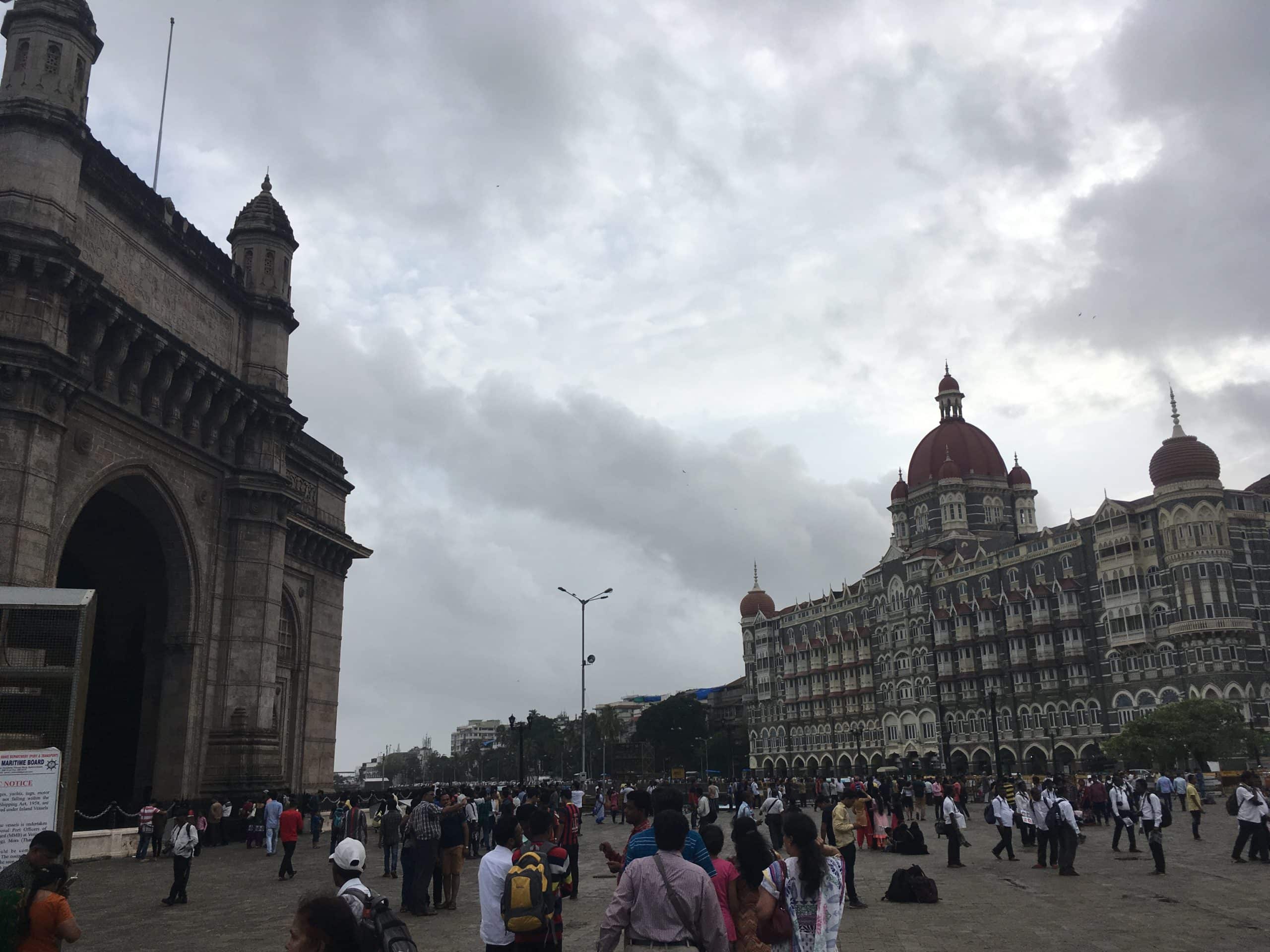
Right on the seafront in Colaba, these two monuments are the most famous sights in Mumbai, and they stand side by side looking out across the harbour.
The Gateway of India is a huge basalt arch, around 26 metres tall, that was built to commemorate the visit of King George V and Queen Mary in December 1911. It was the first time a reigning British monarch had ever visited India. The arch wasn’t ready when they arrived, so the royal couple were greeted by a cardboard model instead, and the real thing wasn’t finished until 1924.
Although the arch was built to celebrate the arrival of the British, it ended up marking their departure. In February 1948, the last British troops in India marched through it to board the ship that would take them home. Today, the square around it is always buzzing with families, street vendors and photographers.

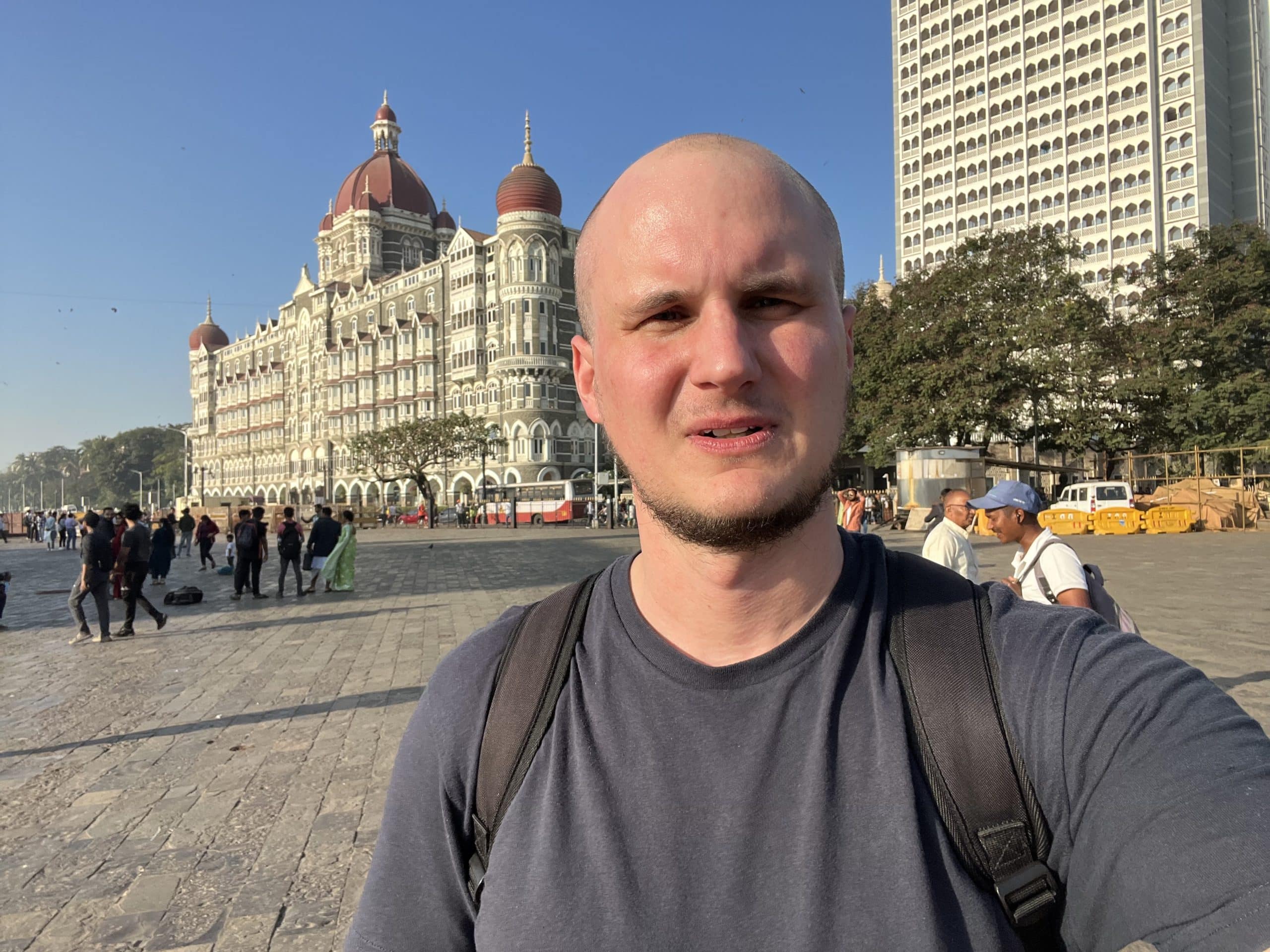
Just across the road stands the Taj Mahal Palace Hotel, which is one of the most famous hotels in the world. It was built by the industrialist Jamsetji Tata and opened in 1903. Legend says that Tata decided to build it after he was refused entry to one of the city’s “whites-only” hotels. Historians aren’t sure whether that’s true, but it’s a story you’ll hear again and again in Mumbai.
When it opened, the Taj was remarkably modern for its time. It is said to have been the first hotel in India with electricity, and it boasted American fans, German lifts and a Turkish bath. During the First World War, it was turned into a hospital. In November 2008, it was one of the targets of the terror attacks that shook Mumbai, and part of the building was badly damaged by fire. It has since been beautifully restored, and for many people in the city, it has become a symbol of Mumbai’s resilience.

Elephanta Island
The Gateway is also where you catch the ferry to Elephanta Island, about an hour across Mumbai Harbour. The ferry ride is part of the fun, offering a great view of the Gateway and the Taj before the city’s skyline fades into the haze.
Elephanta Island is home to a series of temple caves carved straight into the rock of the hillside. Rather than being built, the temples were dug out, with the rock chipped away to leave pillars, chambers and enormous sculptures. Most of the temples are dedicated to the Hindu god Shiva.
The highlight is the Great Cave, and at its heart is the Trimurti, a colossal carving of Shiva with three faces that stands around six metres tall. Each face shows a different side of the god’s nature: the creator, the preserver and the destroyer.
Sadly, many of the sculptures are badly damaged. Even so, the scale and skill of the work is breathtaking, and it’s no surprise that the caves are now a UNESCO World Heritage Site. One tip: the caves are closed on Mondays, so plan your trip around that.
If you’d rather not deal with the ferry queues yourself, this half-day Elephanta Caves tour includes hotel pickup, the ferry from the Gateway and a guide to bring the carvings to life.
Leopold Café and a Note on Shantaram
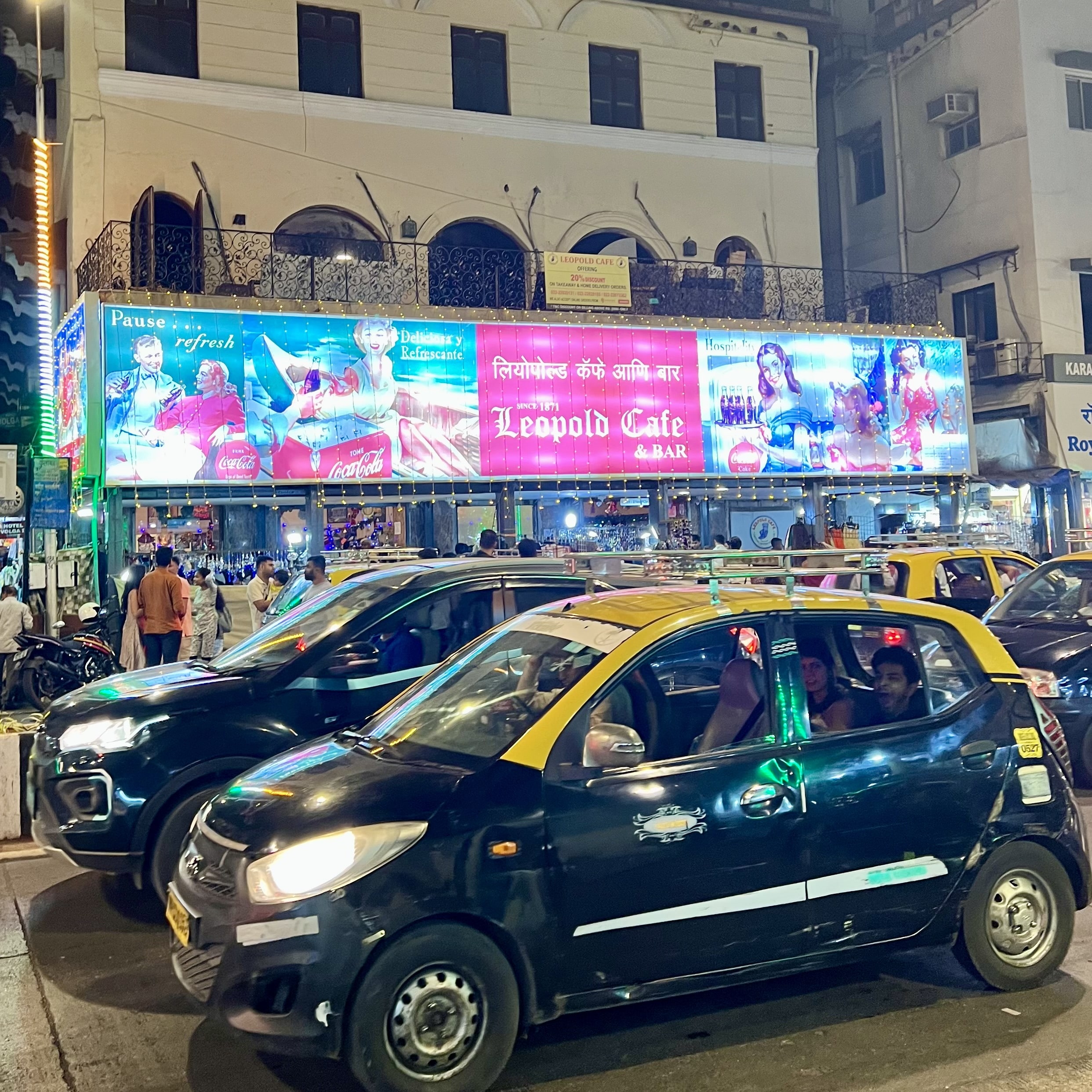
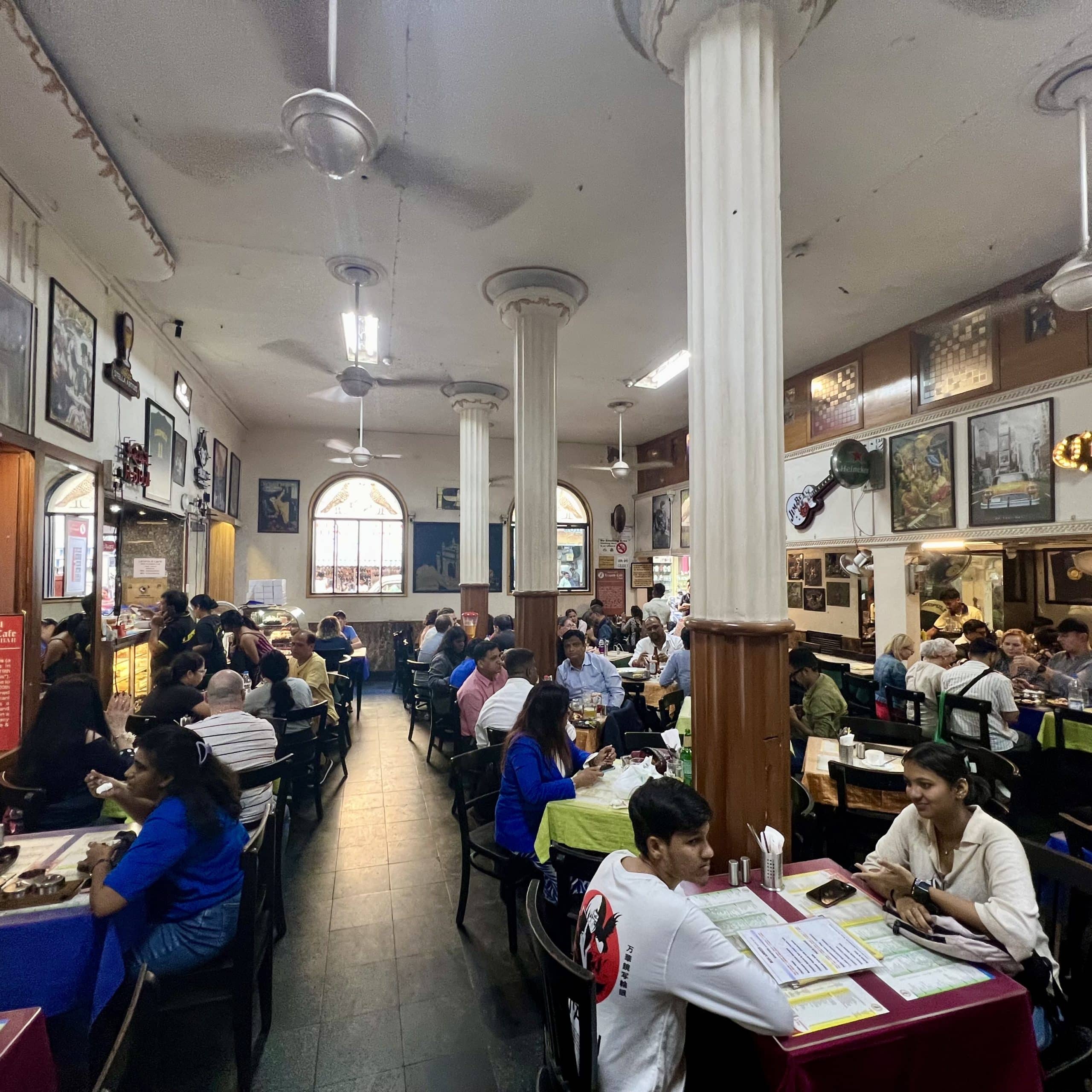
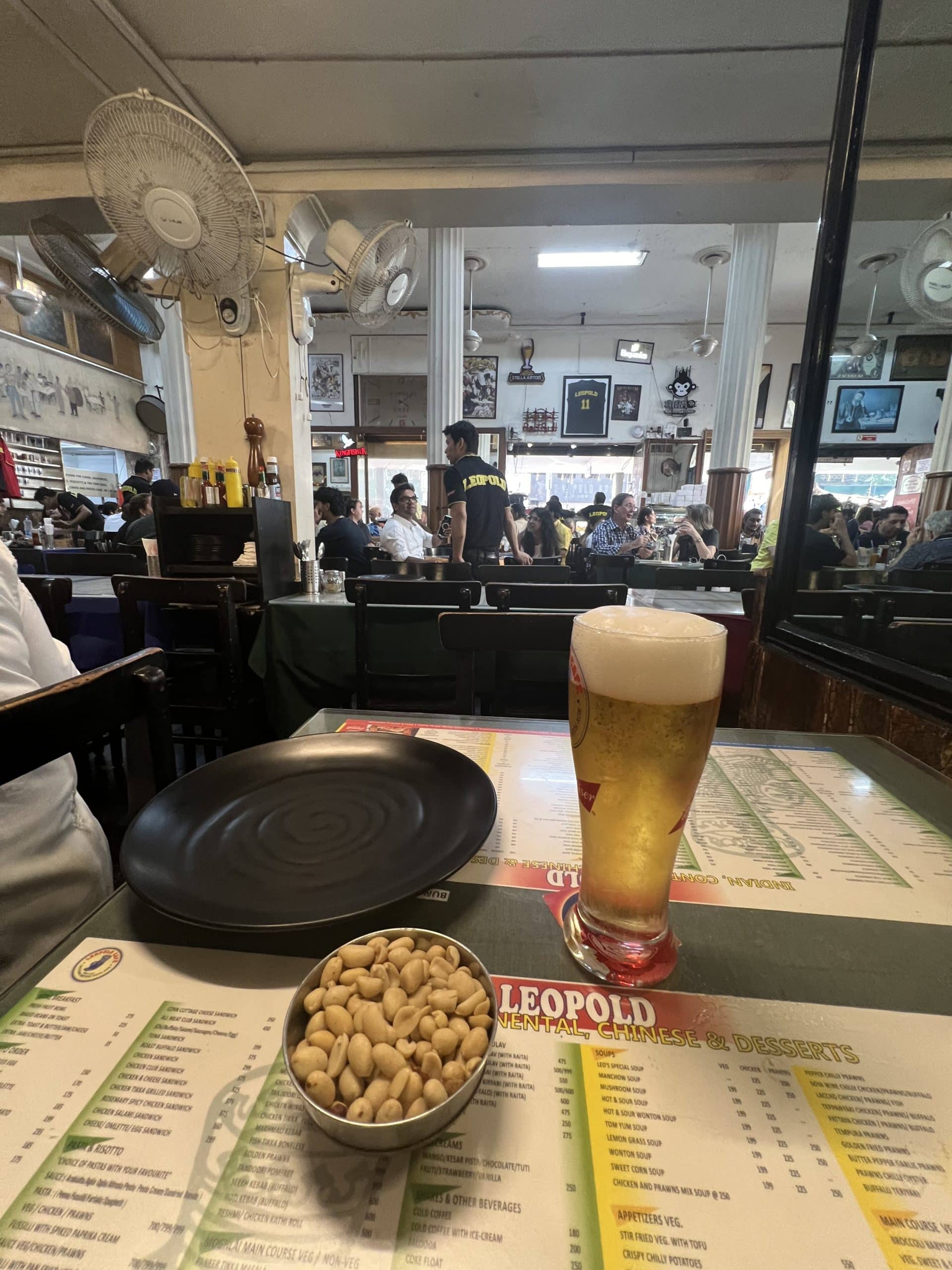
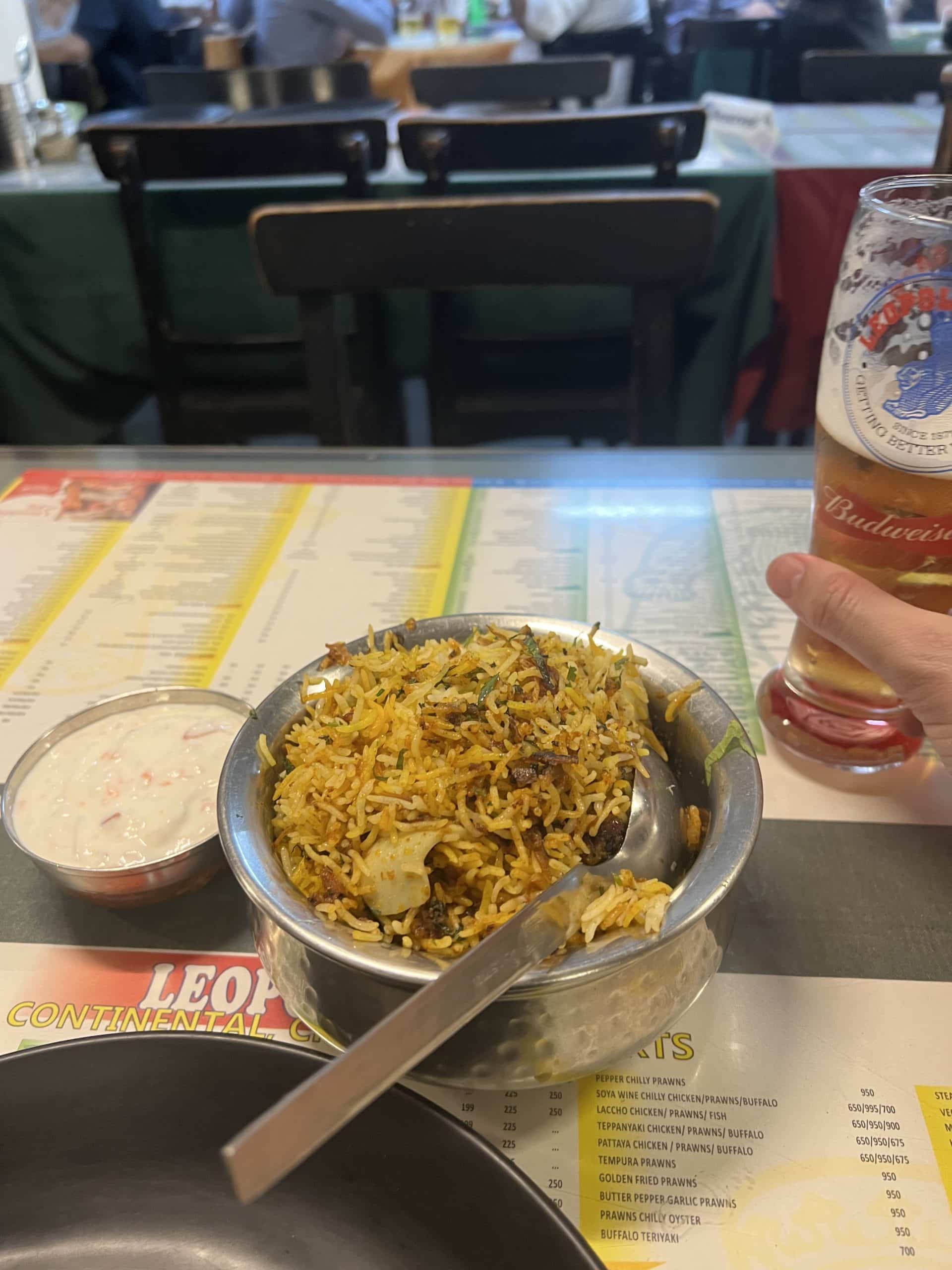
A short walk from the Gateway, on the busy Colaba Causeway, is Leopold Café, and it’s one of my favourite places in the city. It was founded in 1871 by an Iranian family, which makes it one of the oldest cafés in Mumbai. It’s loud, crowded and full of character, with whirring ceiling fans, tables packed with travellers and locals, and a menu that seems to go on forever.

Leopold’s has been famous among travellers for decades, but it was a book that turned it into a legend. In 2003, the Australian writer Gregory David Roberts published Shantaram, a huge novel based loosely on his own life. Roberts was a convicted armed robber who escaped from a maximum-security prison in Melbourne in 1980 and fled to Bombay, as the city was then called, using a false passport. In the novel, his alter ego, Lin, lives in a slum, runs a free medical clinic, falls in with the city’s mafia and even ends up fighting in Afghanistan. Much of the story revolves around Leopold’s, where Lin and his friends meet, drink and plot.
I loved this book so much, and it really underpins my time in Mumbai. I read it shortly after my first trip there, and it took me straight back, in the way only a good book can, to those days exploring a new city on the other side of the world.
If you haven’t read it already, you can find Shantaram here, or wherever books are sold.
How much of the book is true has been debated ever since, and Roberts himself has always described it as a novel rather than a memoir. Either way, it captures the chaos, colour and spirit of Bombay like nothing else I’ve read. It was adapted into a television series starring Charlie Hunnam in 2022, which I haven’t been able to bring myself to watch, because for me, a TV adaptation can ruin the magic of a book. Am I weird for thinking that?
Marine Drive
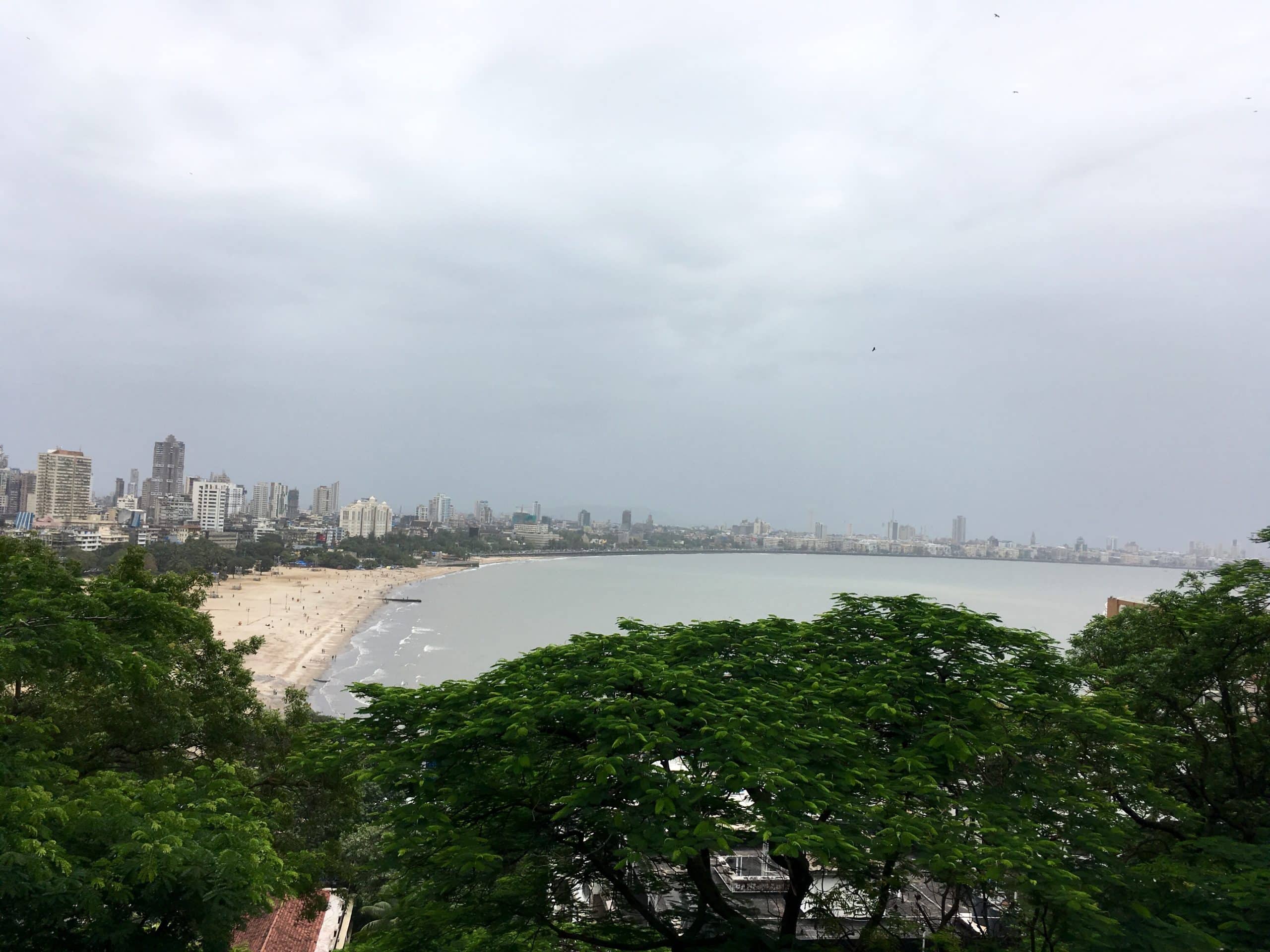
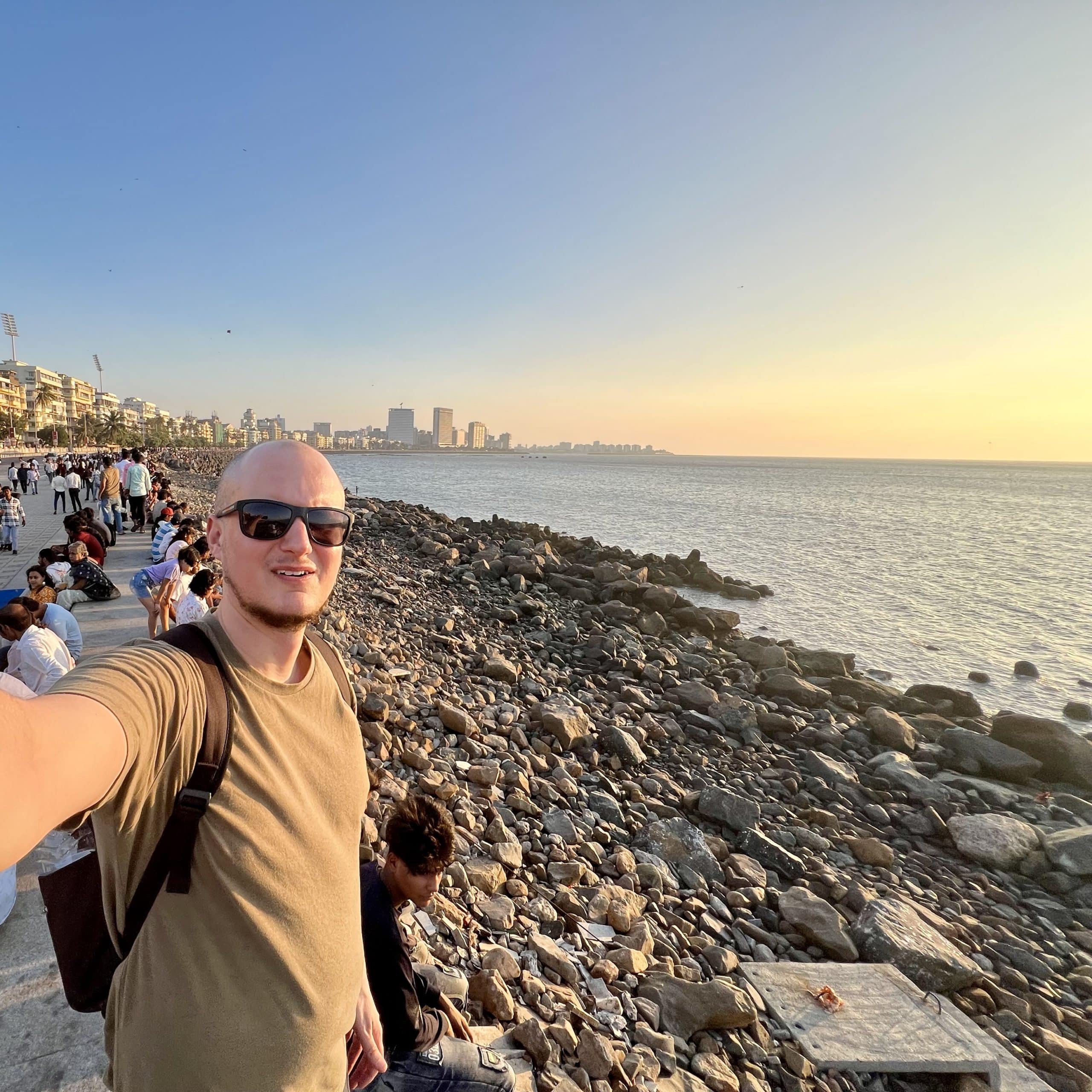
If there’s one place that captures the rhythm of everyday life in Mumbai, it’s Marine Drive. This great sweeping boulevard curves for around three and a half kilometres along the shore of Back Bay, from Nariman Point in the south to Chowpatty Beach at the foot of Malabar Hill. It was built in the early twentieth century on land reclaimed from the sea, and it’s lined with one of the finest collections of Art Deco buildings anywhere in the world. Together with the Victorian Gothic buildings nearby, they were declared a UNESCO World Heritage Site in 2018.
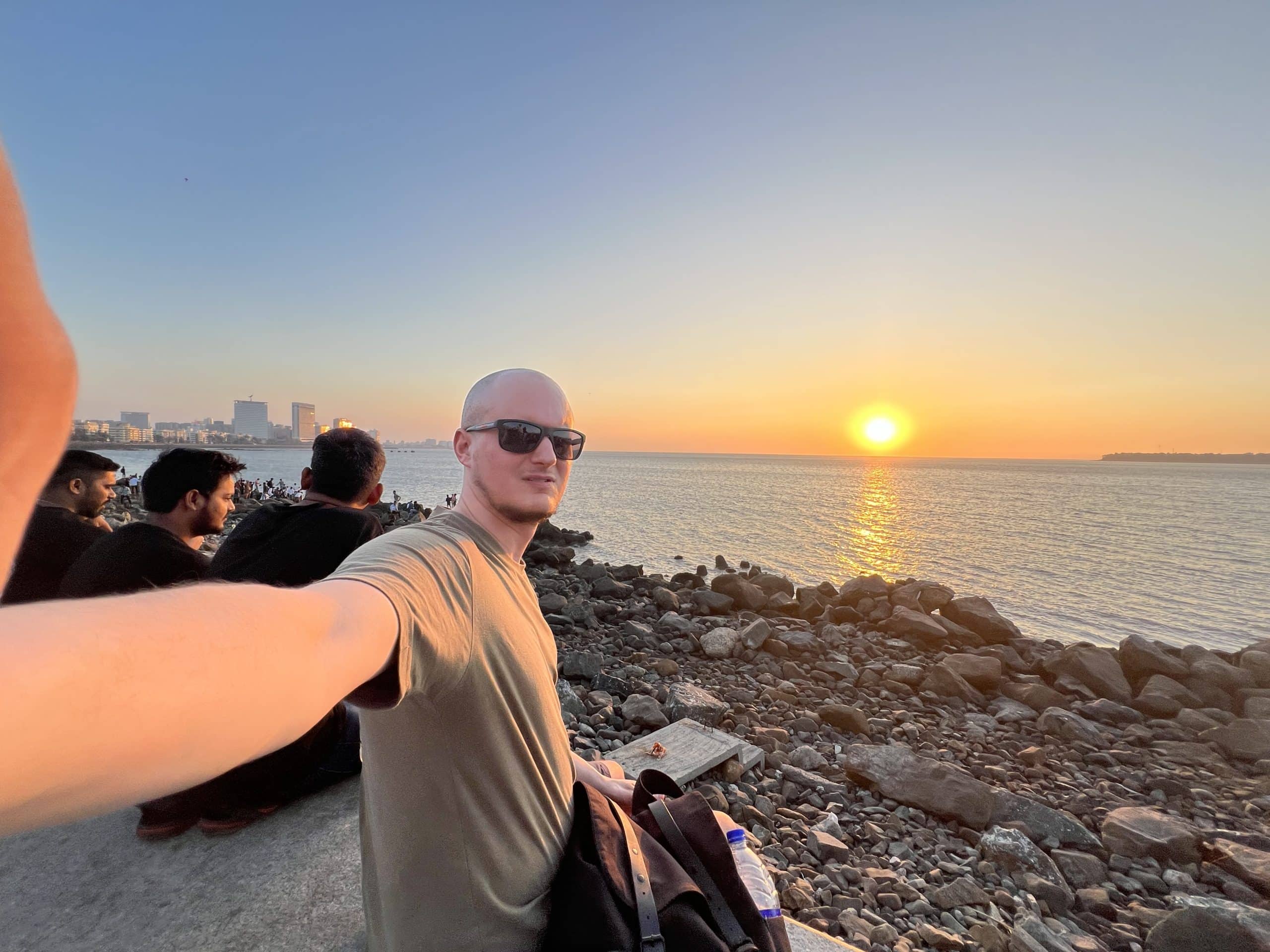
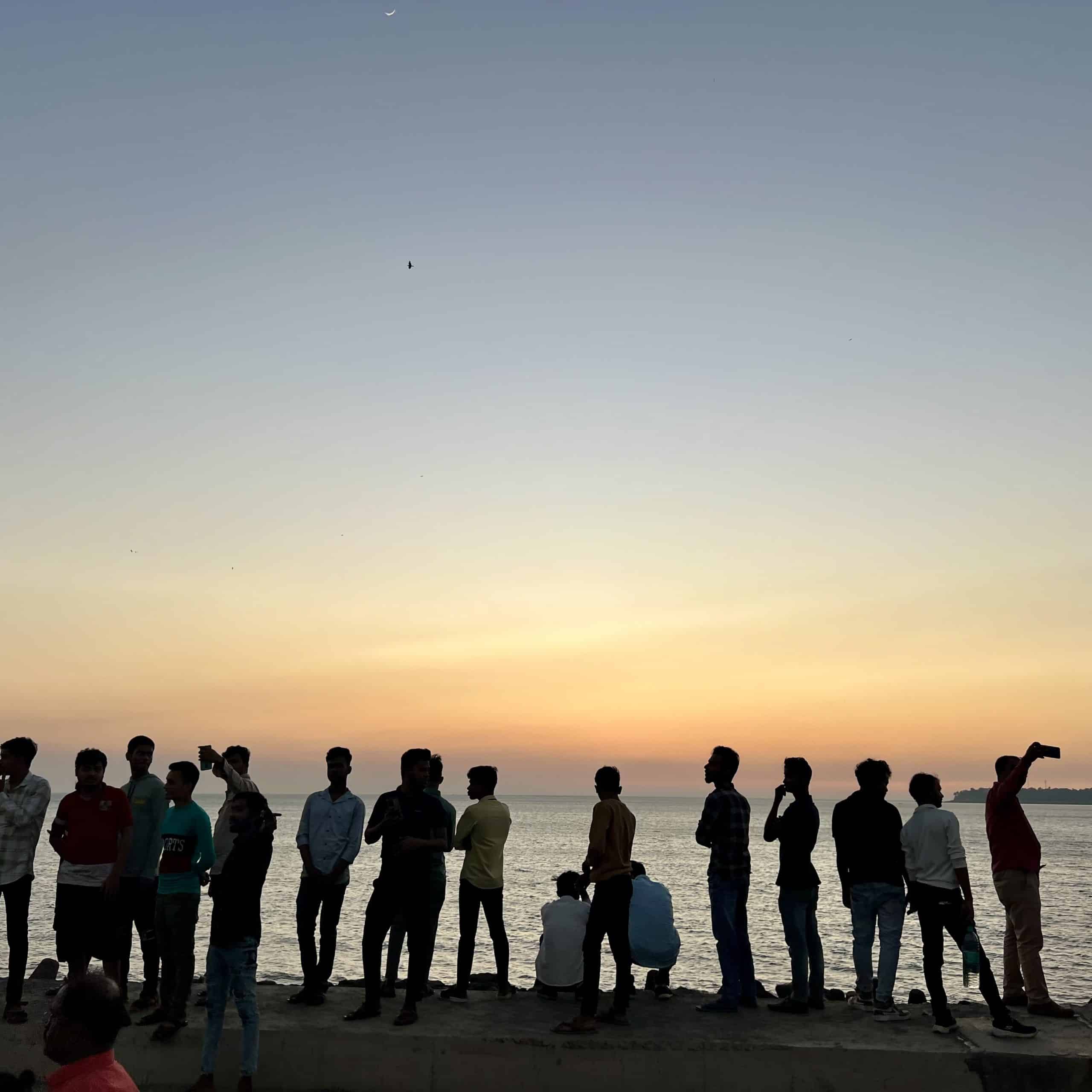
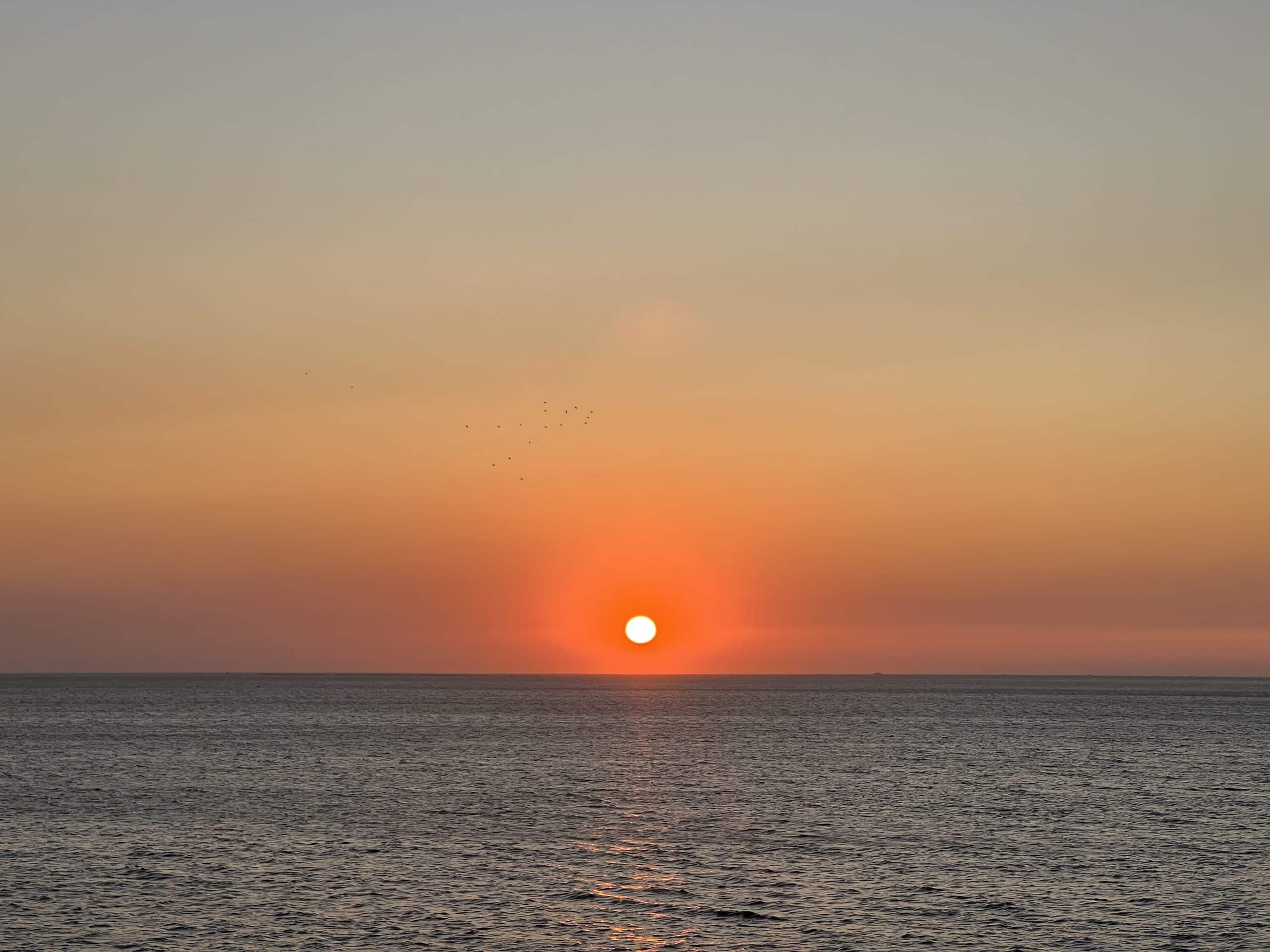
The best time to come is late in the afternoon. As the heat of the day fades, the whole city seems to come out to the sea wall. You’ll see couples sitting side by side watching the waves, families strolling with ice creams, joggers weaving through the crowds, and vendors selling roasted corn and cups of chai. Then, as the sun puts on a dramatic and imposing show over the Arabian Sea and the streetlights flicker on, the curve of the road lights up like a string of pearls. That’s why Marine Drive is known as the Queen’s Necklace.

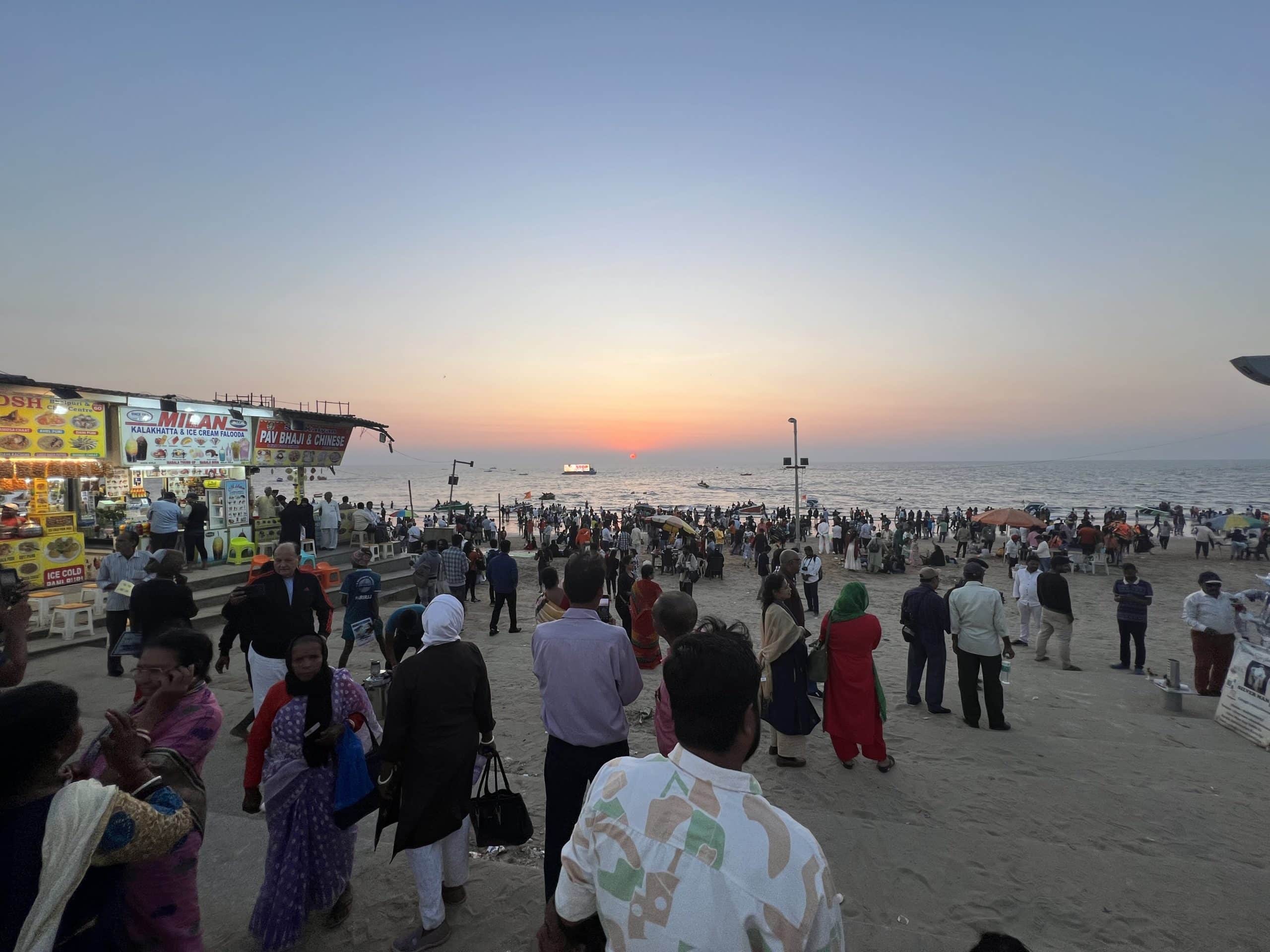
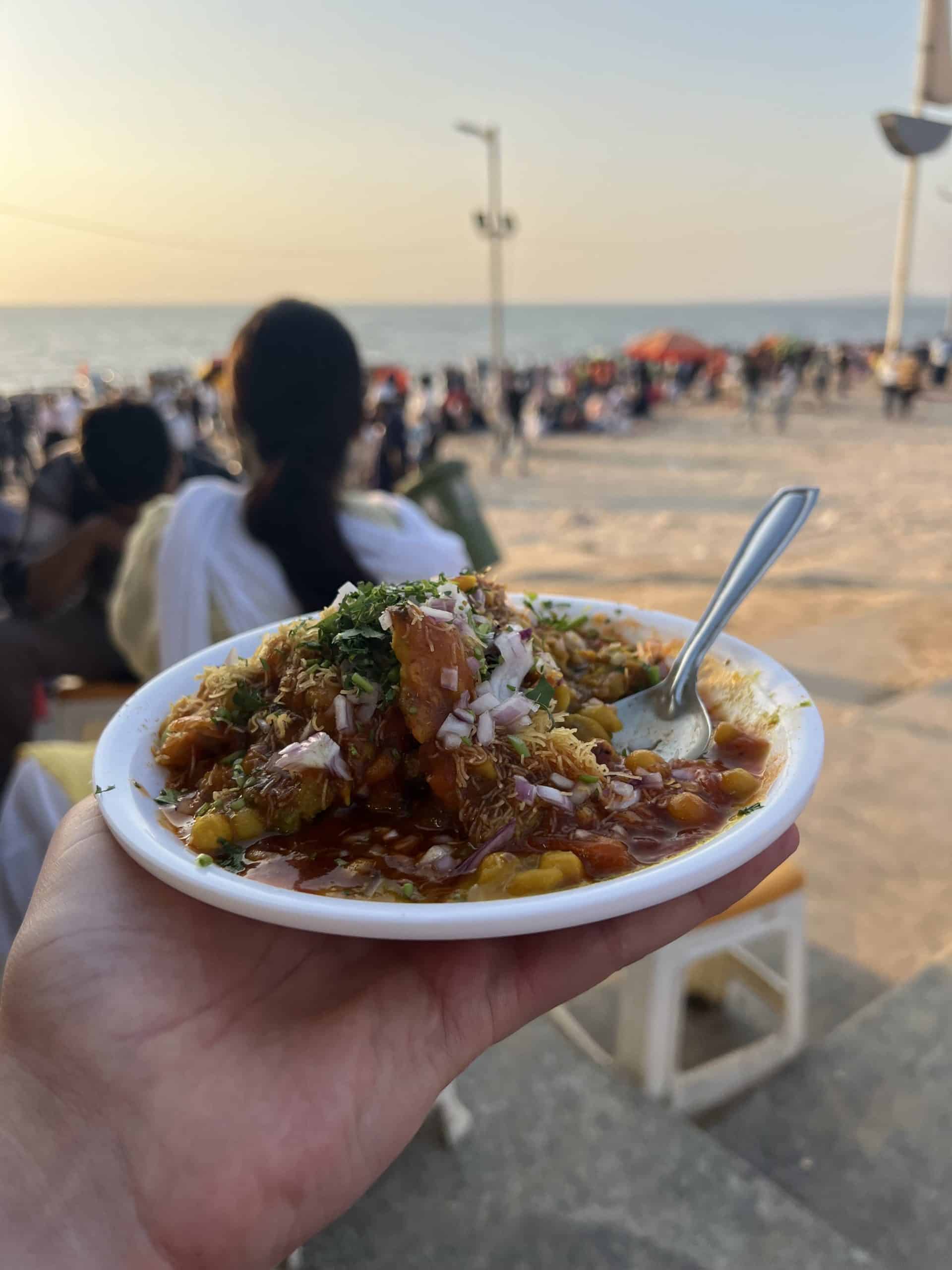
At the northern end, Marine Drive runs into Chowpatty Beach, which is one of the best places in the city to try Mumbai’s famous street food. Grab a plate of pav bhaji or bhel puri from one of the stalls, find a spot on the sand, and watch the city go by.
Haji Ali Dargah
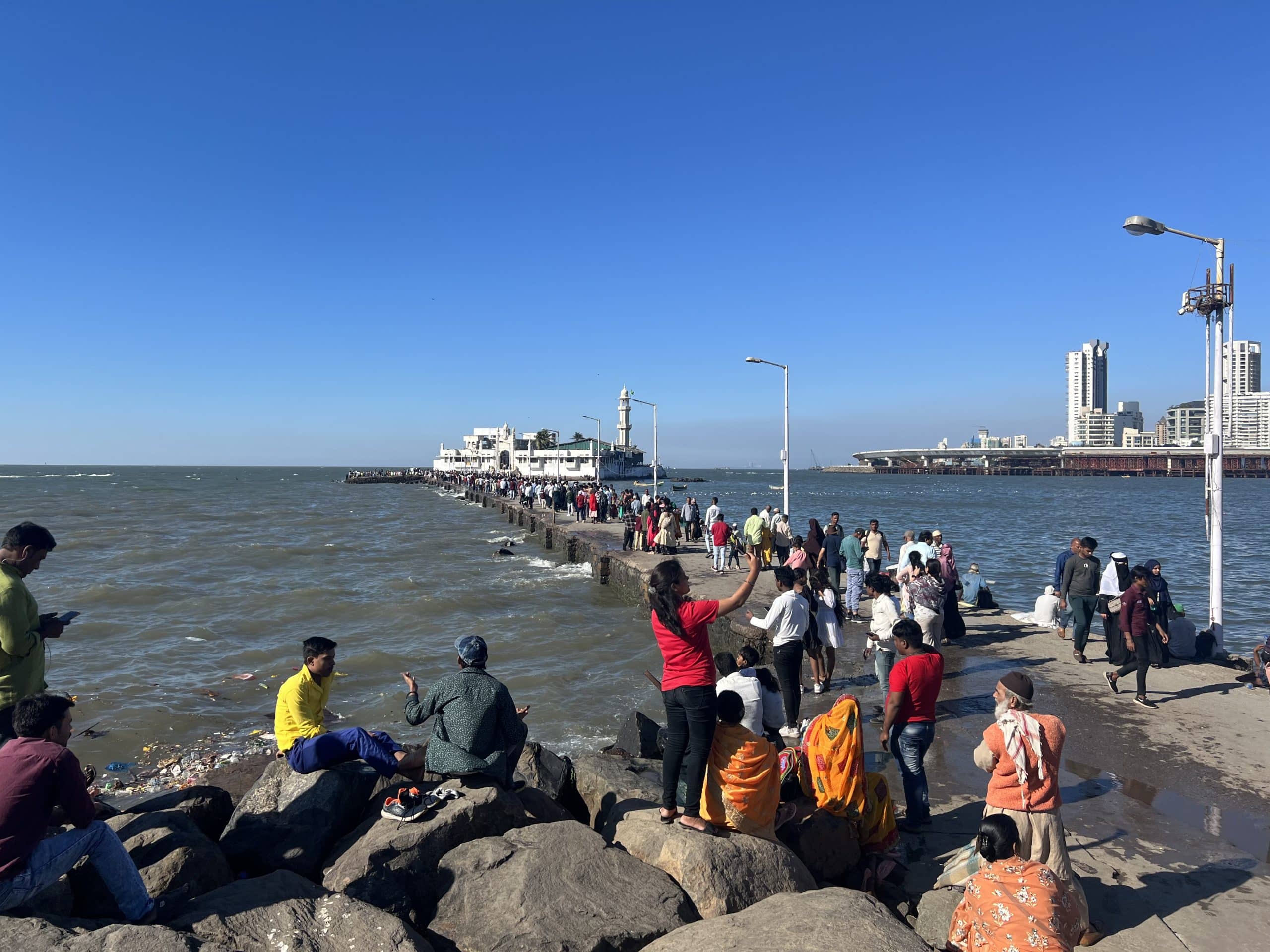
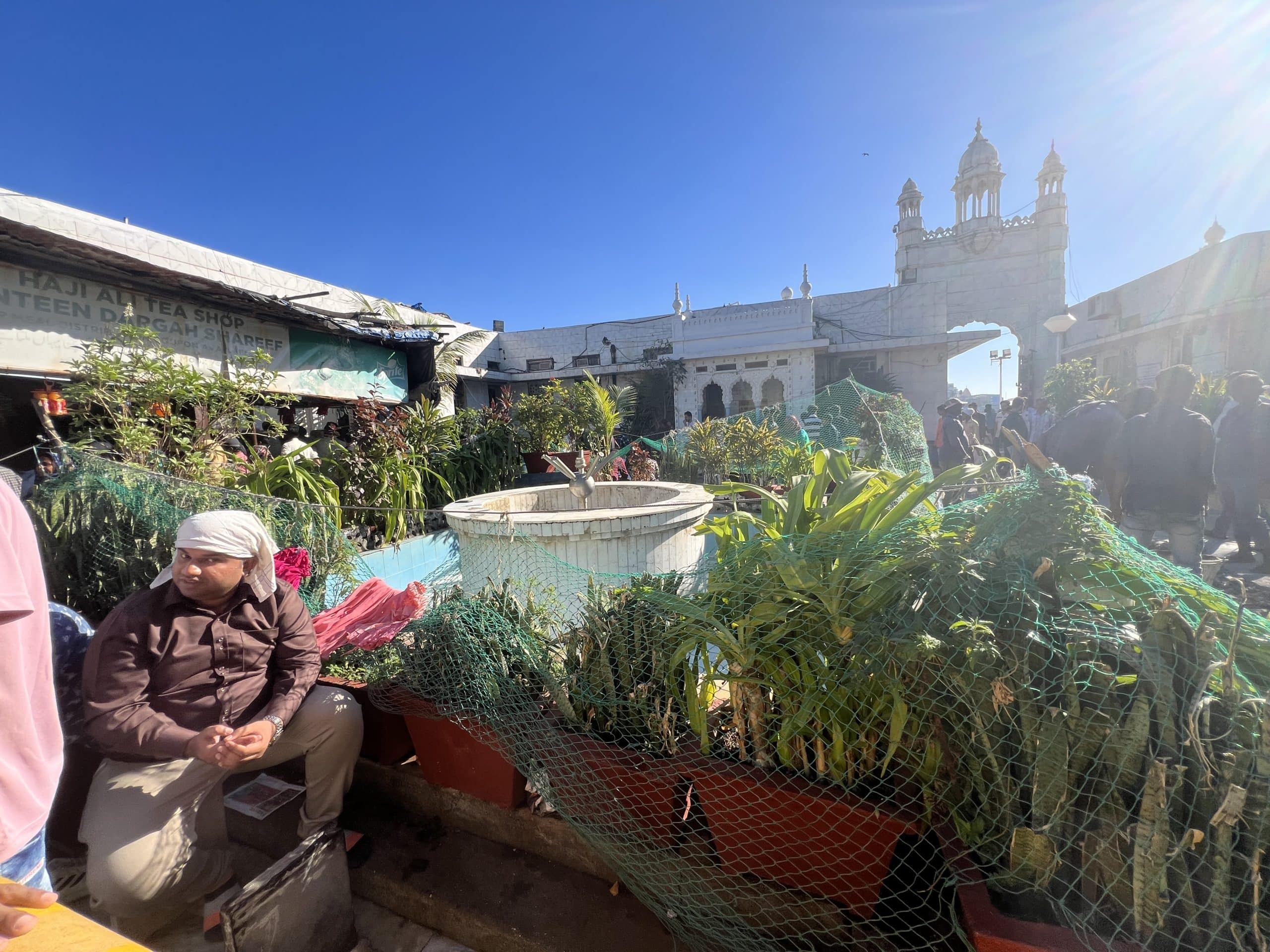
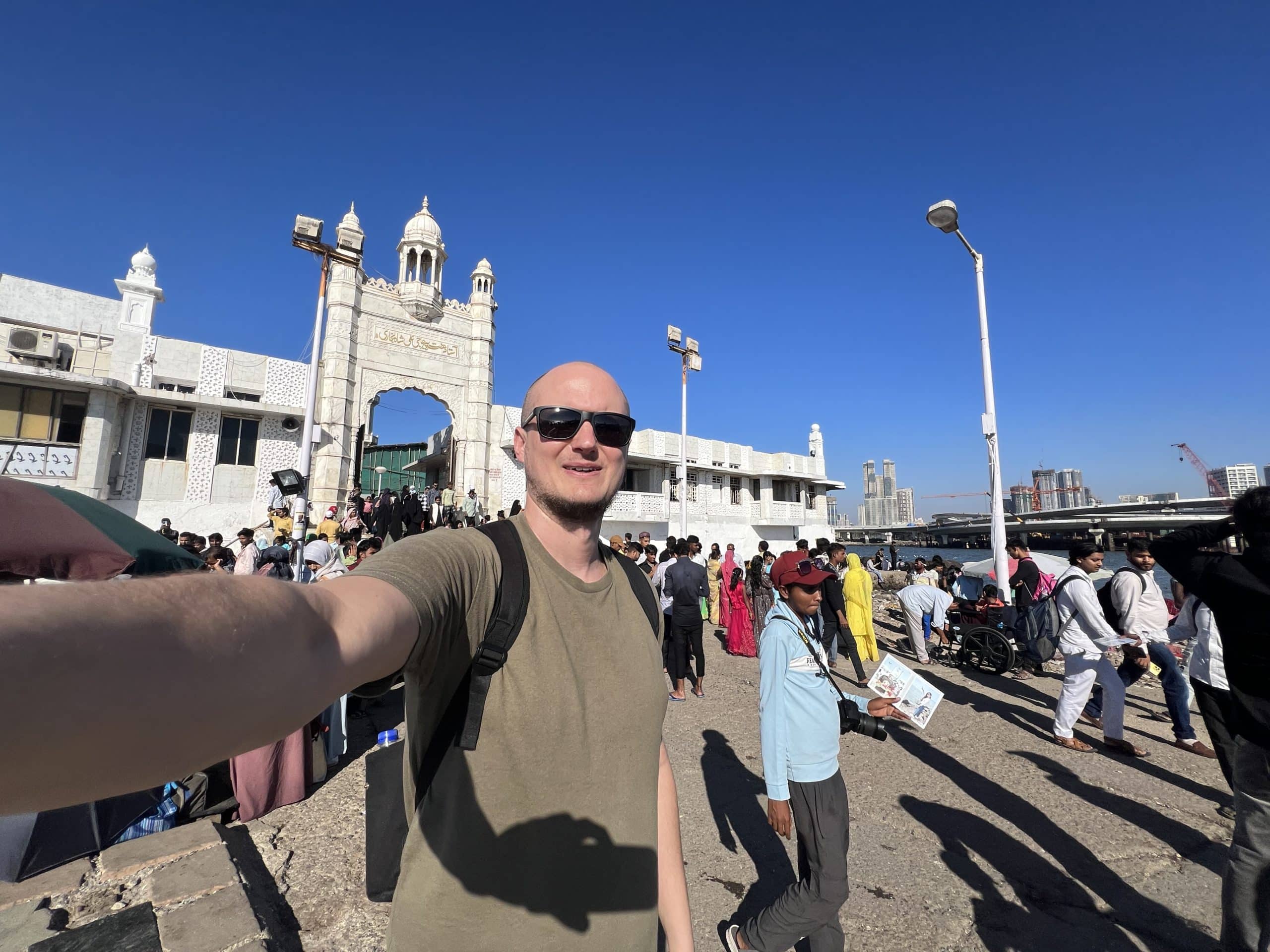
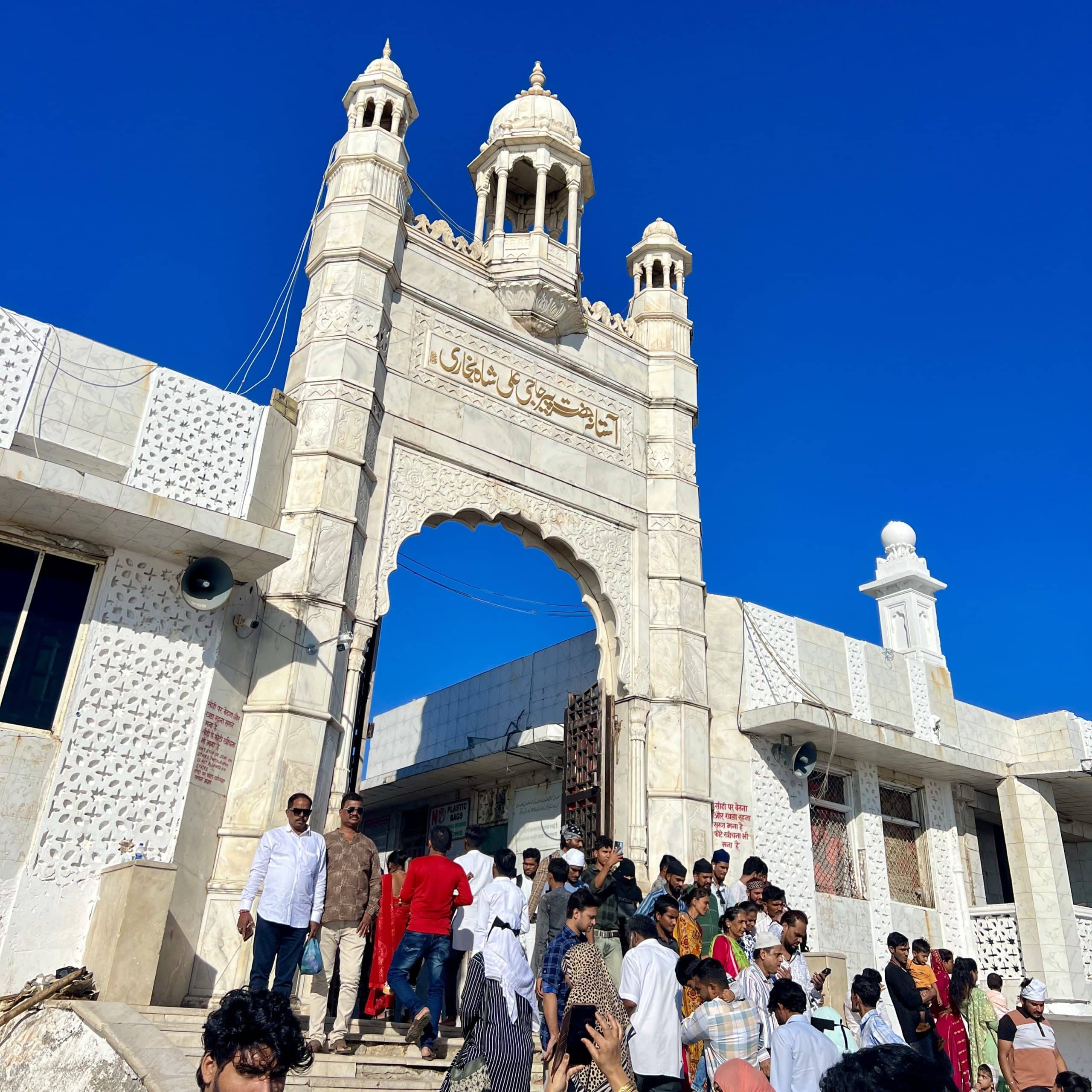
One of the most beautiful sights in Mumbai seems to float on the sea itself. Haji Ali Dargah is a gleaming white mosque and shrine that sits on a tiny rocky islet just off the coast at Worli. A dargah is a shrine built over the tomb of a Muslim saint, and this one is the resting place of Pir Haji Ali Shah Bukhari, a Sufi saint who lived in the fifteenth century.

According to legend, Haji Ali was a wealthy merchant from Bukhara, in what is now Uzbekistan. He gave away all his worldly possessions before setting out on the pilgrimage to Mecca, but he died on the journey. His followers say his coffin miraculously floated all the way back across the sea and came to rest on this very spot, where the shrine was built in his memory. There are other versions of the story, but that’s the one you’ll hear most often, and it’s the kind of legend I love.
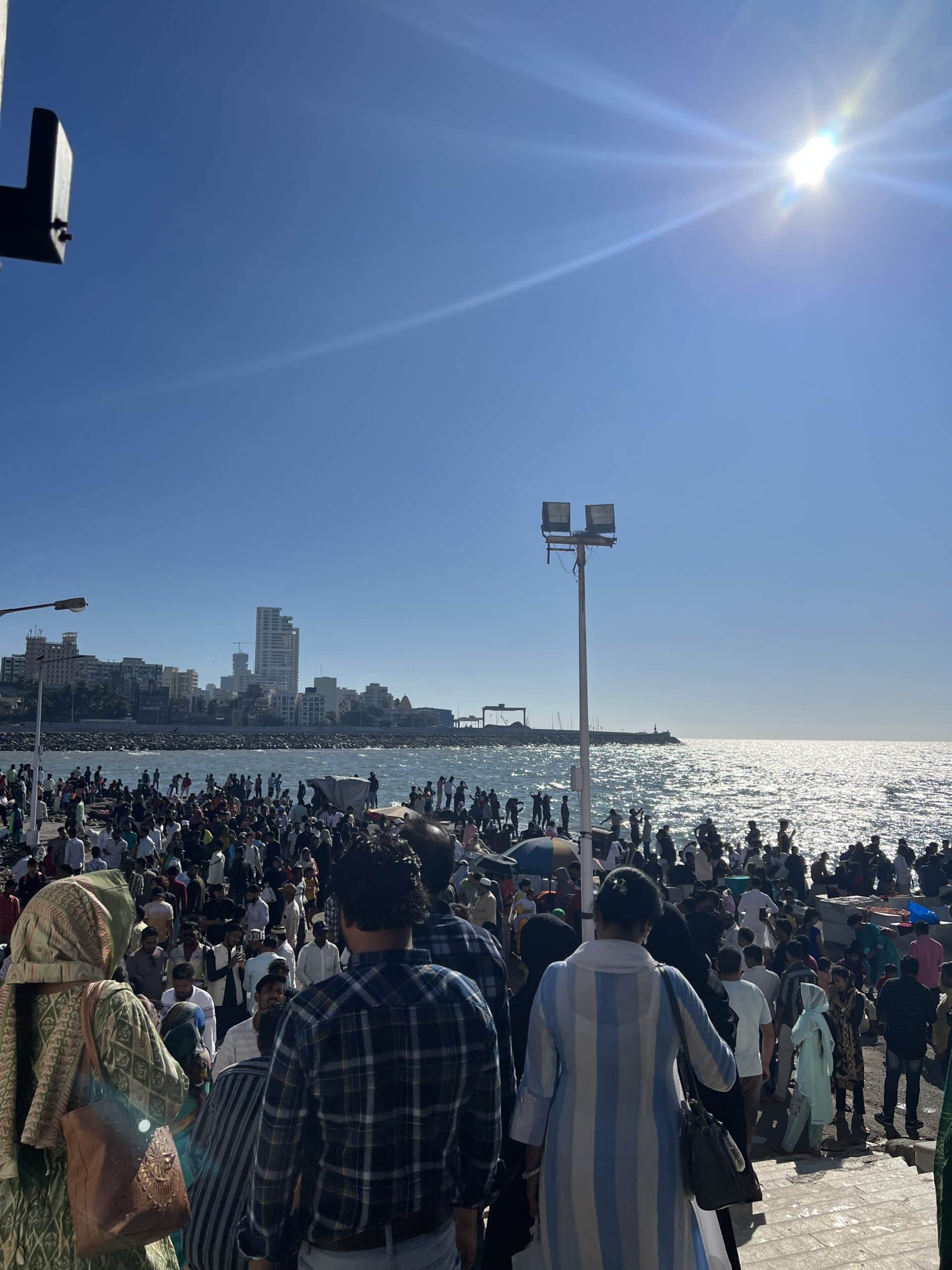
The only way to reach the shrine is along a narrow causeway that stretches out across the water. At high tide, the sea swallows the causeway completely, and the dargah is cut off from the city, so check the tide times before you go. Walking out along the causeway is an experience in itself, with the waves lapping at either side, pilgrims streaming past, and stalls selling flowers, sweets and offerings along the way.

The dargah is open to people of all faiths, and thousands of visitors come every week, especially on Thursdays and Fridays. Inside, the atmosphere is peaceful and devotional, and sometimes you’ll hear qawwali, the soulful devotional music of the Sufis, drifting through the air. Remember to dress modestly and cover your head before you go in.
Bandra Fort
Up in Bandra West, perched on a rocky headland where the land meets the Arabian Sea, are the ruins of Bandra Fort. Its original name was Castella de Aguada, which means “Fort of the Waterpoint”. The Portuguese built it in 1640 as a watchtower guarding the entrance to Mahim Bay, and it took its name from a freshwater spring nearby, where passing ships would stop to fill up with water.
At the time, Bandra was a Portuguese stronghold, even after the islands of Bombay passed to the British. In 1739, the Marathas swept through the area and drove the Portuguese out. The British, fearing that the fort would fall into Maratha hands, partially demolished it. What remains today is a crumbling but atmospheric collection of stone walls, steps and terraces, which have been restored and landscaped into a peaceful little park.
The real draw, though, is the view. From the top of the old walls, you can look out across the sea to the Bandra–Worli Sea Link, a huge cable-stayed bridge that sweeps across the bay towards the city. It’s a wonderful contrast, with a seventeenth-century fort on one side and modern Mumbai on the other. In the late afternoon, the fort is a favourite spot for local couples, and it makes a lovely place to sit and watch the waves crashing on the rocks below.

Juhu Beach
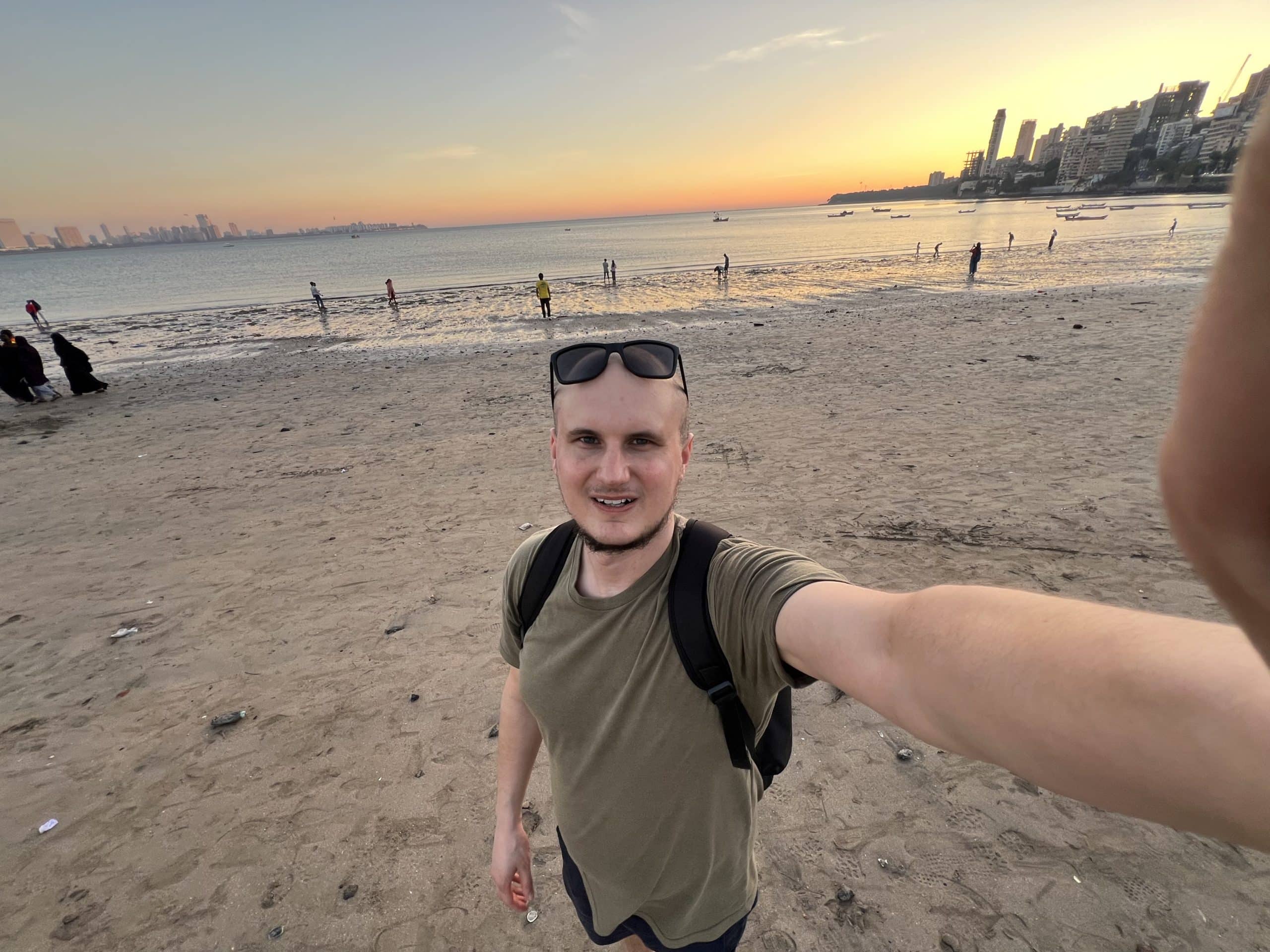
A short drive north of Bandra, an evening spent at Juhu Beach is always a highlight of my trip. It’s a long, wide stretch of golden sand facing the Arabian Sea. Unlike much of Mumbai, it feels open and spacious, and you can breathe a little here.

What I loved most about Juhu is that it belongs to the people of Mumbai. You’ll see very few tourists. Instead, the beach is full of local families, groups of friends and couples, all enjoying the sea breeze after the heat of the day. Children fly kites and play cricket on the sand, vendors wander up and down selling balloons and toys, and everyone seems to be in a holiday mood.
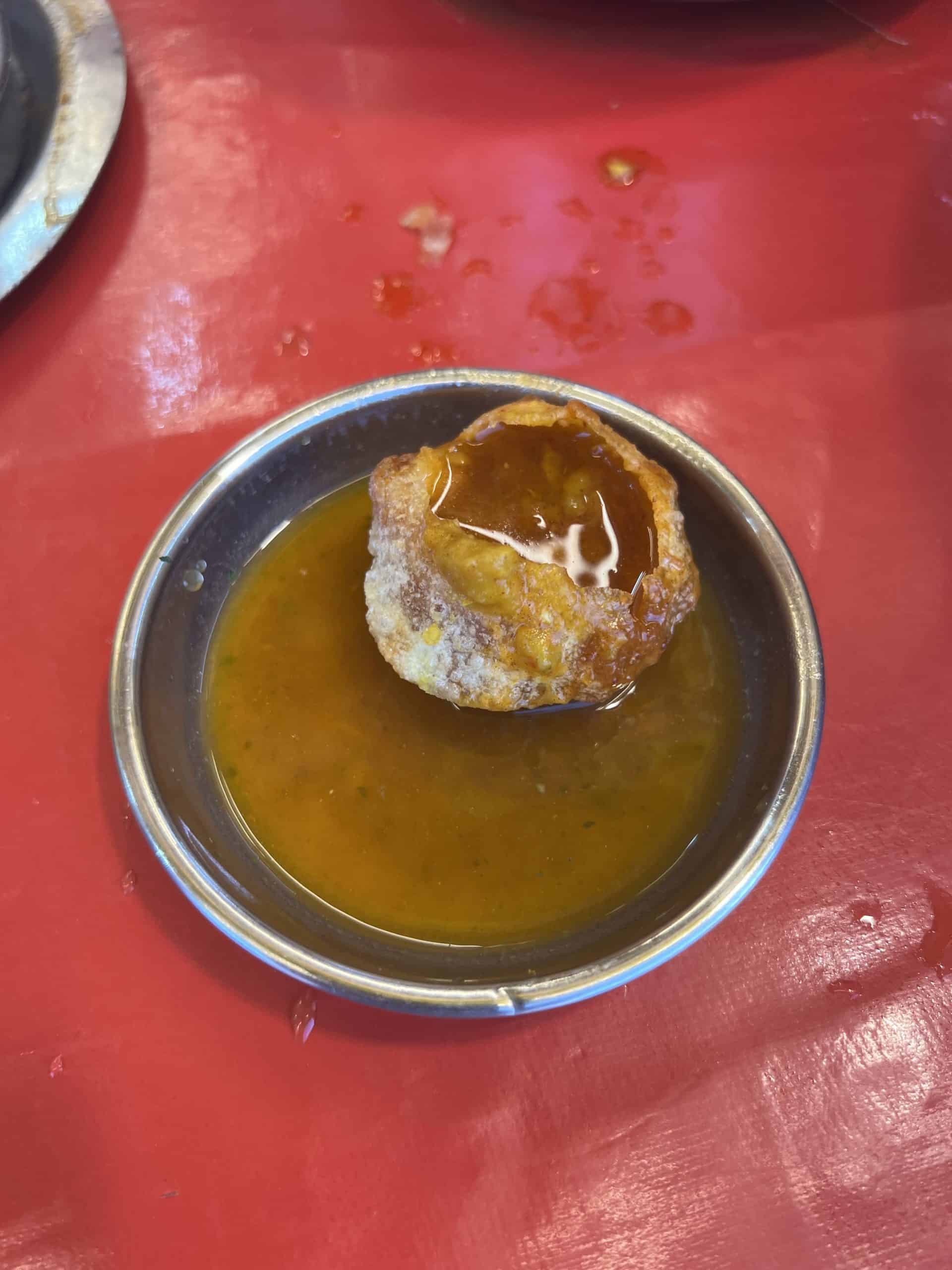
Along the edge of the beach, there’s a long row of food stalls, and this is one of the best places in the city to try Mumbai’s street food. I made one vendor laugh with my complete inability to eat pani puri, and I made a right mess of myself in the process.

But the real reason to come to Juhu is the sunset. As evening falls, the whole beach turns to face the sea, and the sky blazes in shades of orange, pink and gold as the sun sinks slowly into the Arabian Sea. It’s one of the most beautiful sunsets I’ve seen anywhere in India.
The Only Way to Leave Mumbai: Chhatrapati Shivaji Maharaj Terminus
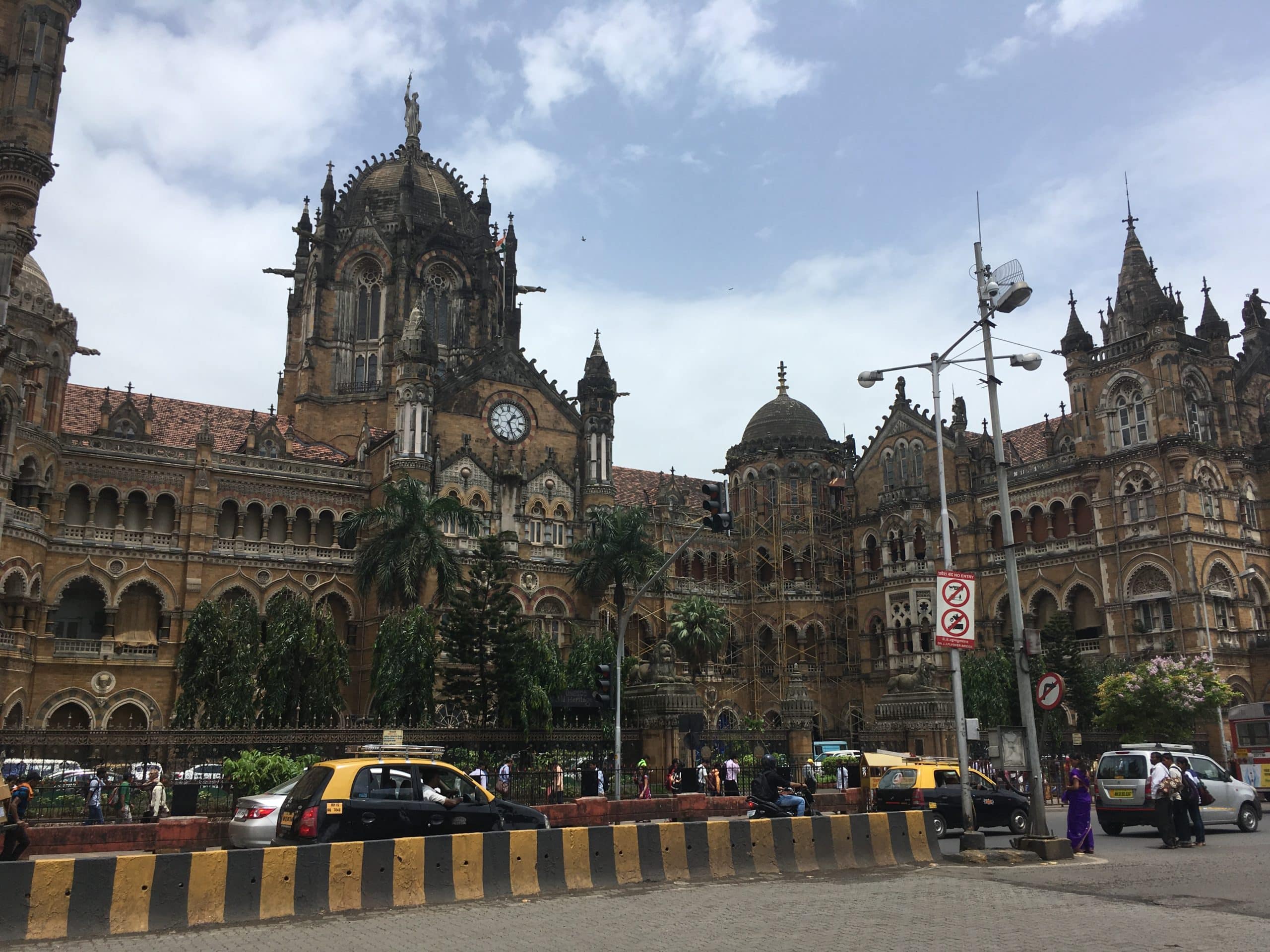
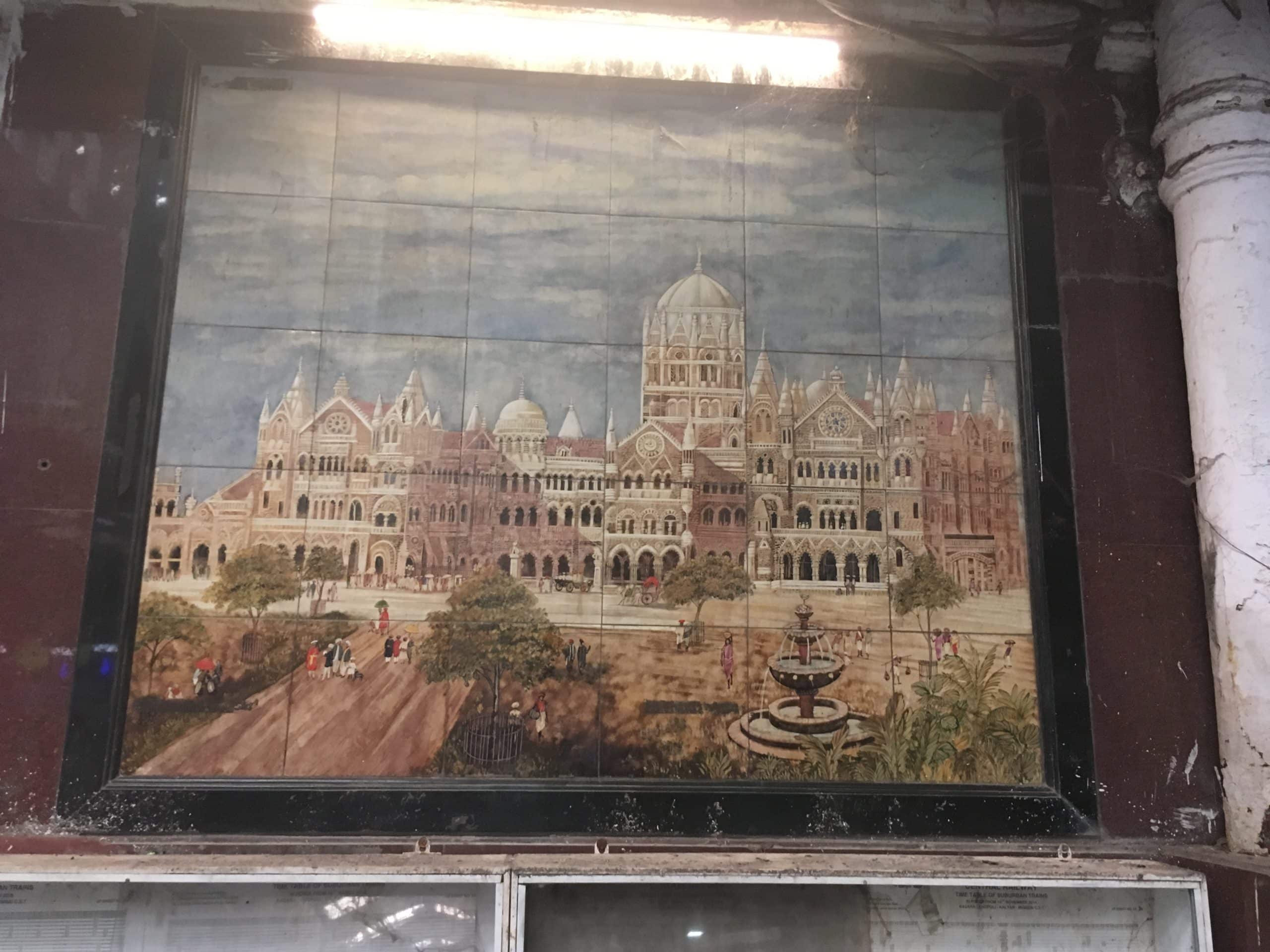
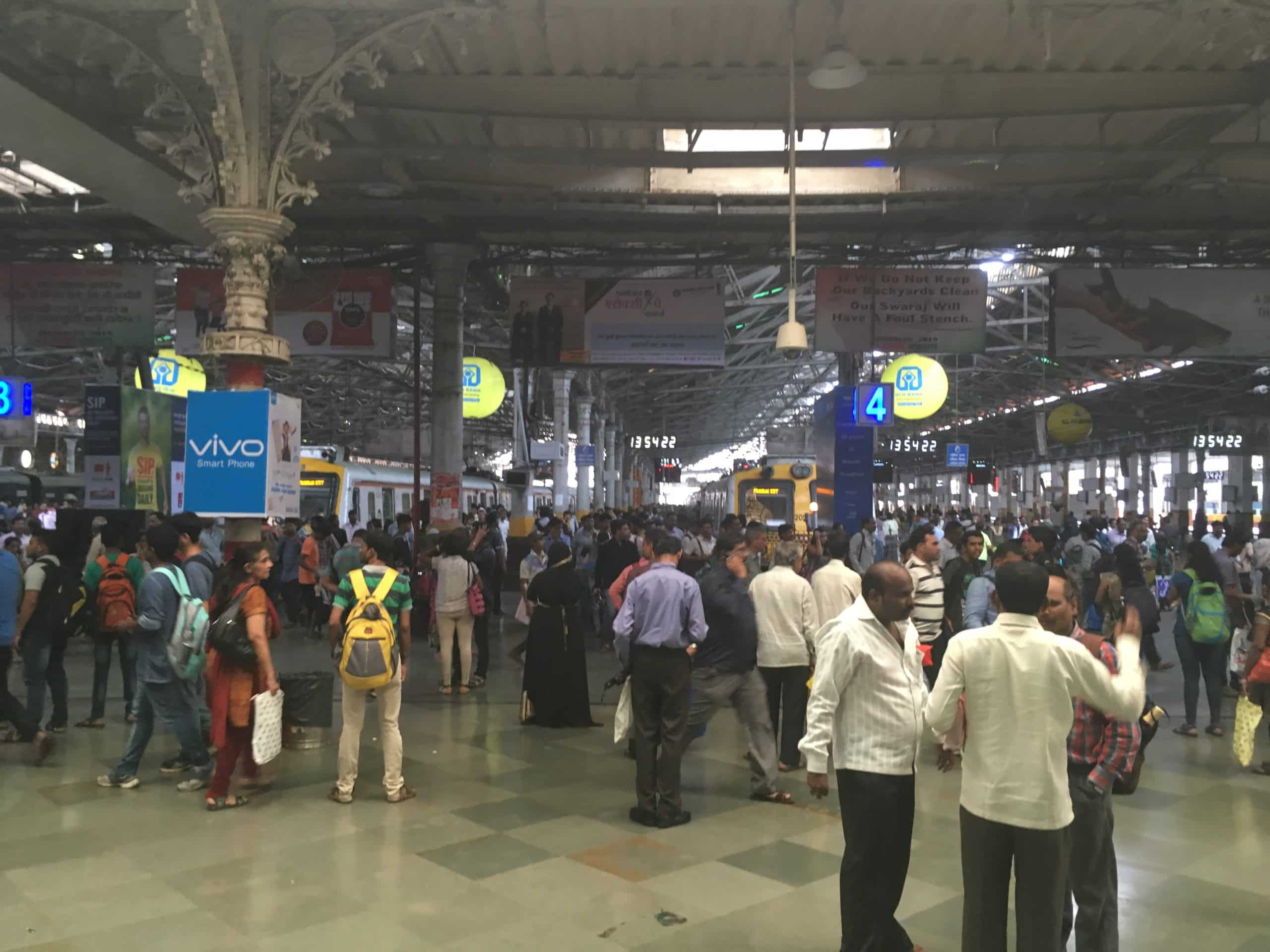
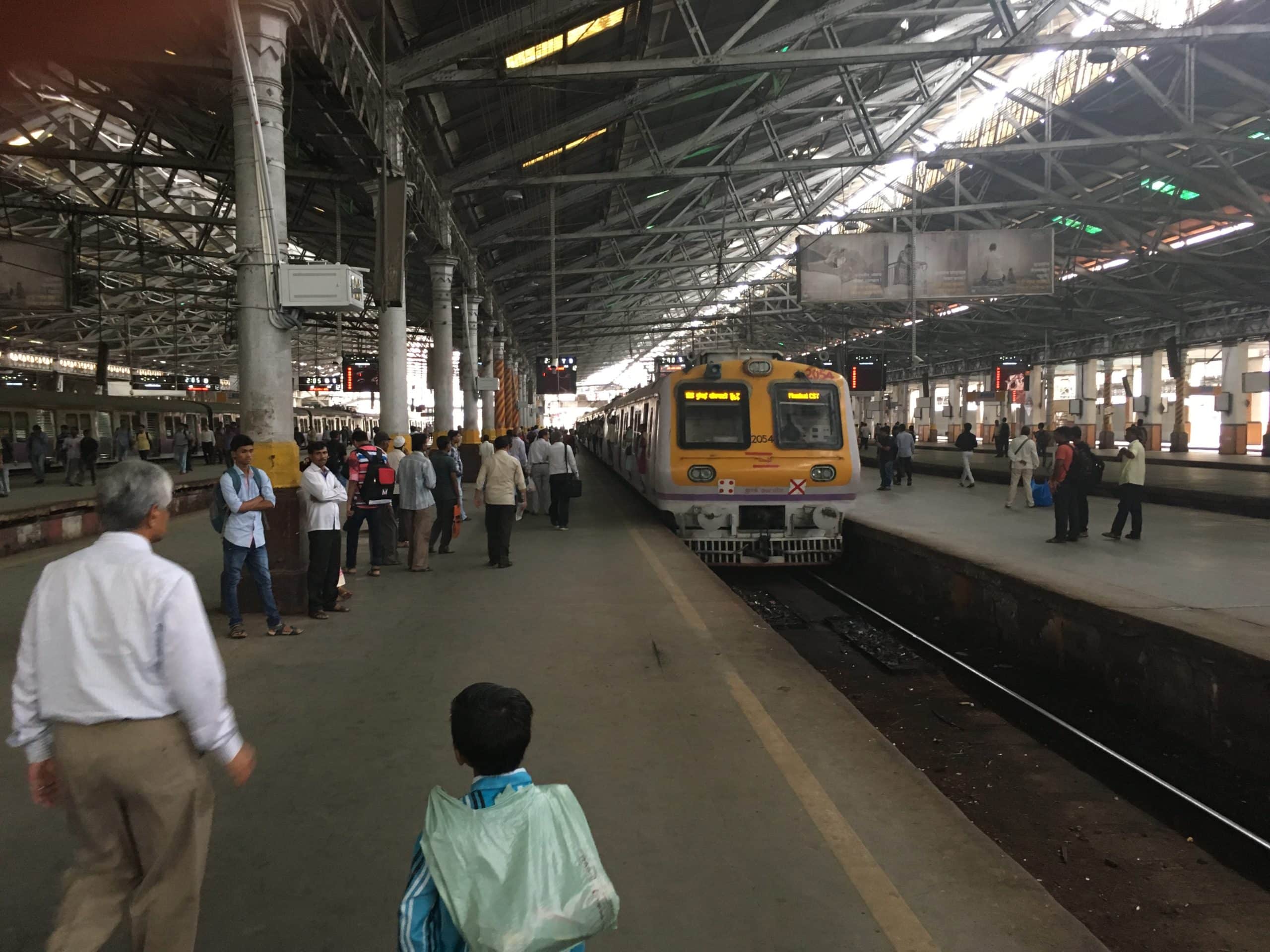
The only way to leave Mumbai in style is by train from Chhatrapati Shivaji Maharaj Terminus. It’s quite a mouthful, so most people still call it by its old name, Victoria Terminus, or simply CST. It isn’t just a railway station. It’s one of the most spectacular buildings in India, and walking through its doors to catch a train feels like stepping back into the age of steam.

The station was designed by the British architect Frederick William Stevens and took ten years to build. It was completed in 1888 and named after Queen Victoria, whose Golden Jubilee had been celebrated the year before. Stevens took the Victorian Gothic style that was fashionable in Britain at the time and blended it with traditional Indian architecture, and the result looks more like a cathedral than a railway station. There are pointed arches, stained-glass windows, turrets and a great central dome topped by a statue representing Progress. Look closely at the stonework and you’ll spot carved peacocks, monkeys, lions and gargoyles peering down at the crowds below. In 2004, it was declared a UNESCO World Heritage Site.
The station also stands on an important piece of history. In 1853, the very first passenger train in India left from Bori Bunder, on this spot, and travelled to Thane, around 34 kilometres away. Since then, Mumbai’s railways have become the lifeblood of the city. Millions of commuters ride the suburban trains every single day, and at rush hour, the station is a heaving sea of people, with passengers squeezing on and off the packed carriages before they’ve even stopped moving.

It was renamed in 1996 in honour of Chhatrapati Shivaji, the seventeenth-century Maratha warrior king, and the word “Maharaj” was added in 2017.
On my last trip, in 2024, I left Mumbai for Goa from here. As the train pulled out of the station and the city slipped away behind me, I couldn’t think of a better way to say goodbye.