In the summer of 2012, a librarian in Mali received a message that would change his life. The city of Timbuktu had fallen to jihadist militants allied to al-Qaeda, and the ancient manuscripts in his care — hundreds of thousands of them, some dating back to the 11th century — were in mortal danger.
His name was Abdel Kader Haidara. He was a book collector and librarian, not a soldier or a spy. What he did next is one of the most remarkable rescue stories of the modern age — and almost nobody has heard of it.
To understand why this matters, you have to understand what Timbuktu once was — and what the world stands to lose if its libraries are destroyed.
Between the 13th and 17th centuries, Timbuktu was one of the great intellectual centres of the world. At its peak, the Islamic Sankore University hosted 25,000 students, a quarter of the city’s entire population. Scholars arrived from Moorish Spain, Persia, and Egypt to study and teach. The curriculum covered not only religious studies but astronomy, mathematics, medicine, and law. Books were status symbols more coveted than gold — wealthy families measured their importance by the size of their libraries, and the book trade was the most important commerce in the city.
There is a West African proverb that captures it perfectly: Salt comes from the north, gold from the south, and silver from the country of the white men — but the word of God and the treasures of wisdom are only to be found in Timbuktu.
Despite the many dangers posed by fire, floods, insects, and pillaging across the centuries, some one million manuscripts have survived from the northern fringes of Guinea and Ghana to the shores of the Mediterranean. National Geographic estimated that 700,000 manuscripts have survived in Timbuktu alone. Some dating back to the 11th century, they cover medicine, astronomy, mathematics, law, literature, and theology — proof that African societies were documenting, debating, and disseminating knowledge centuries before any contact with the Western world. Most of these manuscripts have never been fully studied. Most have never been translated. The question of what knowledge they contain is one that nobody can yet fully answer.
In 2012, all of it was at risk.
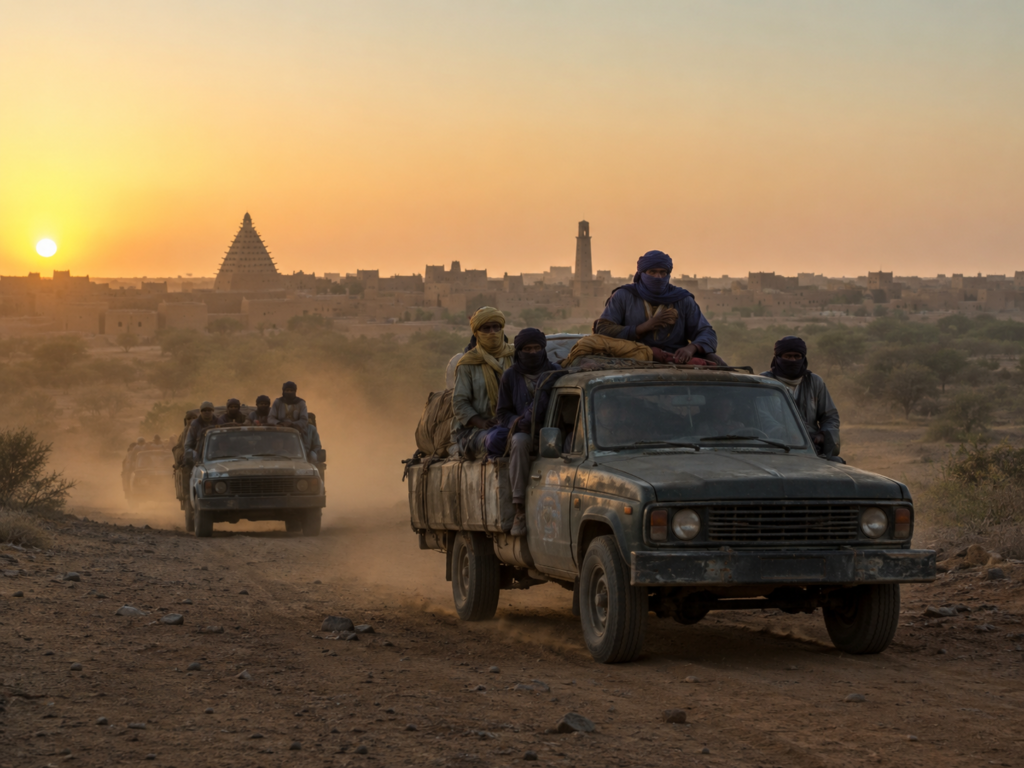
In April of that year, Haidara returned from a business trip to find his city transformed overnight. Terrorist groups had seized northern Mali and launched a systematic effort to destroy anything they viewed as forbidden according to their harsh interpretation of Islamic practices. Music was banned. Ancient shrines were demolished with sledgehammers. Black jihadist flags flew from government buildings. The police, the army, and most ordinary citizens had fled.
Haidara stayed. He kept the library open, moving quietly through occupied streets, trying not to draw attention. But he understood what was coming. The manuscripts — with their celebrations of intellectual inquiry, their poetry and philosophy, their tolerant and cosmopolitan vision of Islam — were exactly the kind of thing these militants wanted erased from history.
He had to get them out.
What followed was an operation of extraordinary ingenuity and courage. Haidara, working from self-imposed exile in Bamako, coordinated a network of volunteers still inside Timbuktu, directing them remotely by phone as they risked their lives.
Night after night, his team quietly packed ancient works of astronomy, poetry, history, and jurisprudence into metal chests, then spirited them out of the library in mule carts and 4x4s to safe houses scattered around the city. When they had bought every metal trunk available in Timbuktu, they sourced more from markets further south. When those ran out, they purchased oil drums and had a craftsman hammer them into containers. Danger lurked at every step of the operation. AQIM operatives stopped, searched, and arrested couriers. Bandits captured a boat full of books on the Niger River and held it for ransom. Malian government soldiers broke open trunks full of manuscripts searching for weapons, roughly pawing through volumes that had survived five centuries.
In one incident, Haidara’s nephew — acting as a courier on the ground — was arrested by the Islamic police and held for 24 hours before being released. In another, during the French military intervention of January 2013 that eventually drove the militants from northern Mali, a French helicopter nearly fired missiles at a boat bringing manuscripts downriver — the pilots suspected the team were smuggling guns.
They were smuggling something infinitely more precious.
By the end of February 2013, Haidara had succeeded in evacuating nearly every manuscript from 45 libraries to safety. The only casualties were 4,200 manuscripts burned to ashes in a bonfire set by militants at the Ahmed Baba Institute just minutes before they fled the city ahead of the French invasion. More than 95 percent of Timbuktu’s literary heritage had been saved.
The story was later told in Joshua Hammer’s book The Bad-Ass Librarians of Timbuktu — one of the most extraordinary true adventure stories of the modern era.
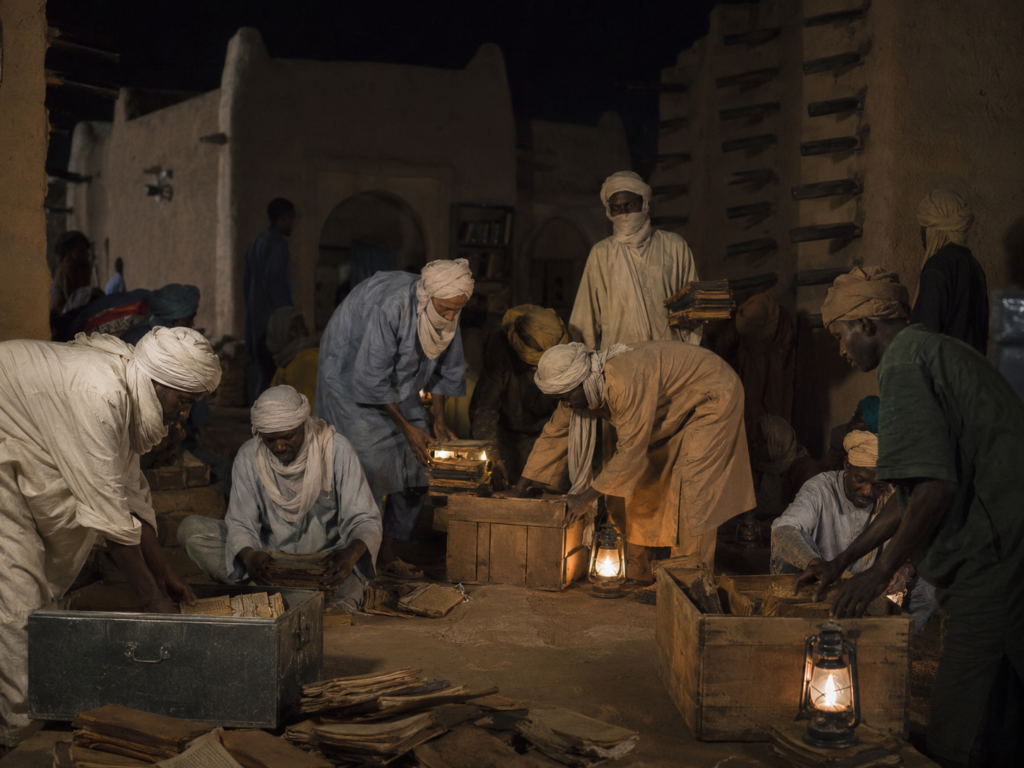
The fact that there were hundreds of thousands of manuscripts left to rescue in the first place is itself a remarkable story. Unlike other great Islamic centres such as Cairo or Fez, which maintained large public libraries, Timbuktu operated on a family-based system where manuscripts were passed down through generations like precious heirlooms. This might seem counterintuitive for a centre of learning, but it proved to be an accidental stroke of genius — a medieval distributed backup system. When conquerors came, they could not march into a single building and destroy everything in one move. The knowledge was scattered across hundreds of private homes, guarded by families who understood exactly what they held.
Some manuscripts bear an inscription on their opening pages: This book may not be shared as inheritance or sold. Families swore publicly to protect their collections for as long as they lived. Generation after generation kept their word. It is because of them — and because of Abdel Kader Haidara — that these manuscripts still exist.
Here is what keeps me thinking about this story long after I first heard it. The total number of surviving manuscripts is unknown, affording only rough estimates. Most remain unstudied and uncatalogued. Digitisation projects are underway — the Hill Museum and Manuscript Library in Minnesota has photographed more than 150,000 documents — but the work is vast, the resources are limited, and many families in Timbuktu still guard their collections too closely to allow outside access, wary after centuries of colonial pillaging.
What might be in those unread pages? Mathematical discoveries that predated Europe by centuries? Medical knowledge still waiting to be understood? Historical accounts of civilisations we know almost nothing about? Nobody can say. The greatest library in Africa was saved from destruction by a librarian with mule carts and metal trunks. What it contains may yet change what we know about the world.
As author Dave Bartel put it when we spoke on the Adventure Story Podcast — and it was his mention of Timbuktu that sent me down this particular rabbit hole: “Ancient knowledge is lost — most everything ever written is gone. But some of it might still be there.”
I told him I’d join him on an expedition to find it. That offer absolutely stands.
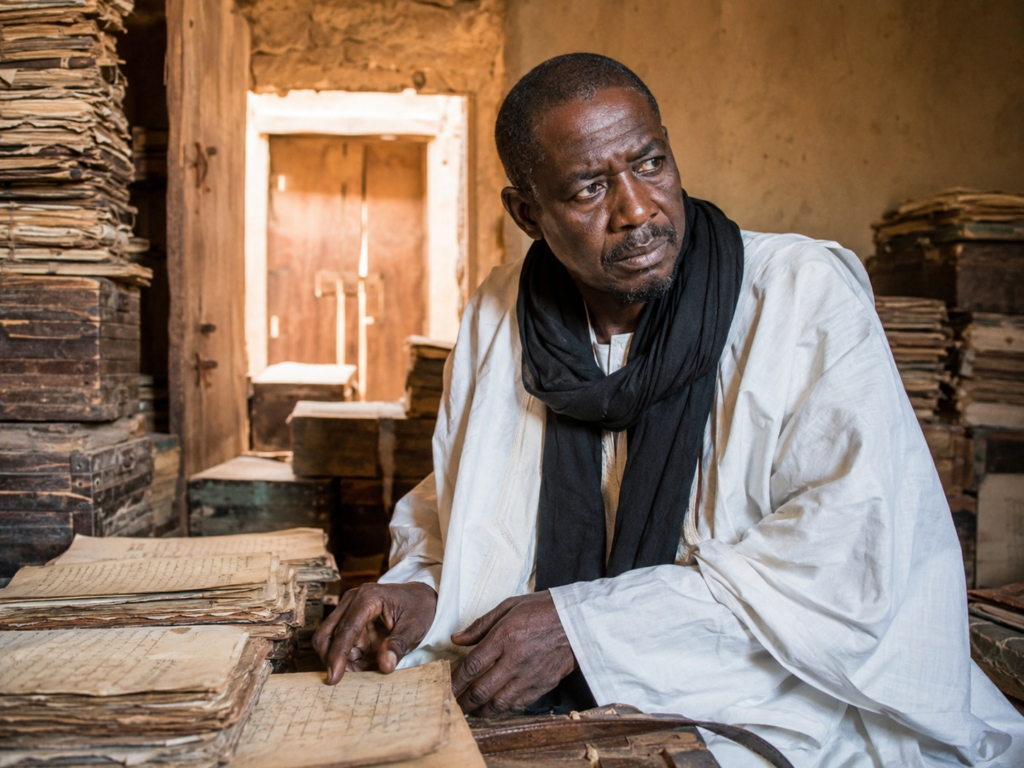
Abdel Kader Haidara, a book collector and librarian, led the rescue. When jihadist militants allied to al-Qaeda took Timbuktu in 2012, he coordinated a network of volunteers by phone from exile in Bamako, smuggling manuscripts out in metal trunks, mule carts and 4x4s. His story is told in Joshua Hammer’s book The Bad-Ass Librarians of Timbuktu.
Around 4,200 manuscripts were burned in a bonfire set by militants at the Ahmed Baba Institute, just minutes before they fled the city ahead of the French intervention in early 2013. By the end of February 2013, Haidara’s team had evacuated nearly every manuscript from 45 libraries, saving more than 95 percent of Timbuktu’s literary heritage.
The manuscripts, some dating back to the 11th century, cover medicine, astronomy, mathematics, law, literature and theology. They show that African societies were documenting and debating knowledge centuries before contact with the Western world. Most have never been fully studied or translated, so their full contents remain unknown.
Unlike Cairo or Fez, which kept large public libraries, Timbuktu relied on a family-based system in which manuscripts were passed down through generations as heirlooms. Spread across hundreds of private homes, the collections could not be destroyed in one move. Some carry an inscription forbidding their sale or division as inheritance.
Nobody knows exactly. National Geographic estimated that 700,000 manuscripts have survived in Timbuktu alone, with around one million across the wider region. Digitisation is underway — the Hill Museum and Manuscript Library in Minnesota has photographed more than 150,000 documents — but many families still guard their collections closely.
If you’d like to join the Adventure Society, my weekly newsletter covering real-world adventures, new books, and podcast updates, head to lukerichardsonauthor.com/adventuresociety.