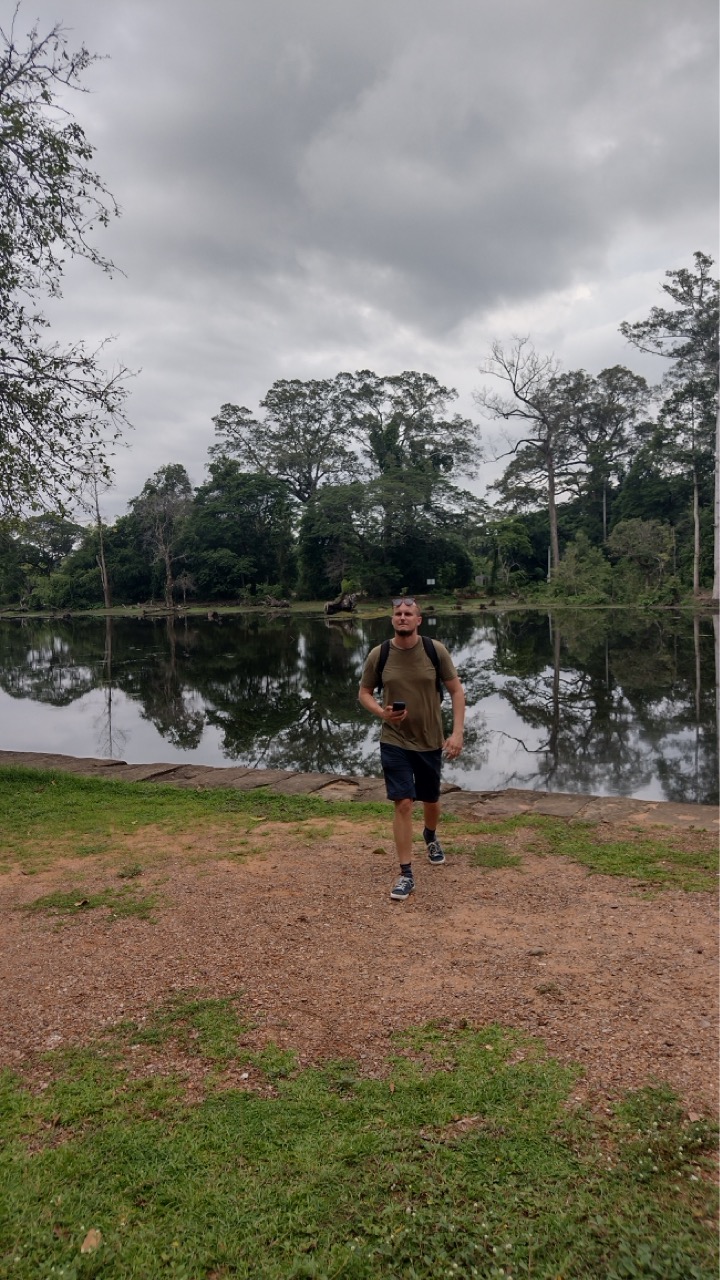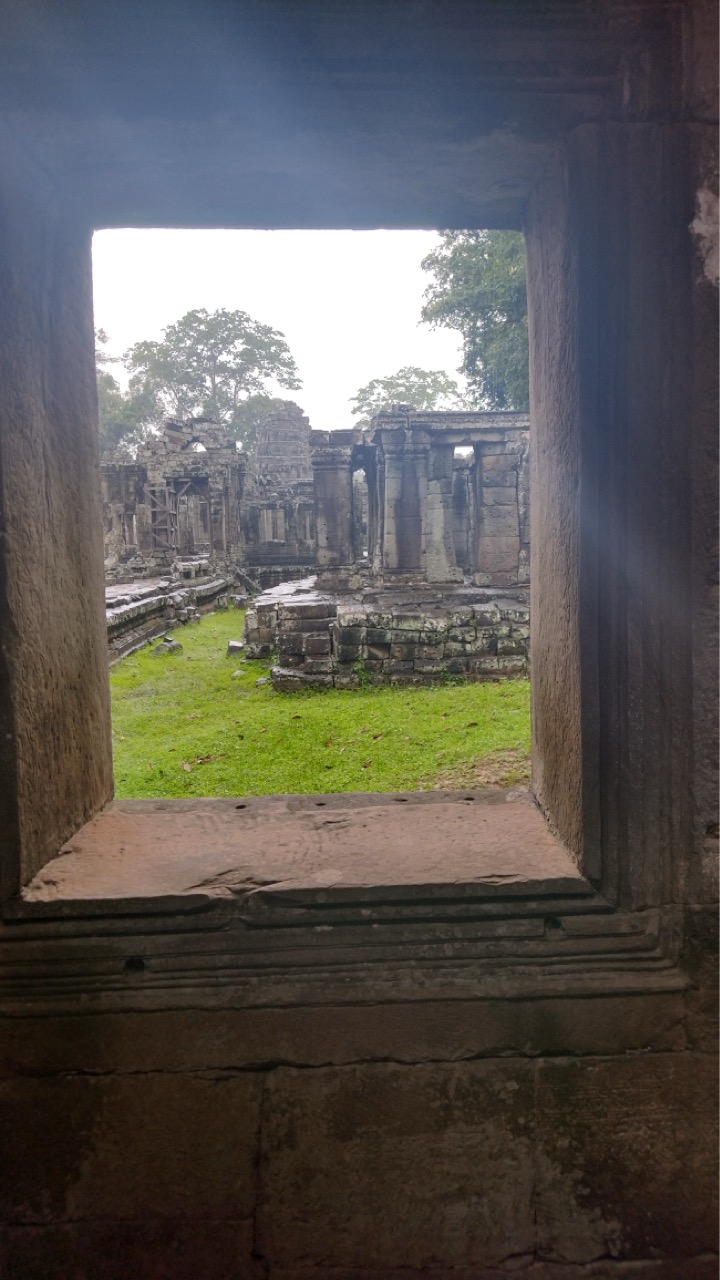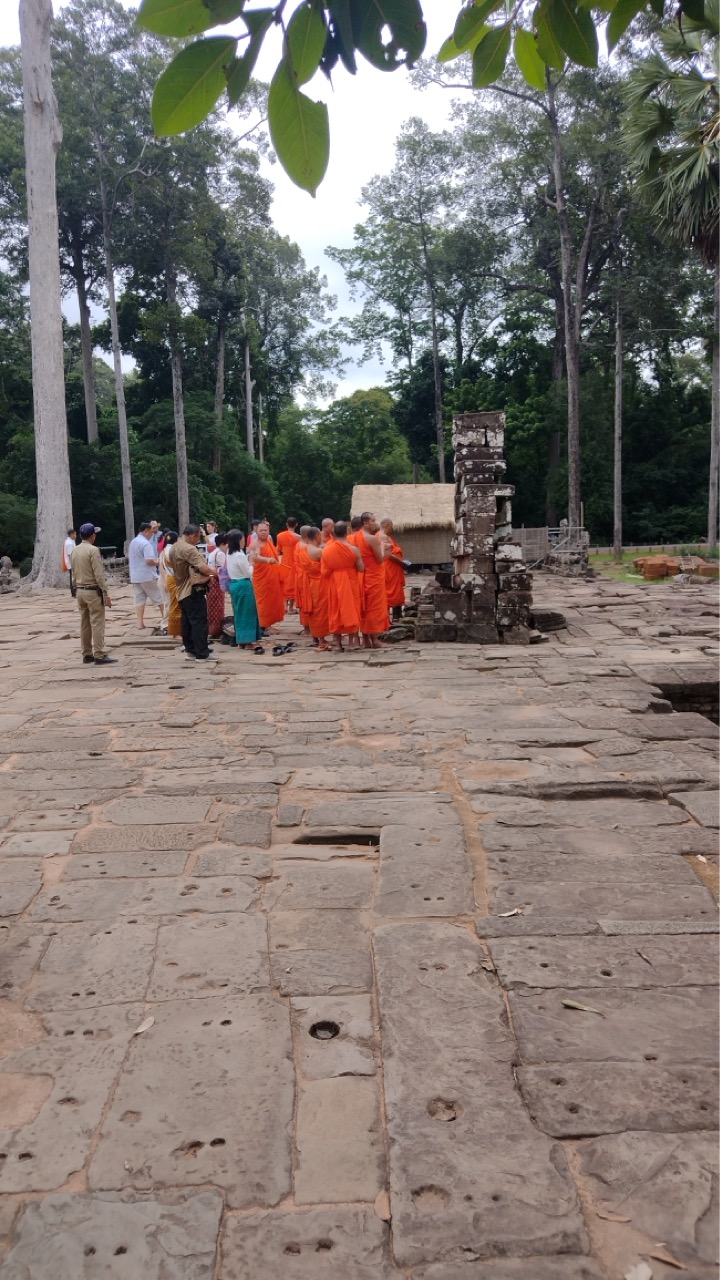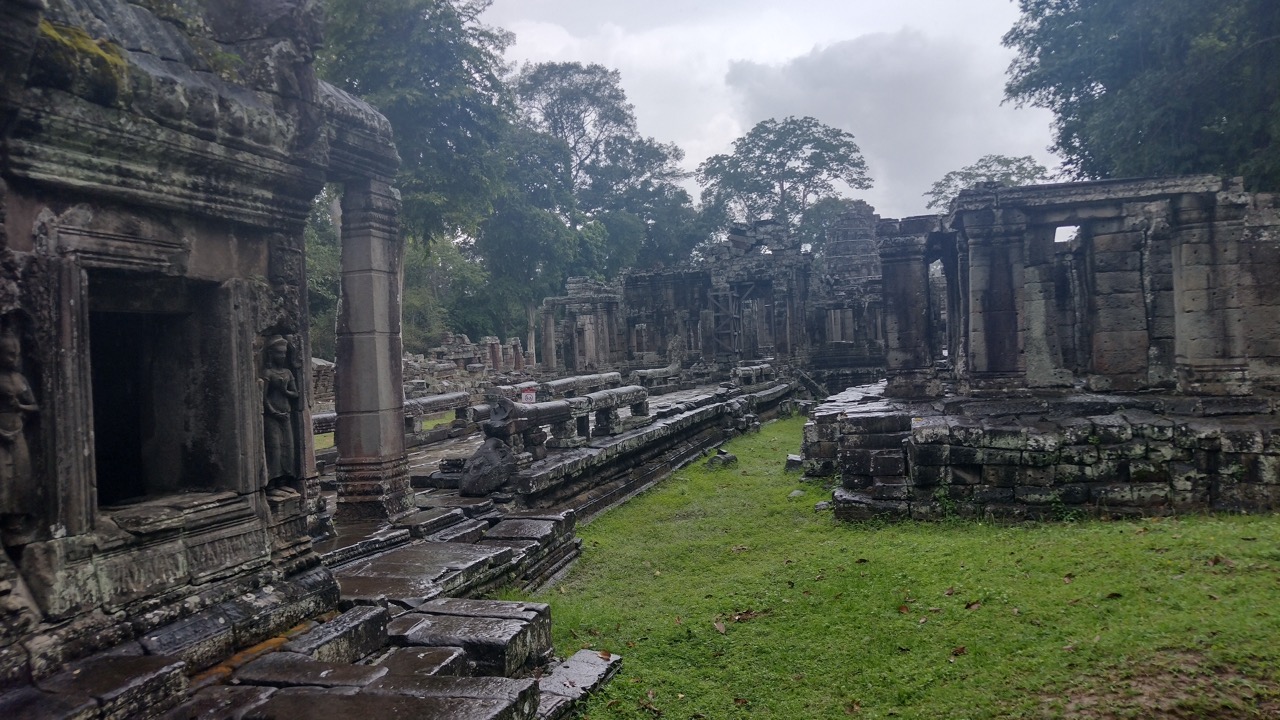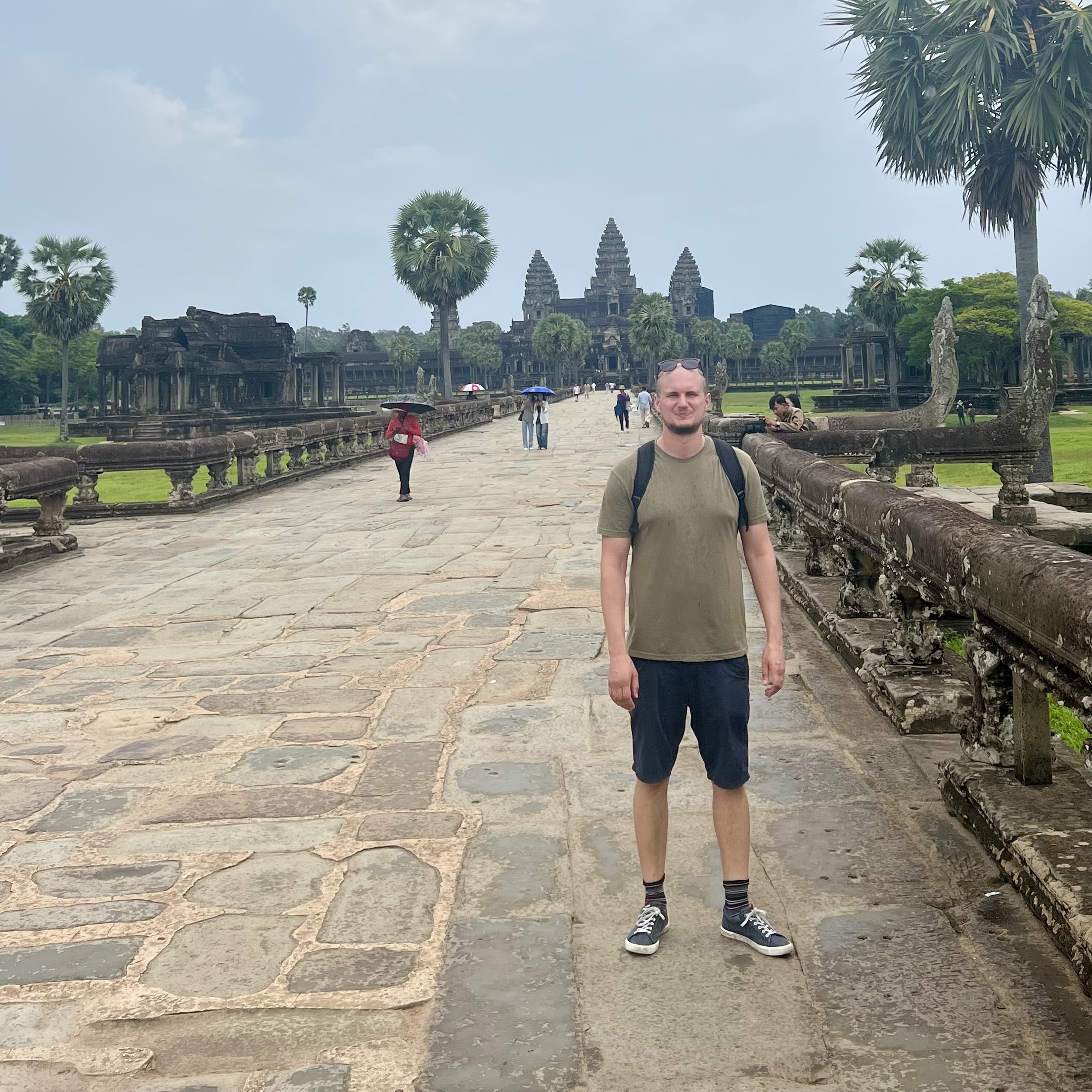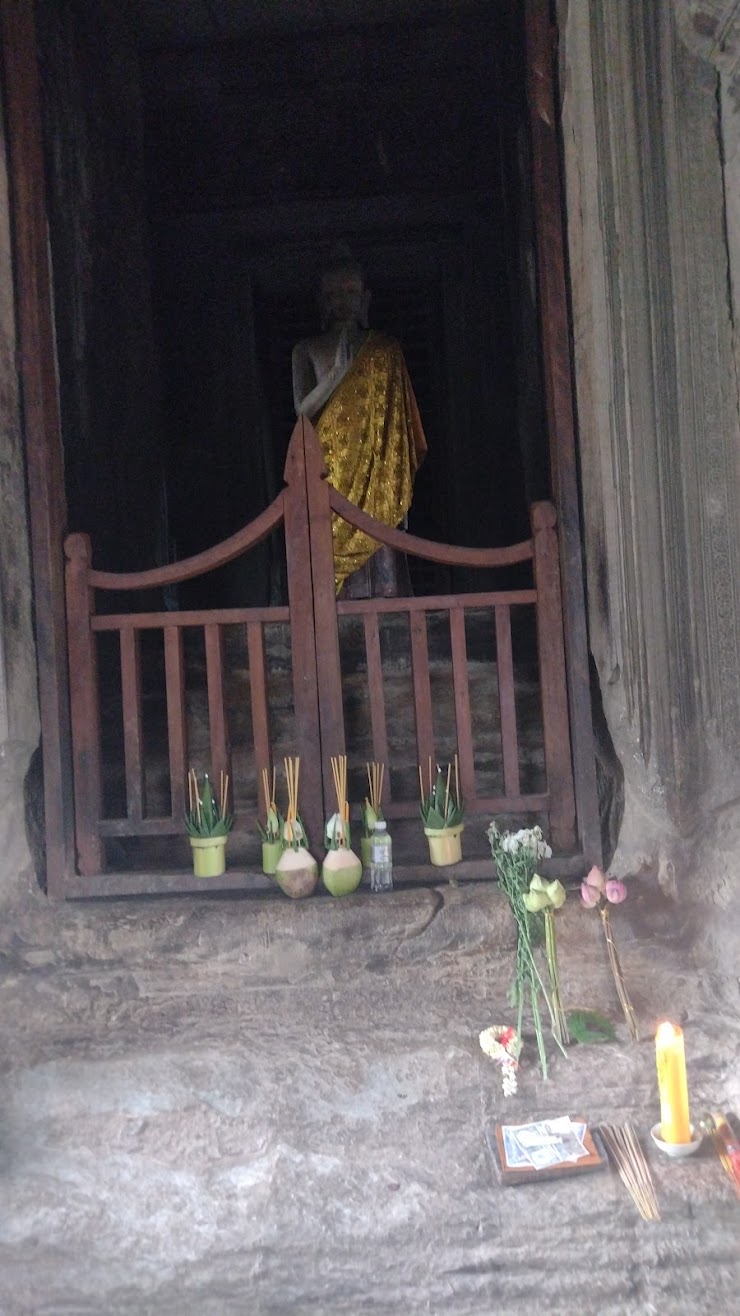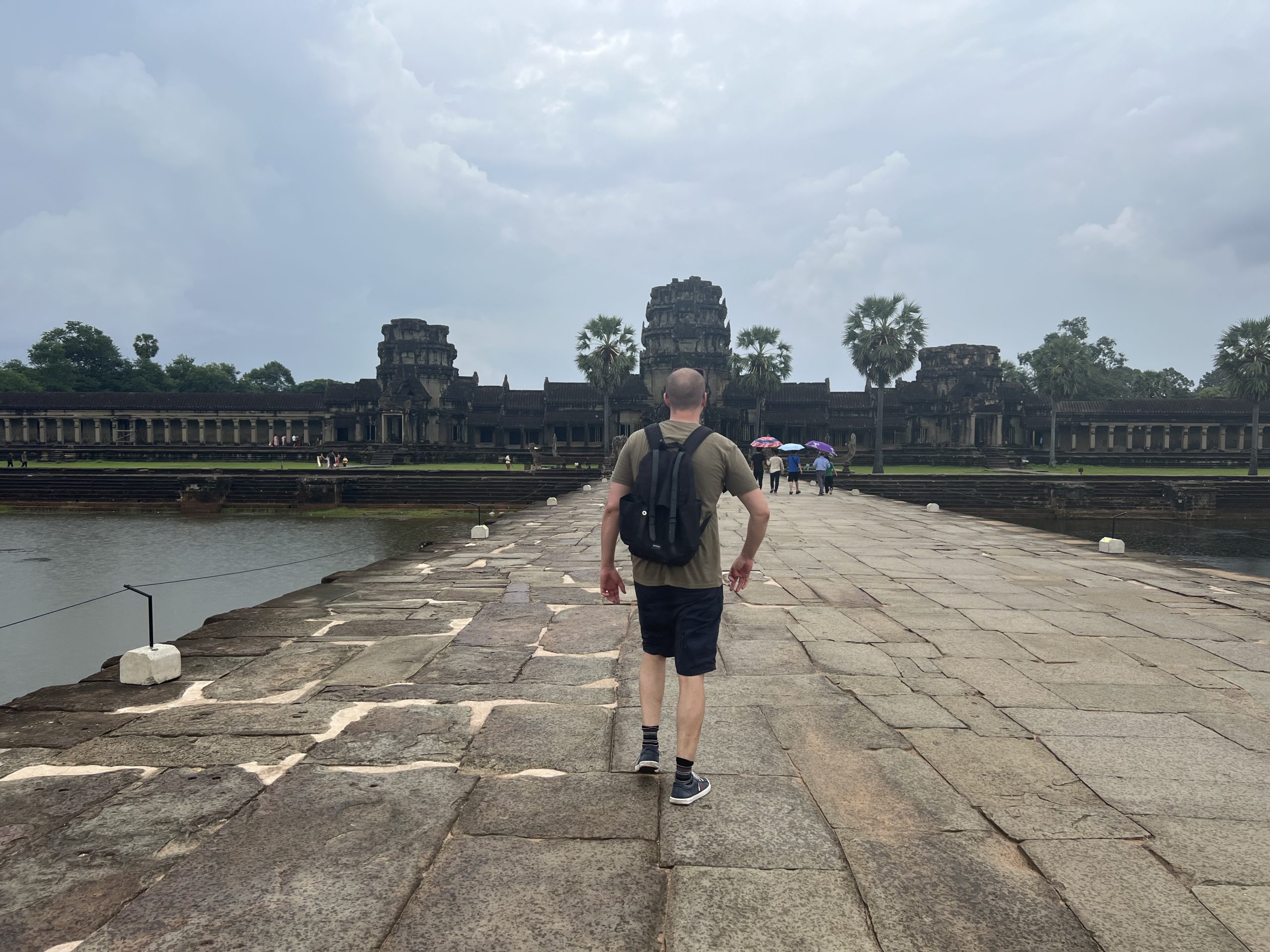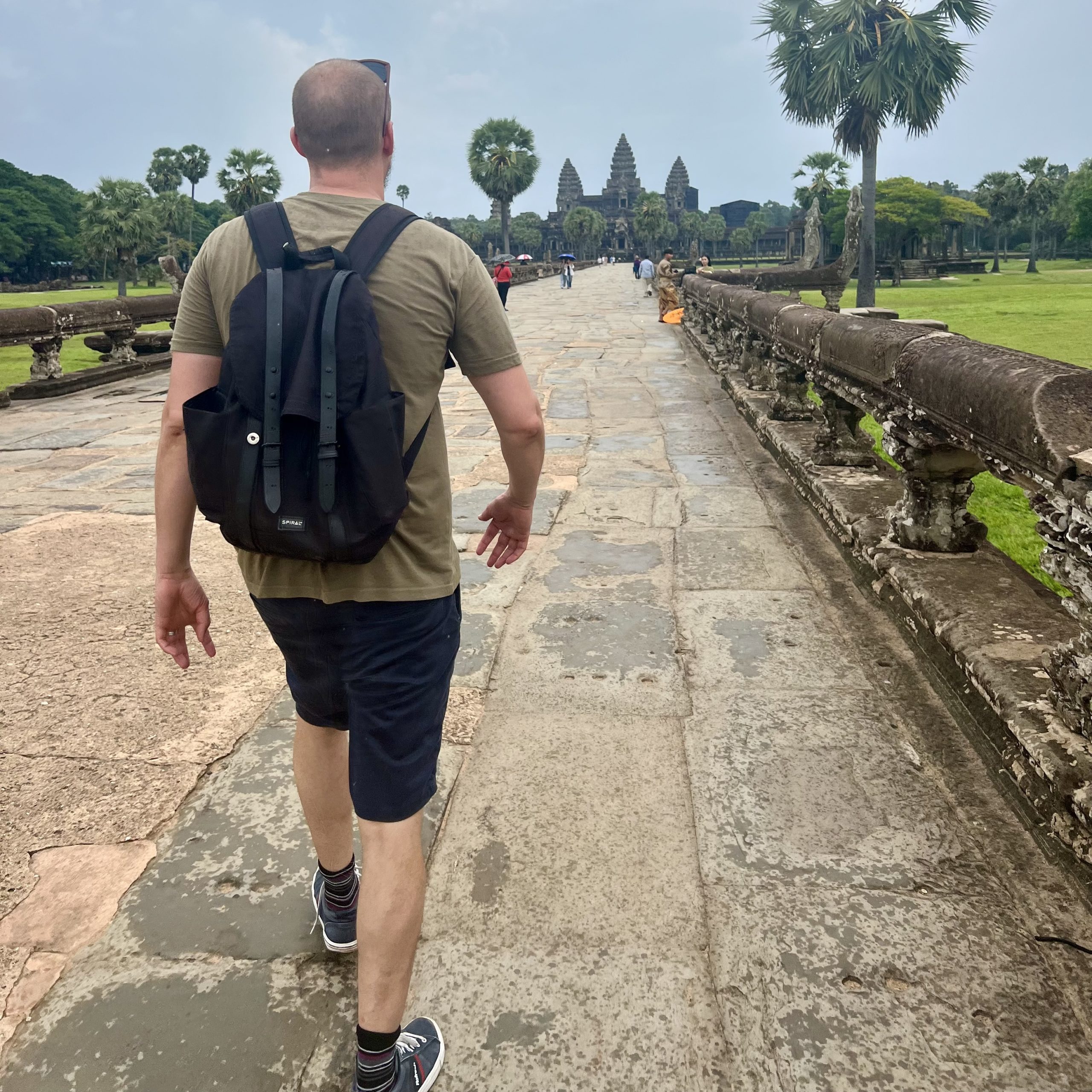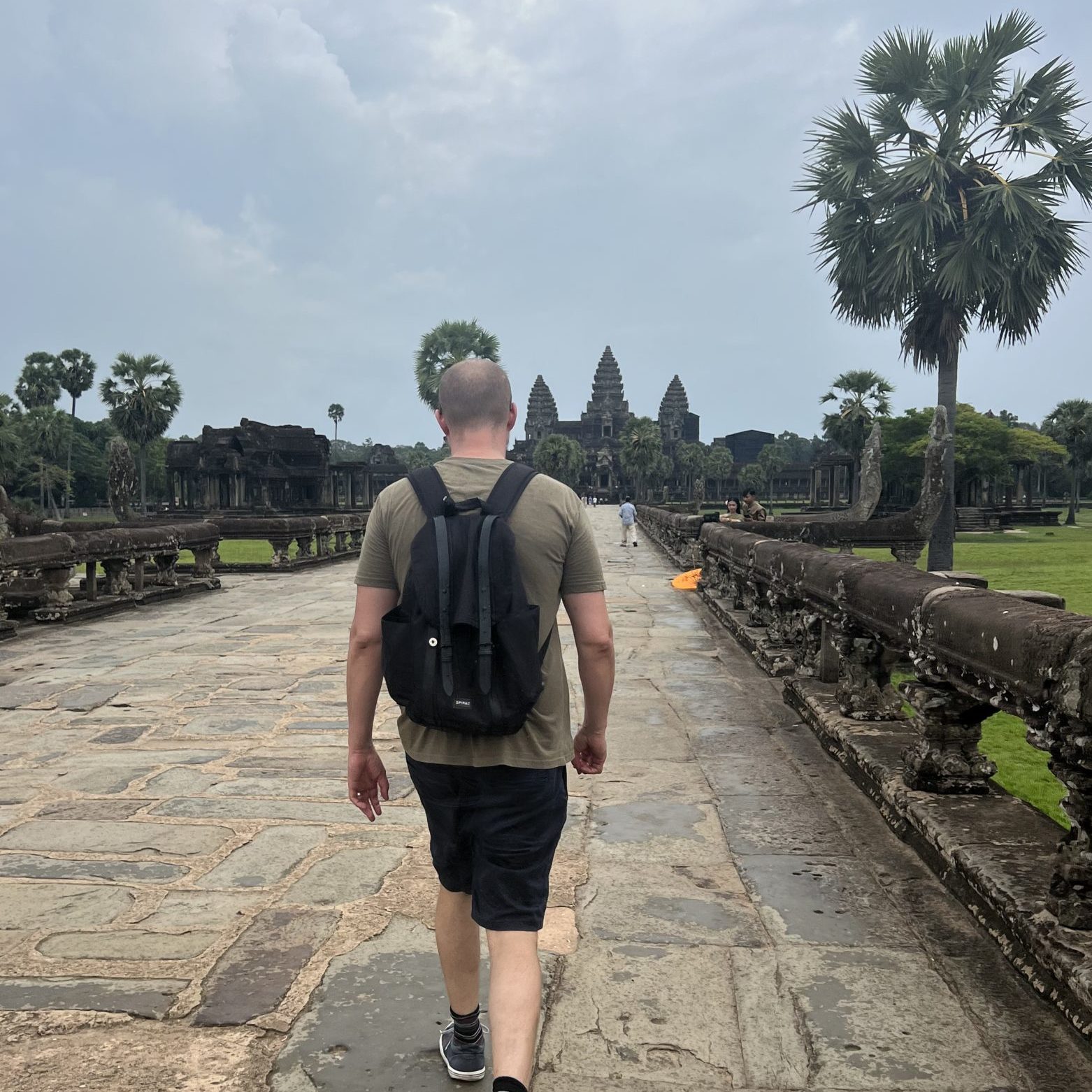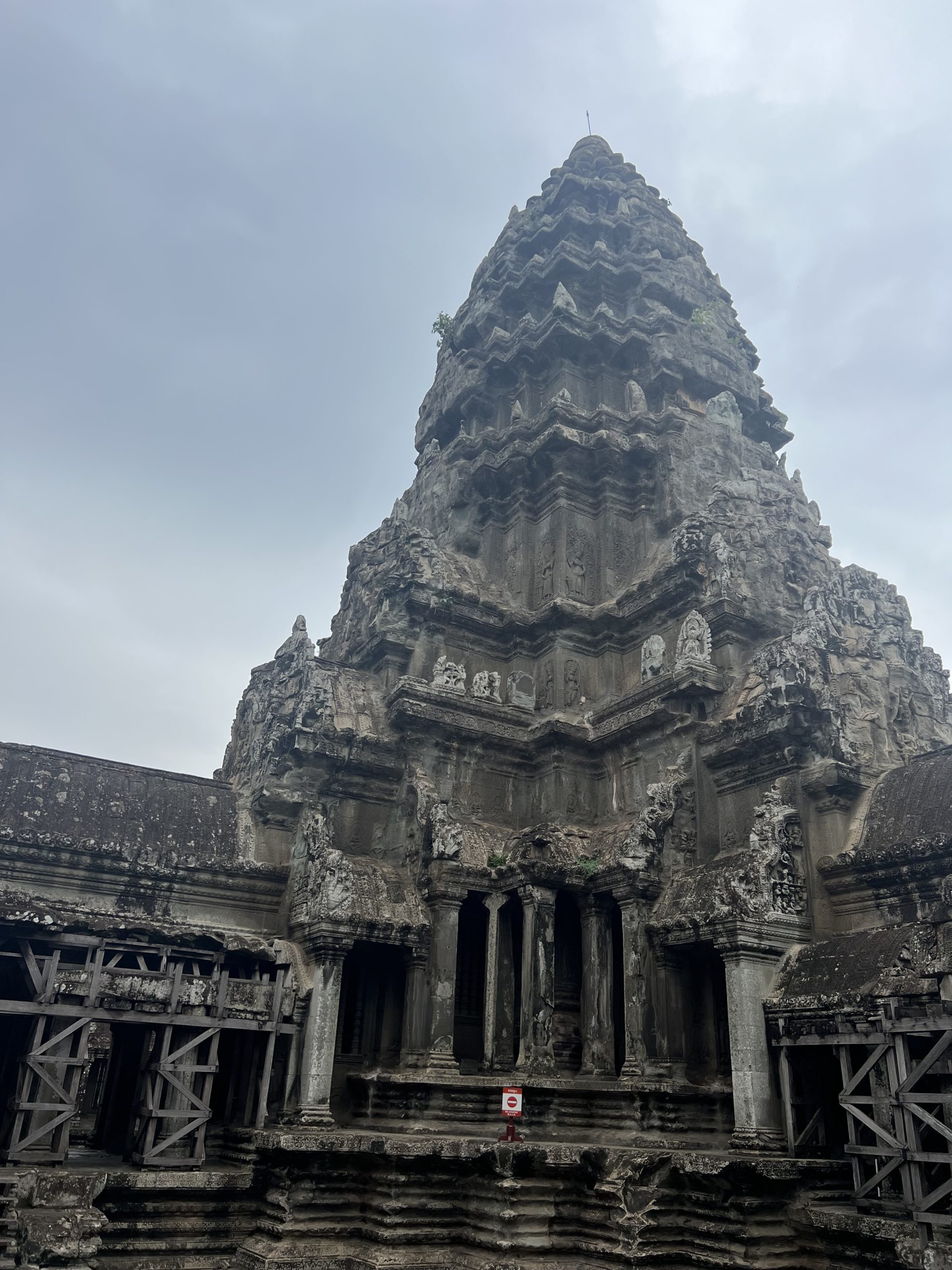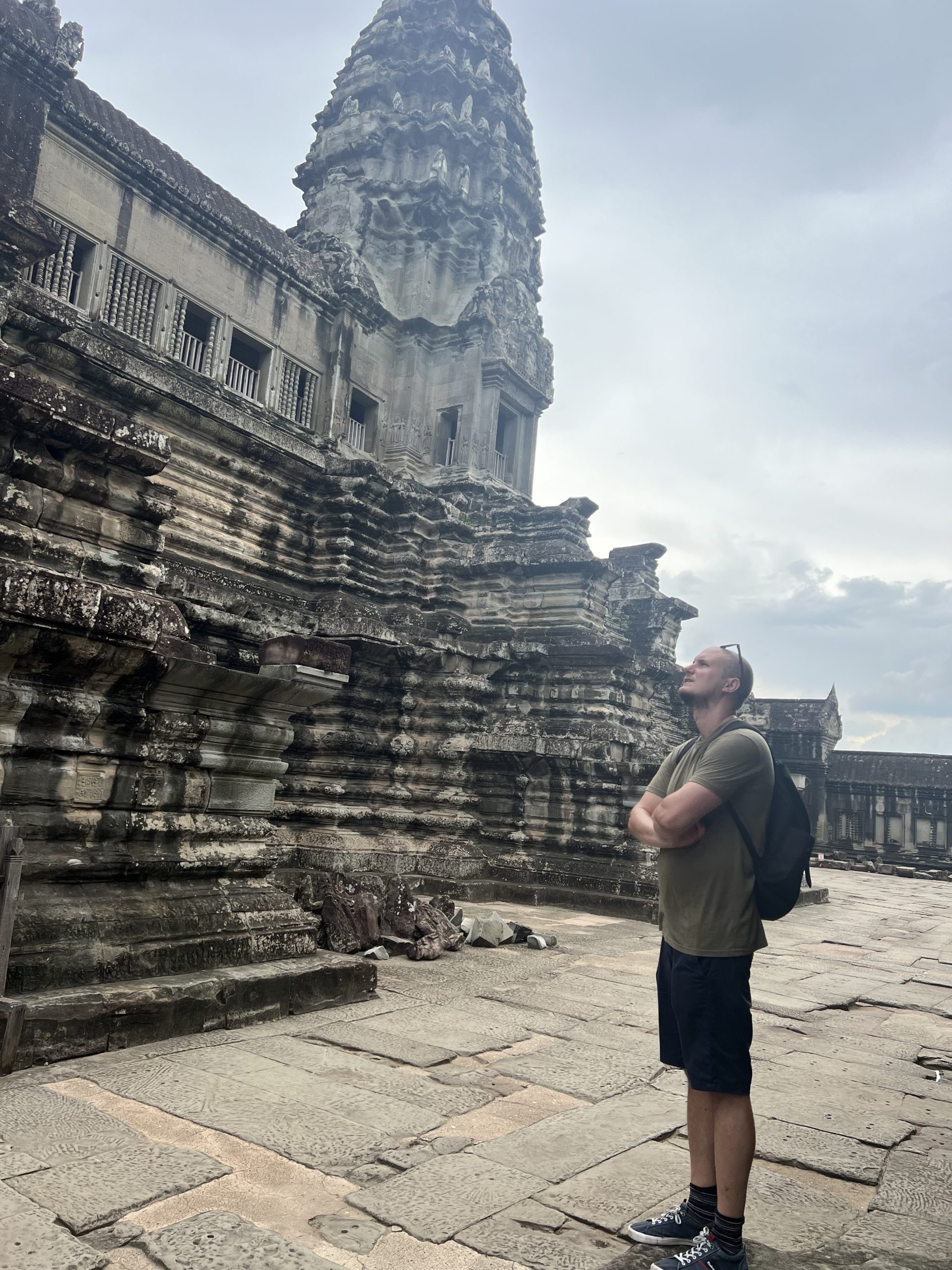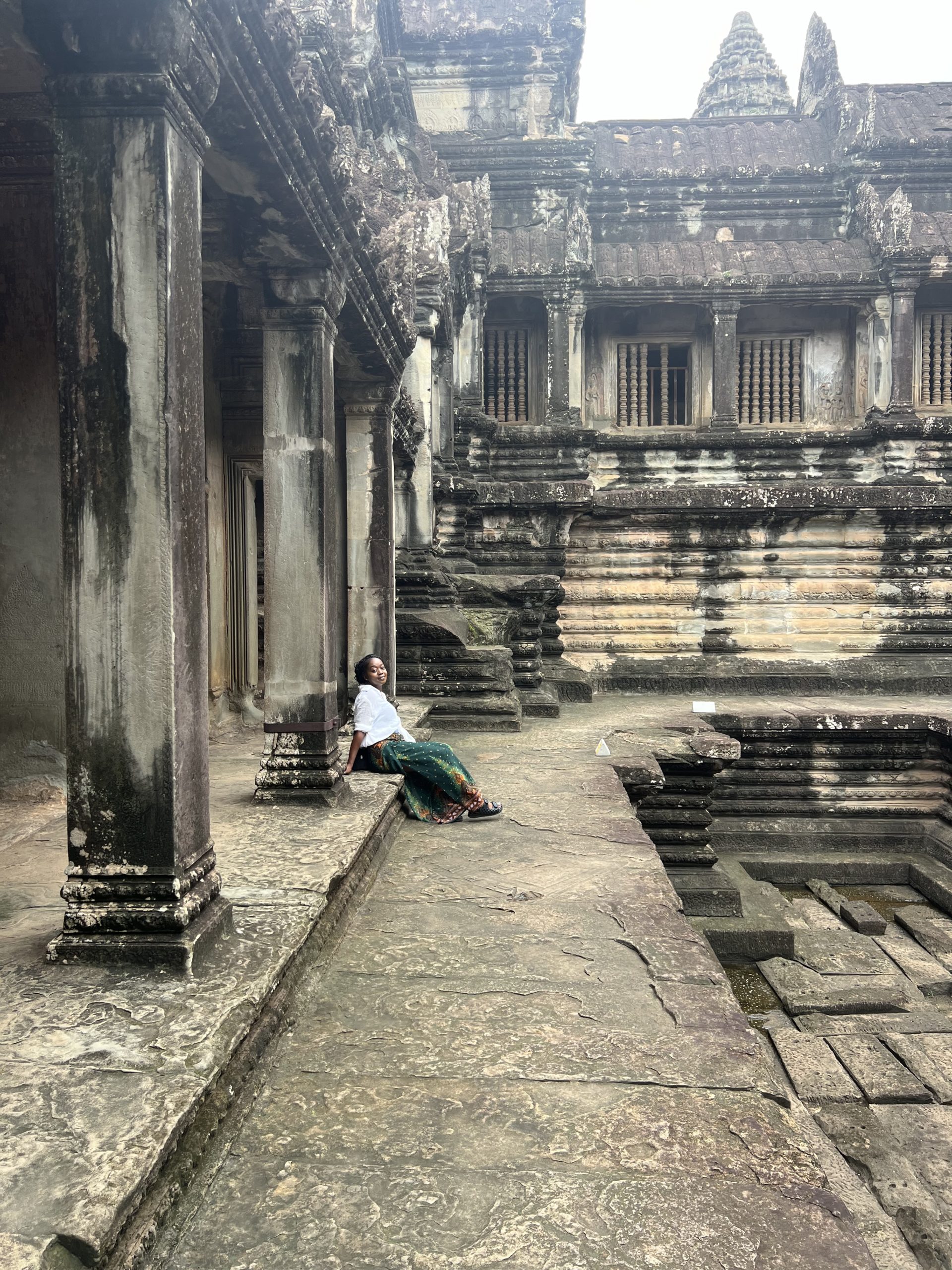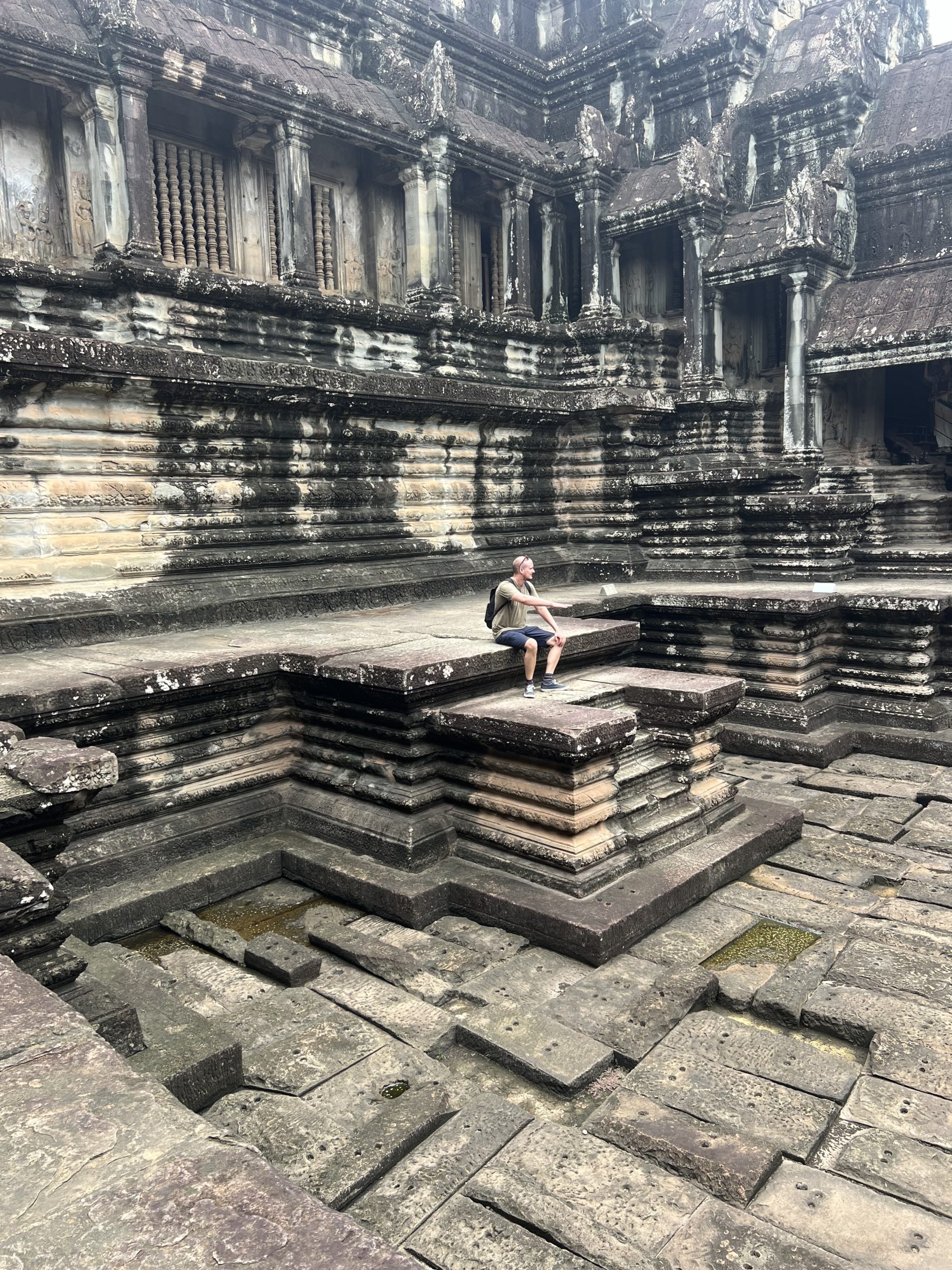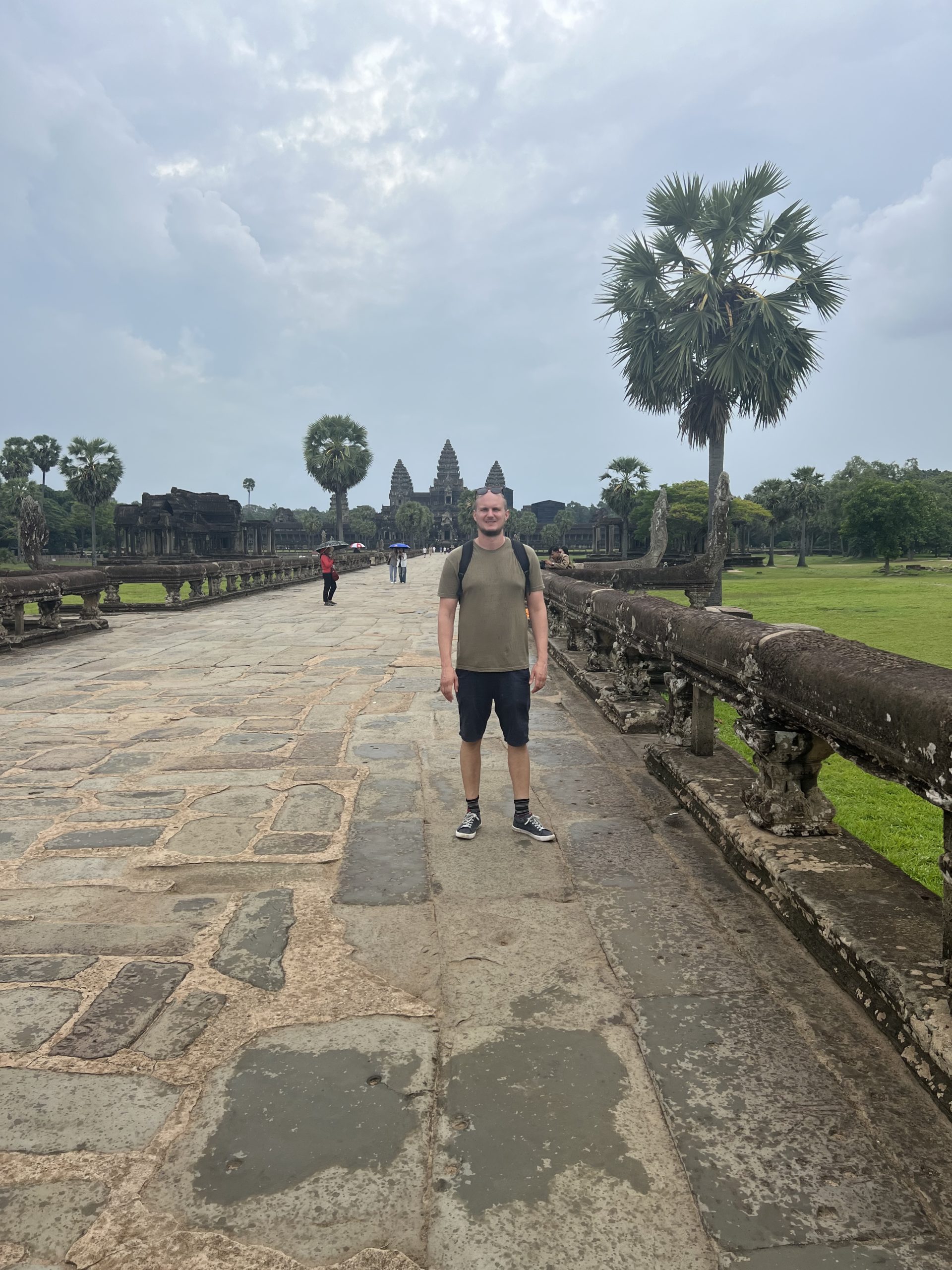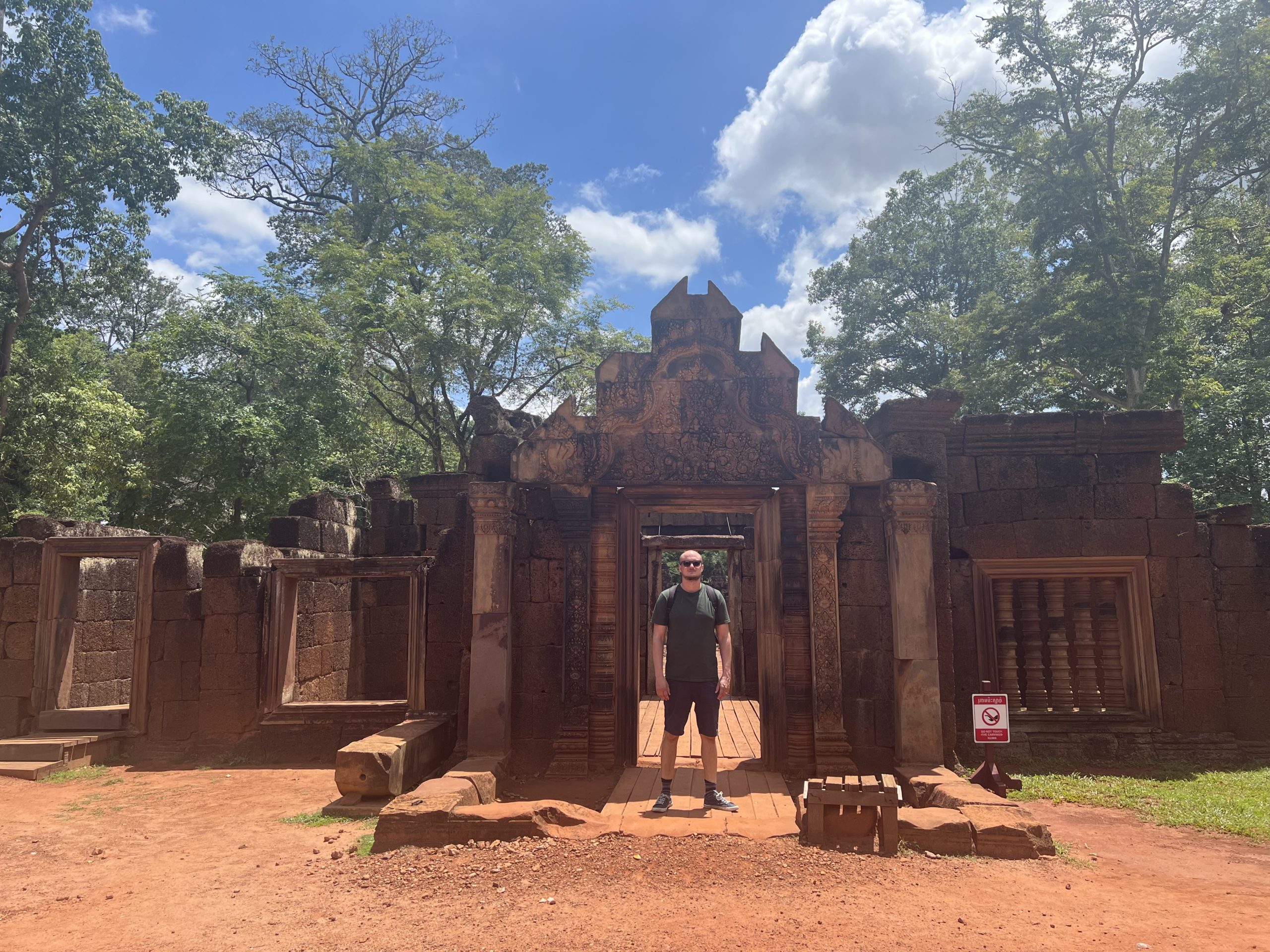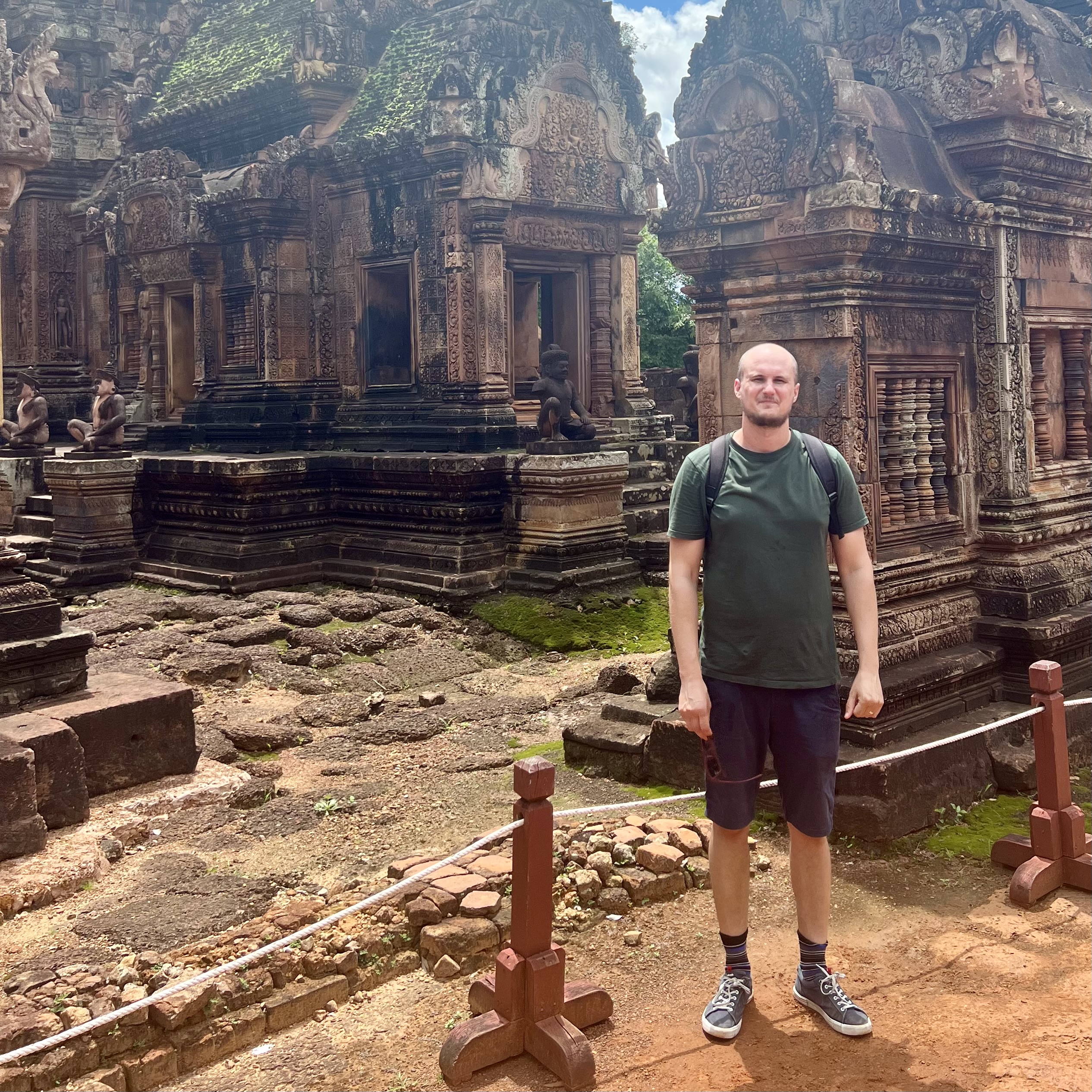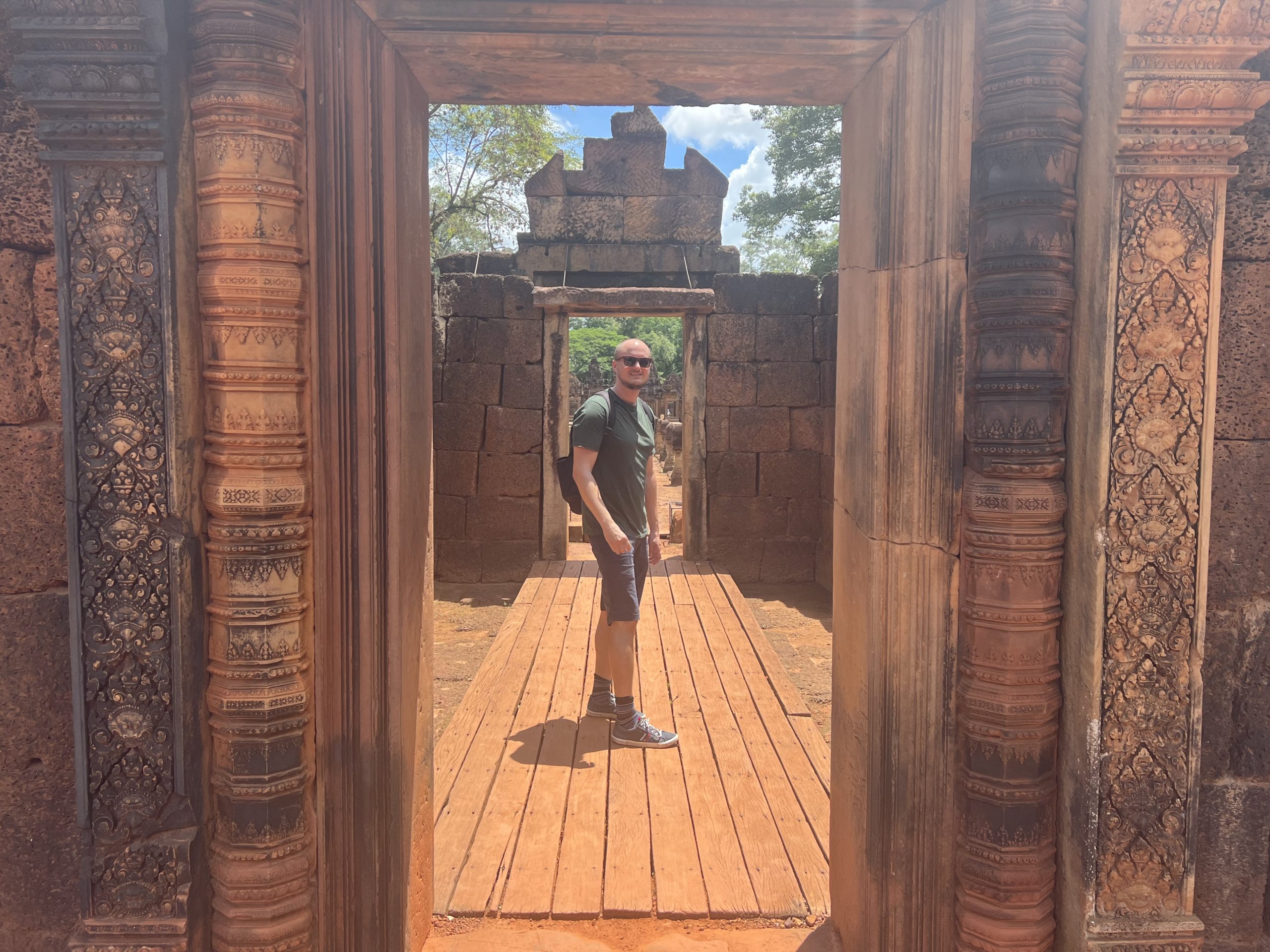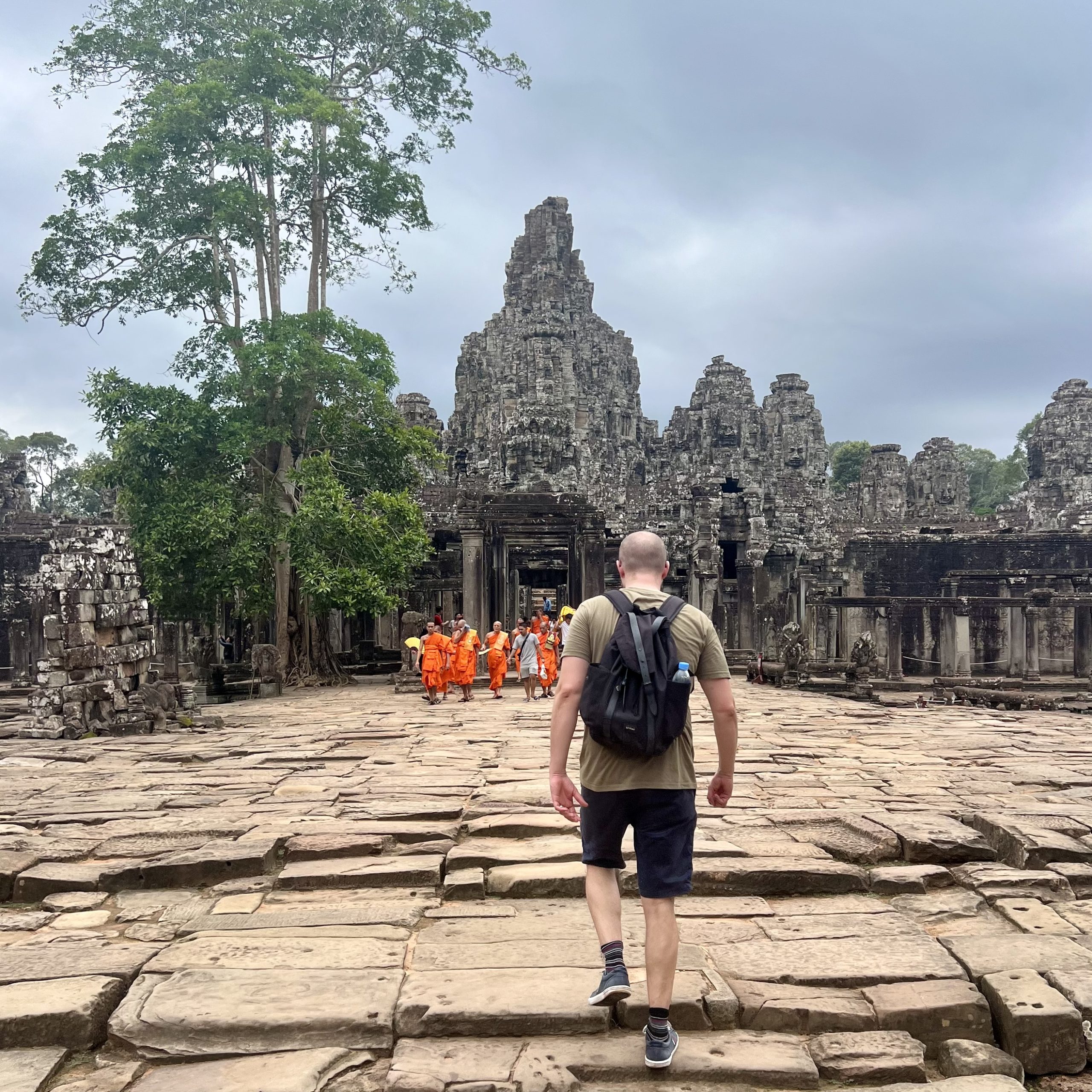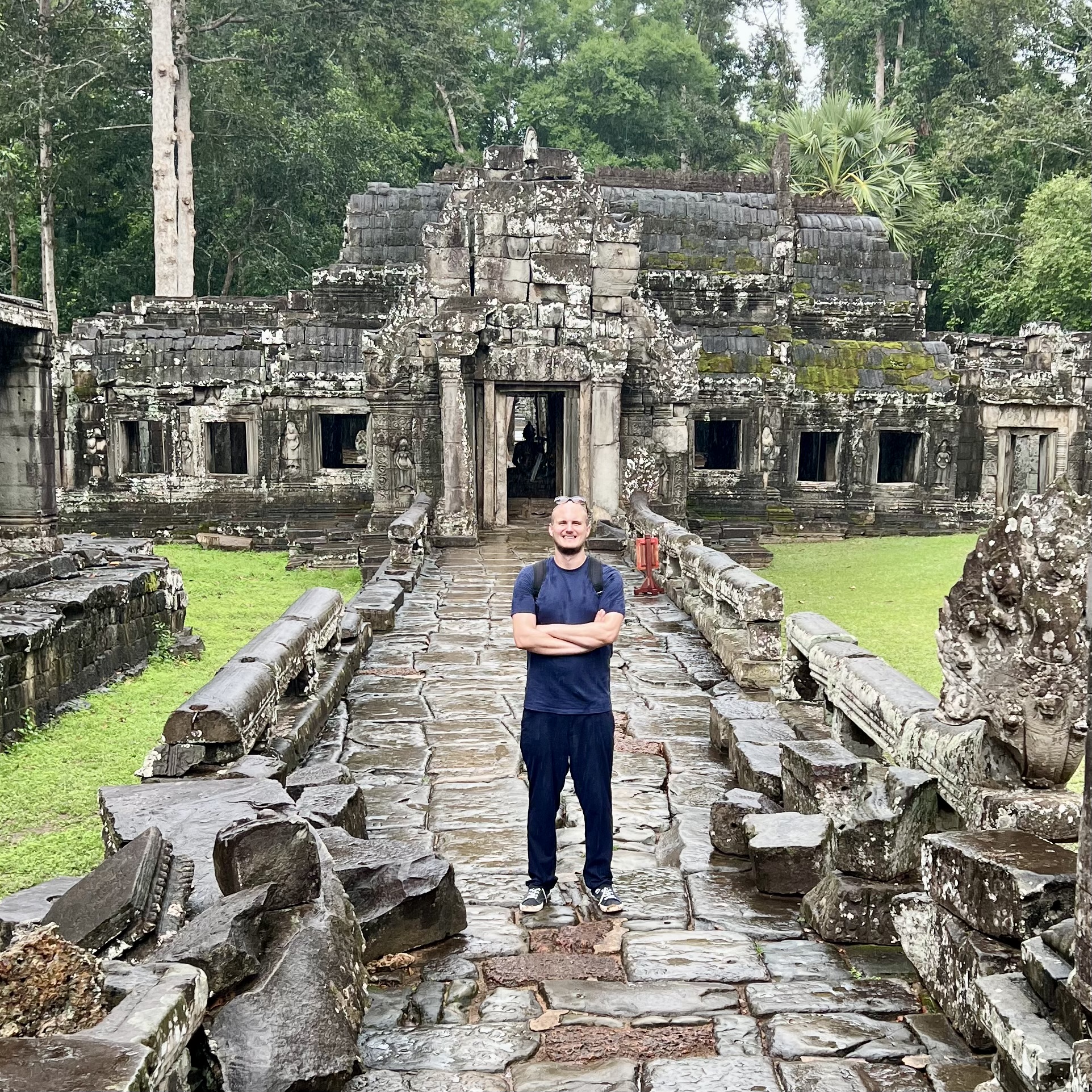
MrsR and I visited Cambodia in July 2024 as research for the Lotus Key and absolutely loved it. It’s a beautiful country with mountains, beaches and incredible temples—we’ll return for sure. At the start of our trip, we spent several days visiting the temples in the Angkor region—including the world-famous Angkor Wat.
 Having not visited before, I was entirely unprepared for the scale of it. You think you know what to expect — you’ve seen the photographs, it’s one of the most recognisable buildings on earth — and then you arrive, and the photographs turn out to have been lying to you all along.
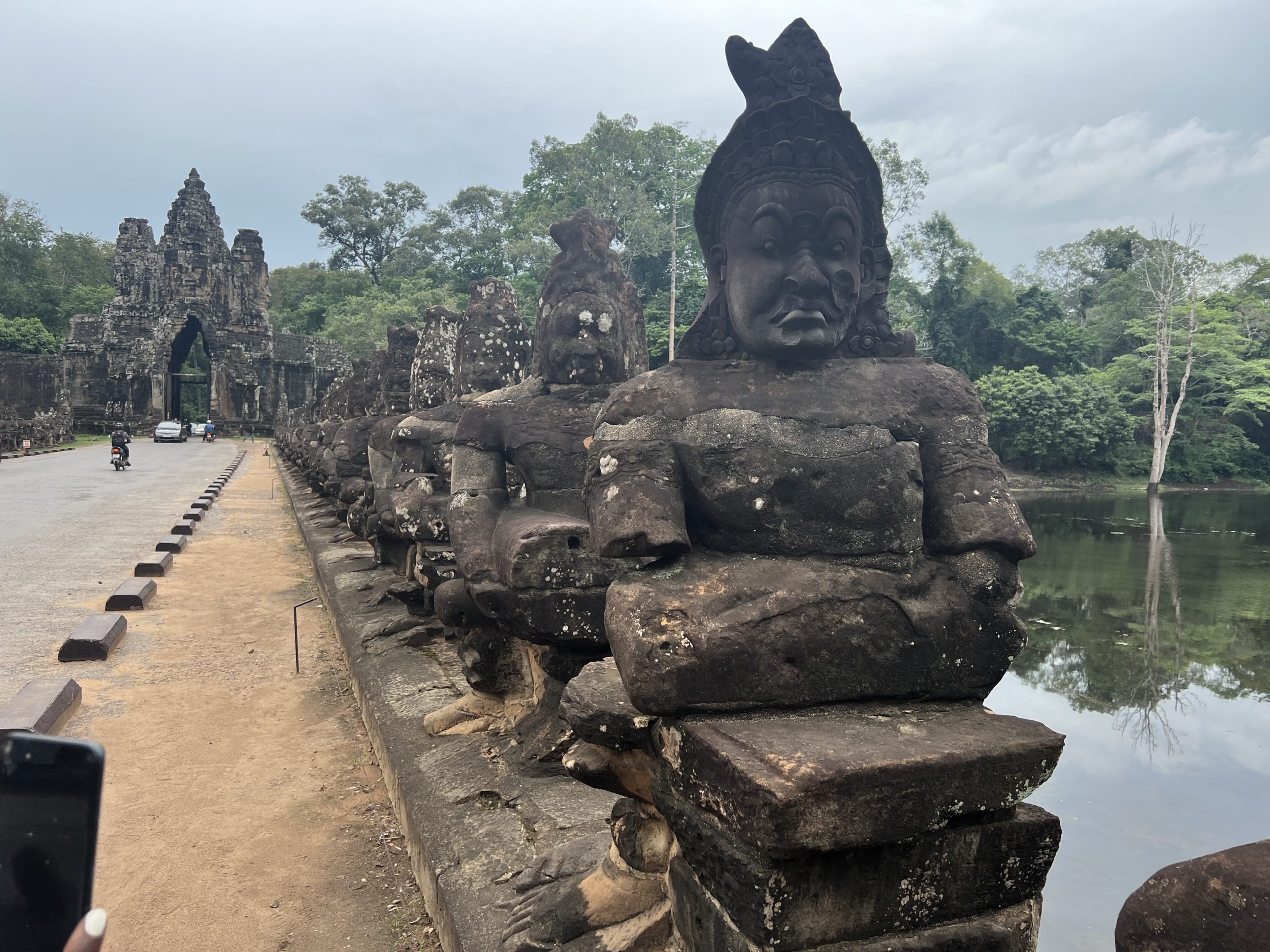
The approach to Angkor Wat begins long before you reach the temple itself, as the vast moat appears out of the jungle. The moat is nearly 200 metres wide and stretches five kilometres around the perimeter, crossed by a long sandstone causeway lined with stone naga serpents.
Reaching that causeway, the lotus towers appear through the haze like something truly magical. –it’s one of those moments that we travel for.
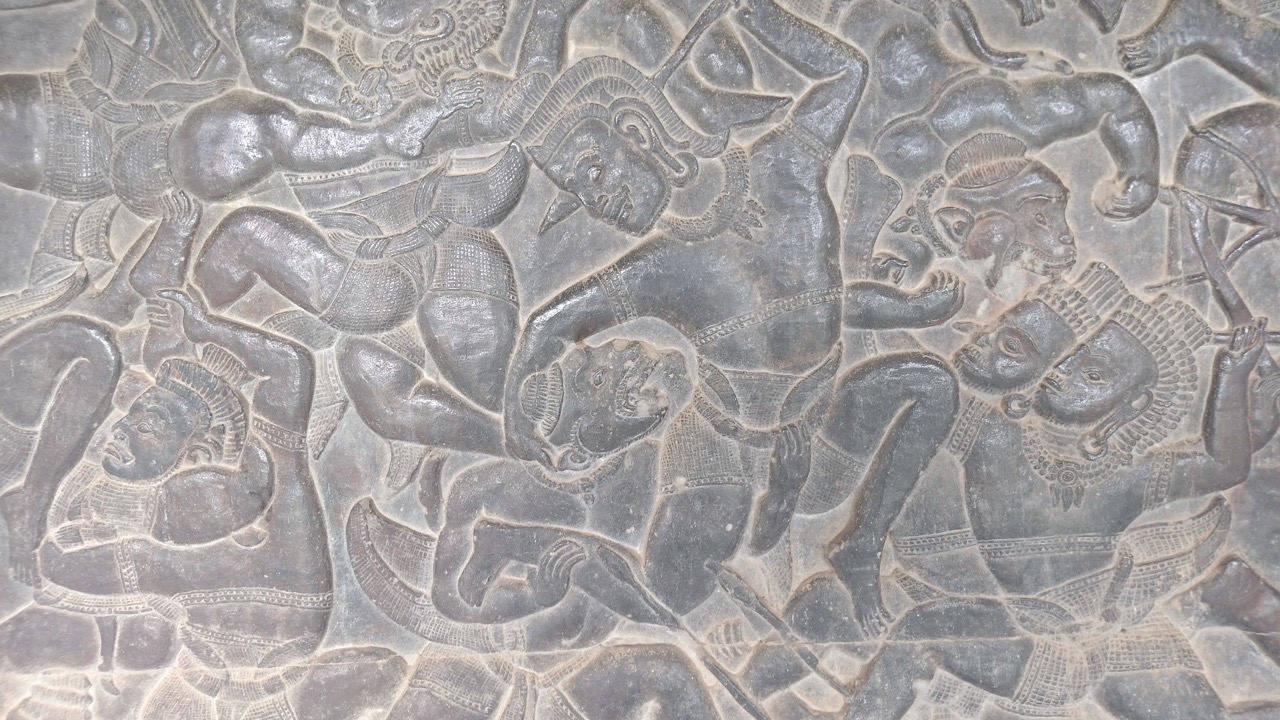
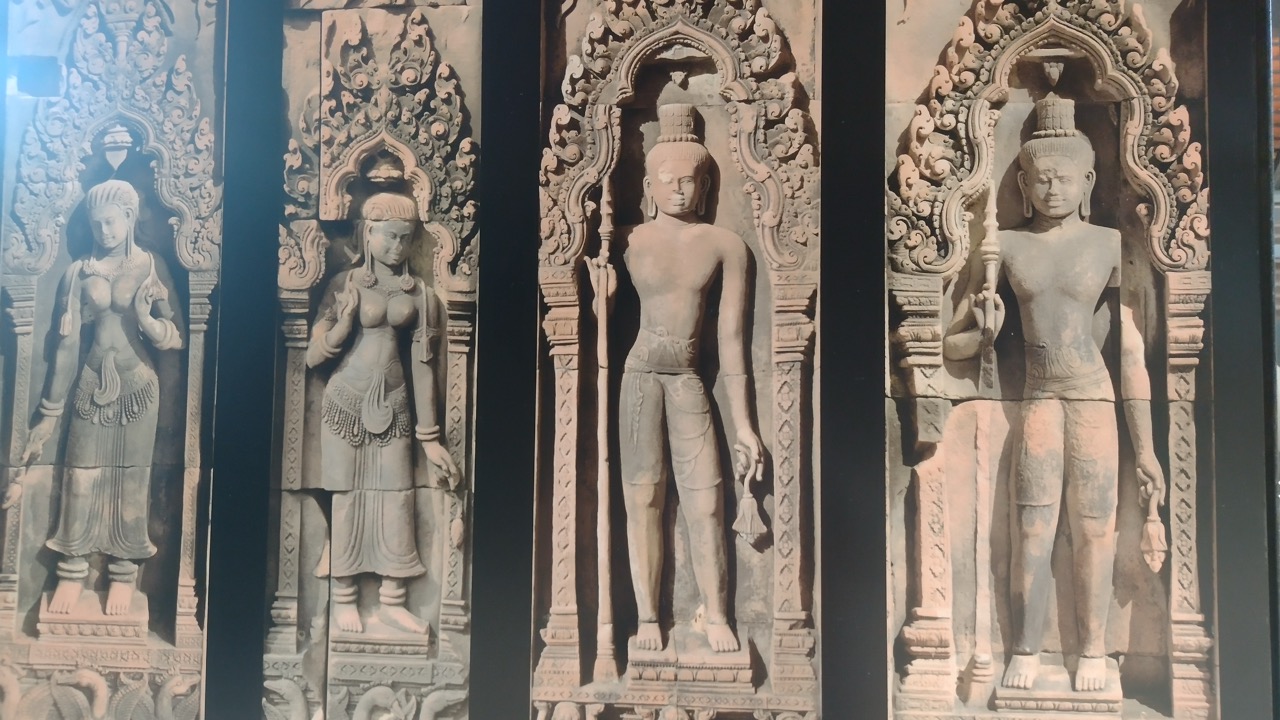
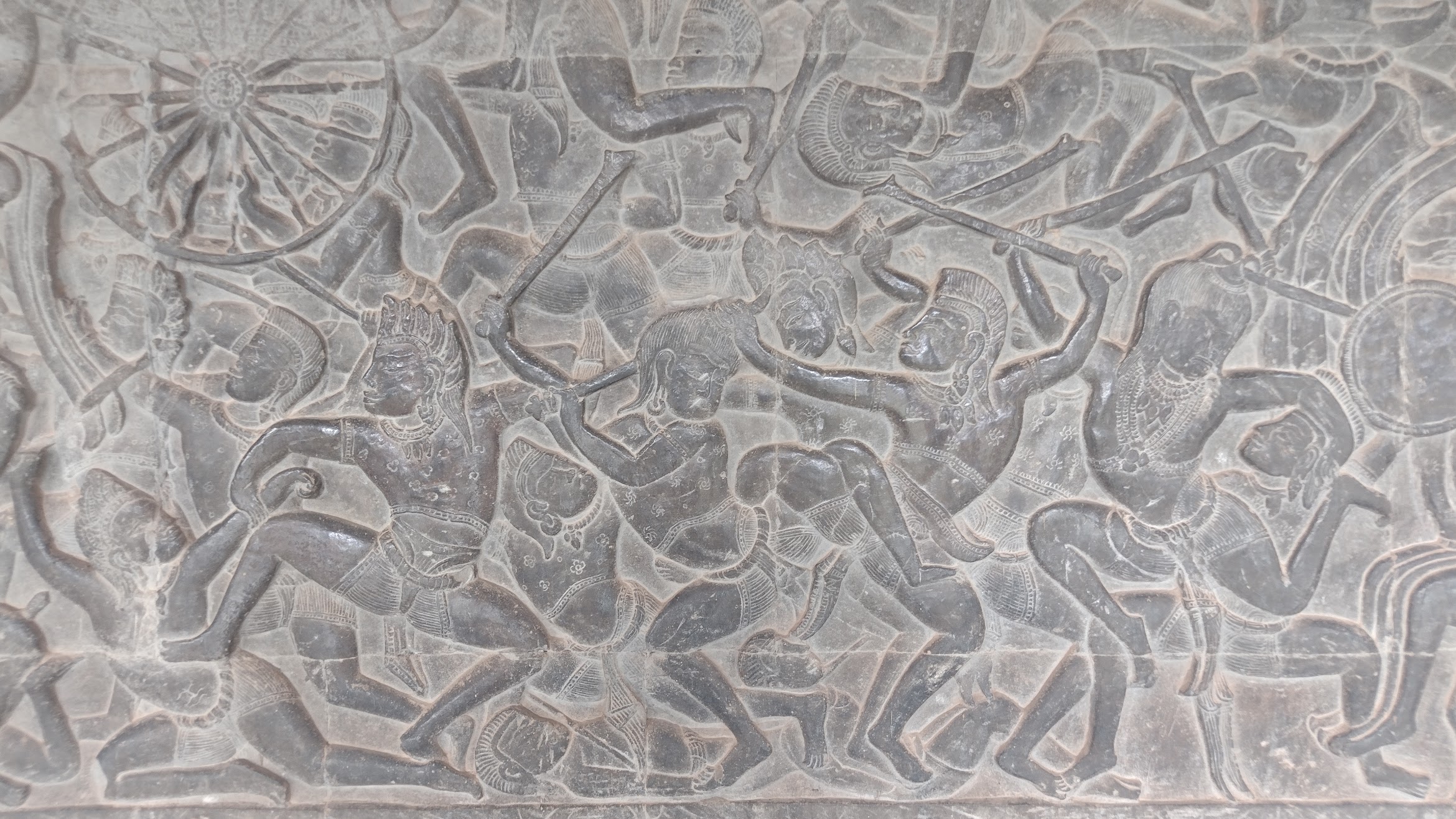
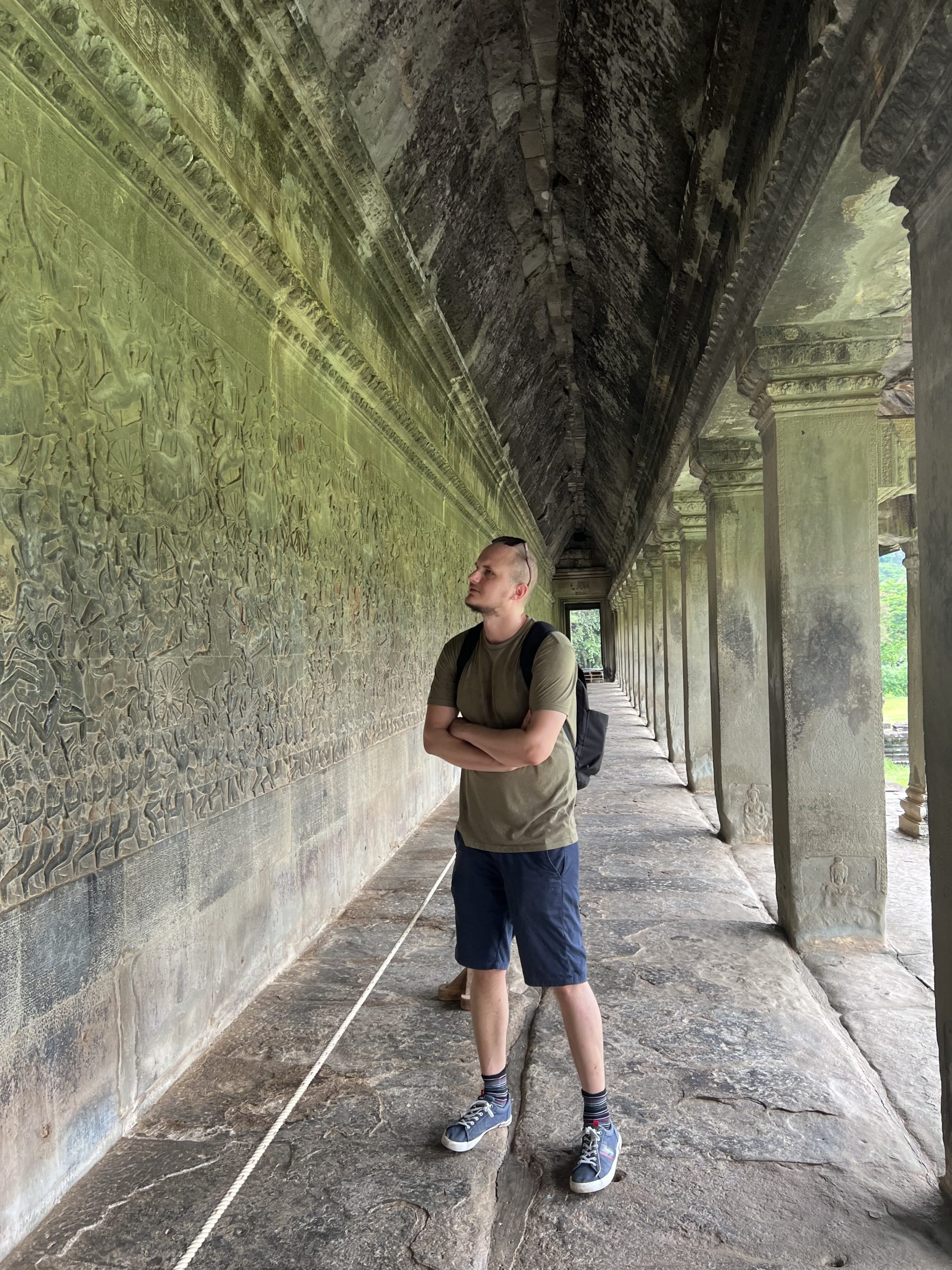
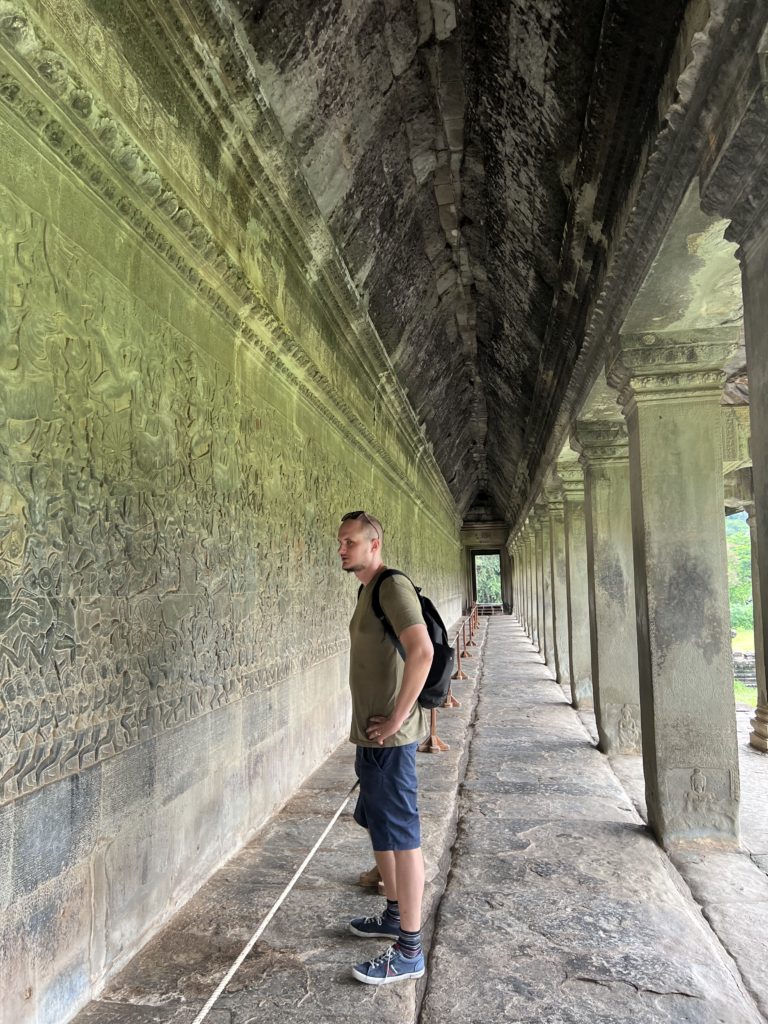
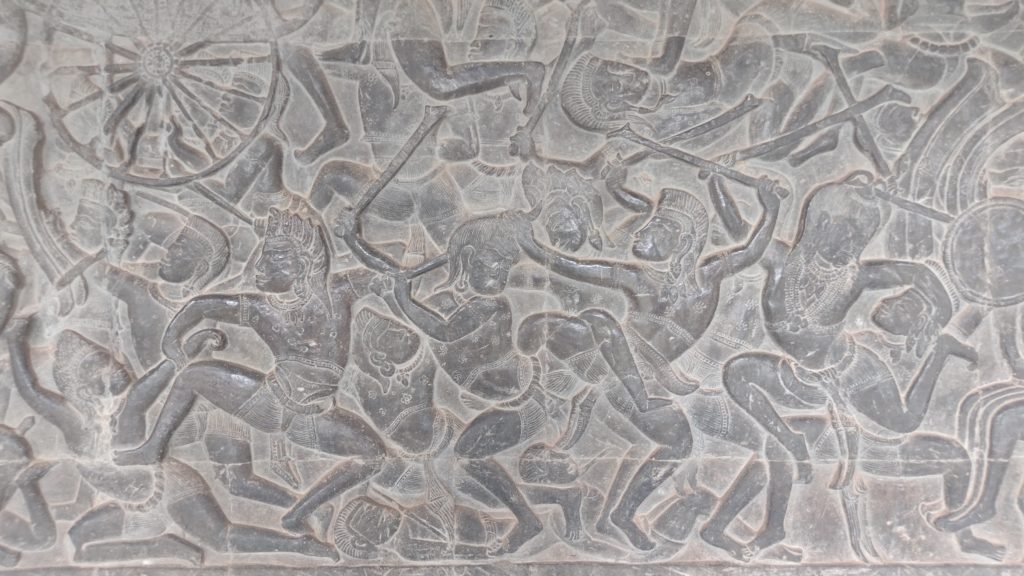
Angkor Wat is the largest religious complex in the world, built in the early 12th century and covering over 160 hectares — and once you’re inside it, you feel every one of those hectares. The galleries seem to go on forever, corridor after corridor of stone bas-reliefs depicting scenes from Hindu mythology and Khmer history, thousands of carved apsaras — celestial dancers — lining the walls, each one subtly different from the last.
What struck me most, though, was the thought of what lies beyond what we can see. The jungle still swallows vast stretches of the surrounding landscape, and recent aerial surveys have revealed just how enormous the civilisation really was — the largest city on earth at its peak. Standing there, I couldn’t shake the feeling that the temples we can visit are just the visible tip of something much, much larger. Which, for a writer, is an irresistible place to start.
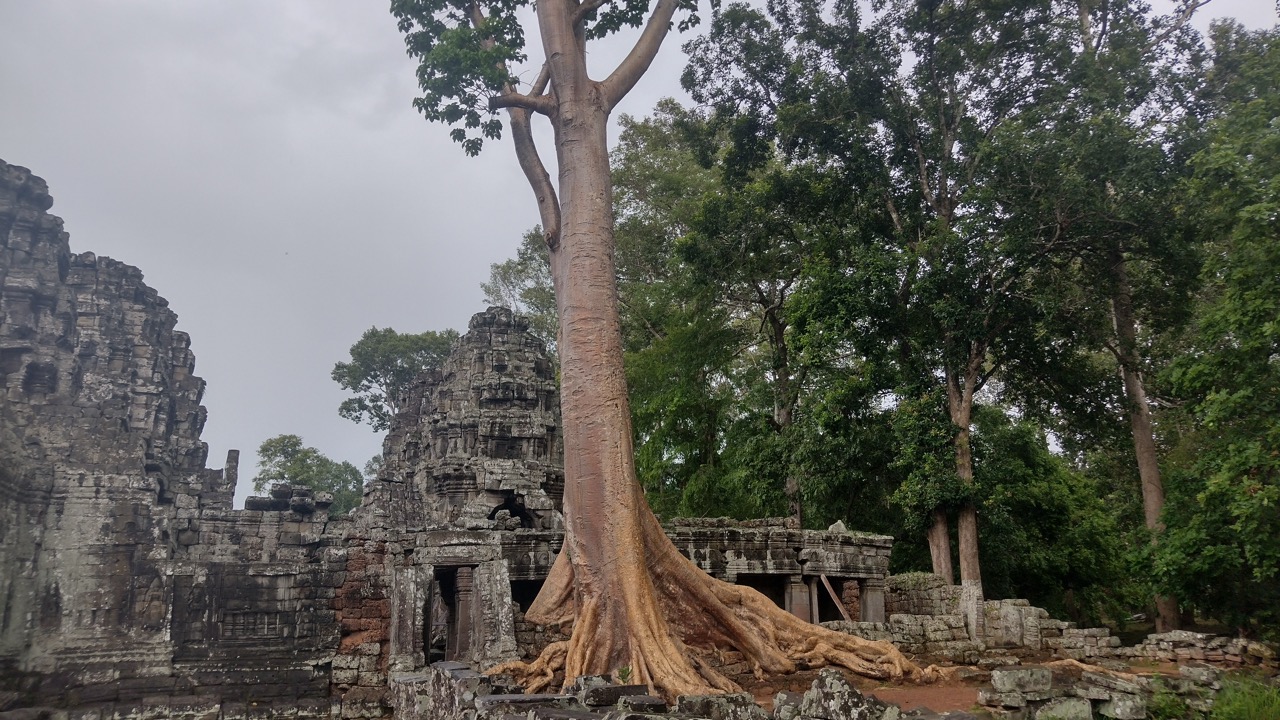
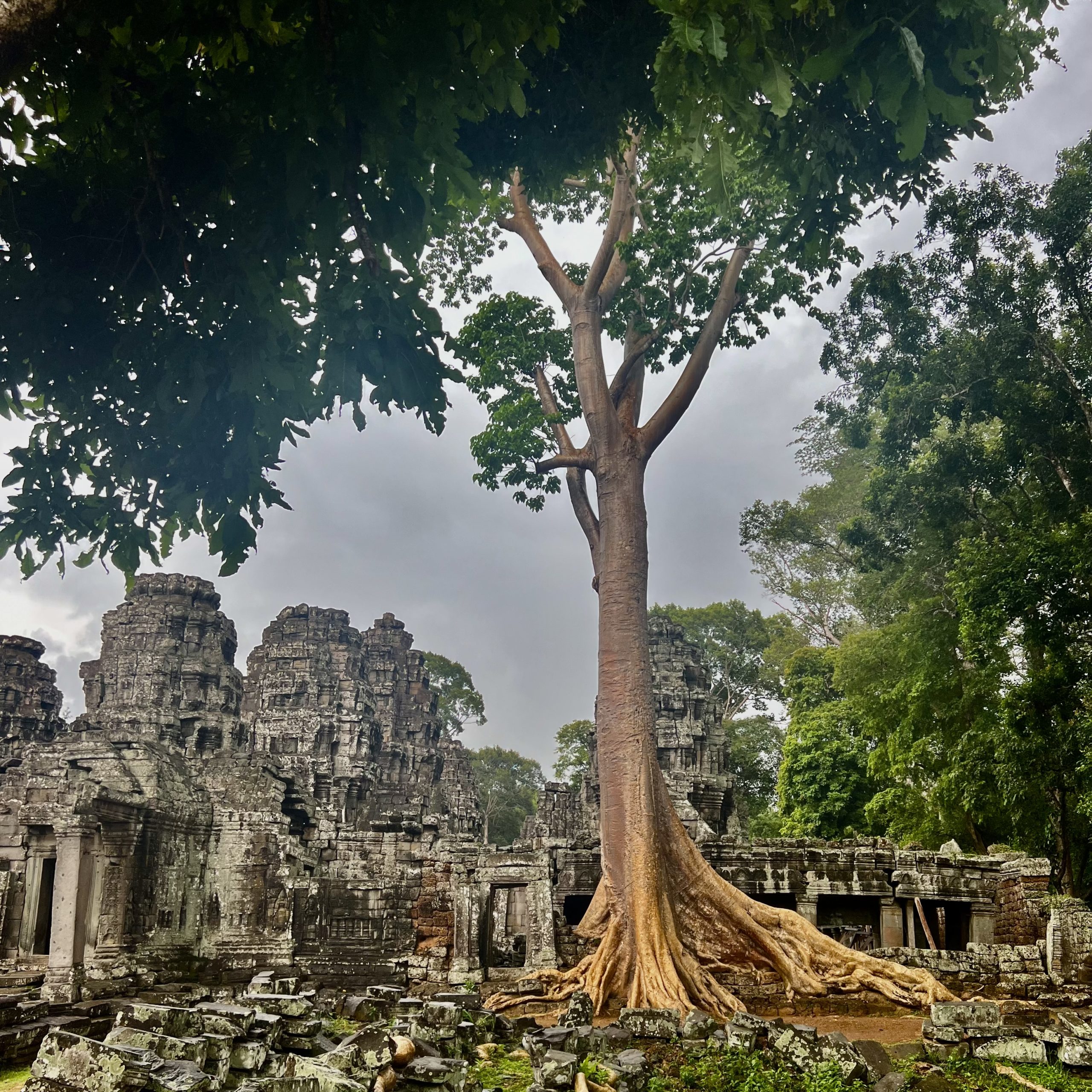
One of the most intriguing places I visited was the temple of Ta Prohm, made famous by the Tomb Raider film that was partly shot there. And yes, it absolutely looks the part.
Built in the late 12th century by the Khmer King Jayavarman VII as a Buddhist monastery, Ta Prohm was once a vast, thriving complex — home to almost 80,000 people. Hard to imagine, standing in the jungle silence of it today.
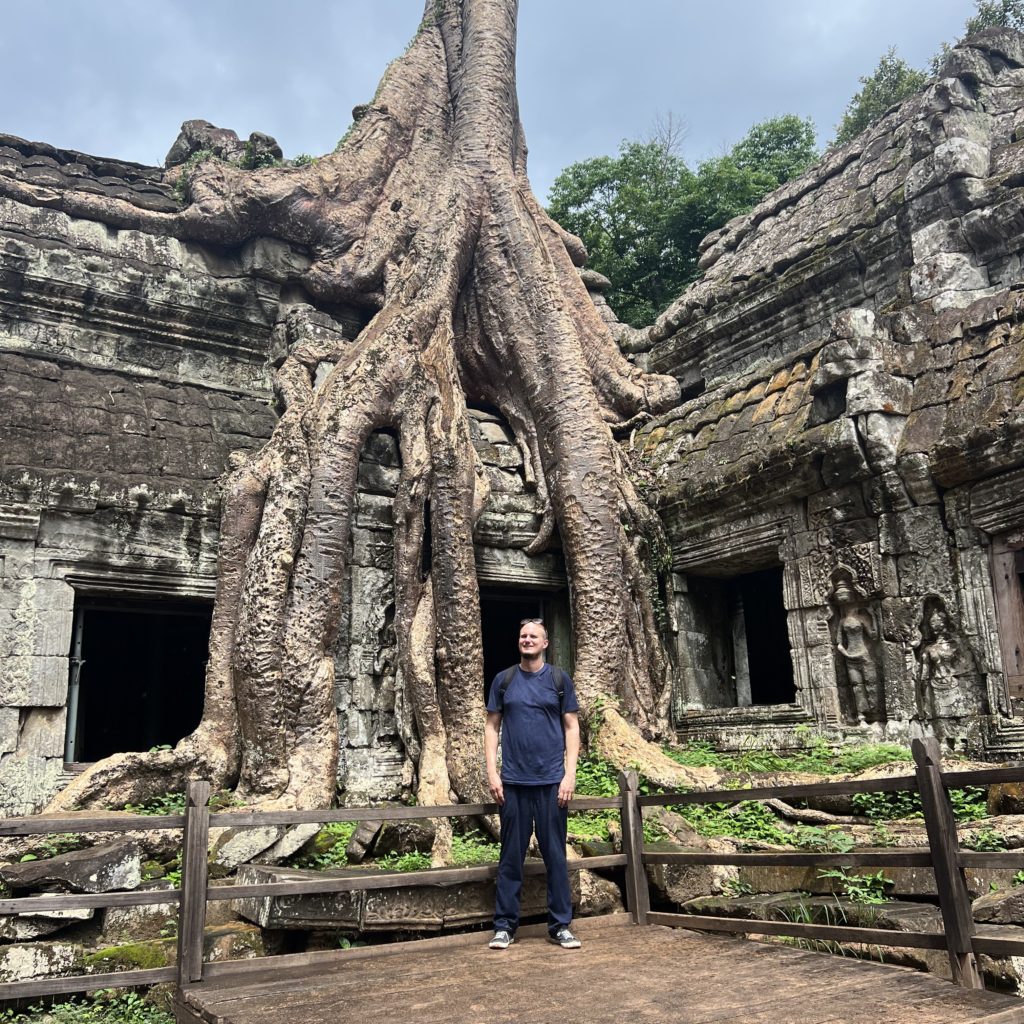
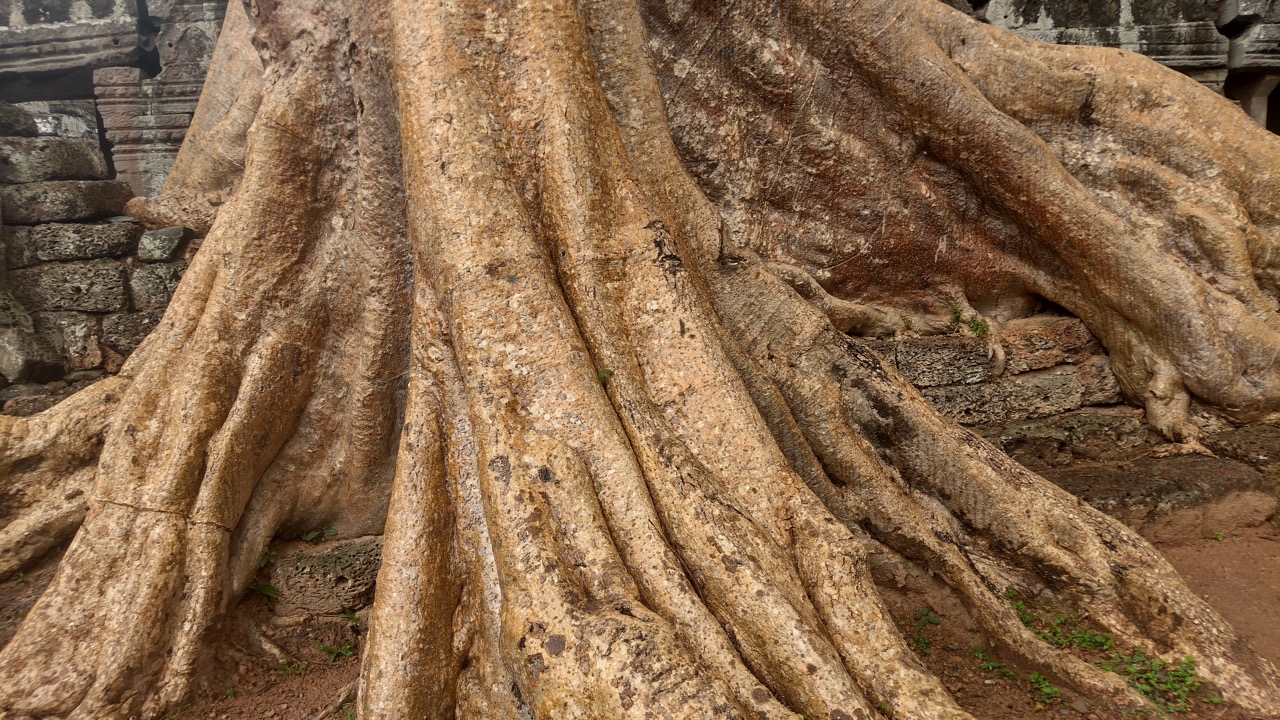
What makes Ta Prohm unlike anywhere else I’ve been is what happened after it was abandoned. When the Khmer Empire fell in the 15th century, the temple was left to the jungle, and the jungle didn’t hesitate. Gigantic trees grew from the walls, their great roots intruding through doors, courts, and roofs. These are not trees around the temple — they are trees through the temple. Enormous silk-cotton and strangler fig trees have wrapped themselves around the stonework over centuries, their roots flowing over walls and doorways, slowly pulling the whole structure apart while simultaneously holding it together. It shouldn’t work as a sight, and yet it’s one of the most extraordinary things I’ve ever seen.
When archaeologists began restoring the temples of Angkor in the early 20th century, they made a deliberate decision to leave Ta Prohm largely as they found it. The result is a place that feels genuinely lost, genuinely discovered, in a way that the more restored temples nearby simply don’t.
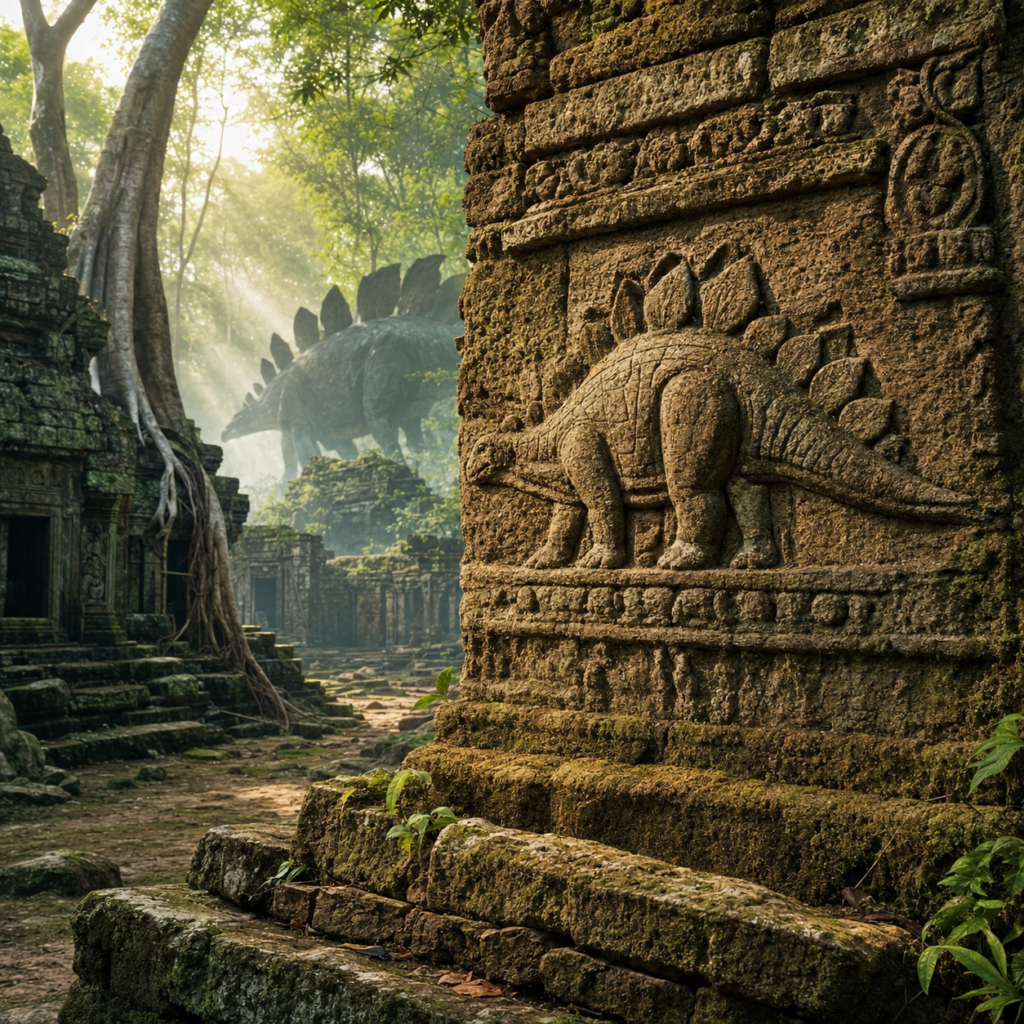
But, even more intriguing, on one wall of the temple, is the carving of a stegosaurus.
Of course, lots of people say it looks like a wild boar, or a cow with a funny-looking face, while others claim it was added later as a joke. Although these possibilities might be true, I think it’s much more fun to let the imagination take over. I’m not suggesting that dinosaurs roamed the planet in the twelfth century, but tales of extinct beasts could have been handed down through the generations to people at that time. Compare this, if you will, to our modern myths surrounding dragons. We’re all pretty certain that dragons don’t exist right now, but creatures that looked a bit like them might have roamed the planet at some point, or they’re an amalgamation of several creatures combined. Either way, to say that it’s a wild boar that’s not up to the standard of the rest of the carvings, is missing the fun.
To add further intrigue, Chinese diplomat Zhou Daguan who visited Angkor in 1296, described temple vaults overflowing with royal treasures. Yet today, these fabled treasure chambers are either empty, or more excitingly, undiscovered. The treasure could have been looted by invading armies, moved by the Khmer kings themselves, or (my favorite theory) could lie somewhere undiscovered.
Much of what we know about Angkor during this time is thanks to Zhao Daguan, who spent nearly a year in the city and documented his observations. His account provides an invaluable glimpse into Khmer life, the architectural marvels, and the society that thrived there. Daguan was awestruck by Angkor Wat and described its grandeur as surpassing anything he had seen. He noted the intricate carvings, vast reservoirs, and impressive city planning. Beyond the temples, his writings shed light on the daily lives of the people, their social hierarchy, customs, clothing, and agriculture. His, remains one of the best accounts of life at the time.
Daguan vividly described the king’s divine status, the elaborate court rituals, and the bustling markets filled with goods from across the region. It was actually Daguan who reported that the Khmer king visited a golden tower at night to commune with a spirit. This spirit was believed to be the true source of the kingdom’s power, and if the king should miss this meeting, disaster would strike. Daguan reports that if the spirit failed to show up even once, it was an omen of the king’s imminent death. If the king himself missed the appointment, there was a national disaster coming. Some claim that Daguan made this up, or misunderstood what was going on, which could of course be true. Either way, this provided me with the idea for the Lotus Key, and how the king might use the relic’s power to communicate his wishes to the people. The truth behind what the Khmer King actually did every night in this golden tower we’ll never know, but we can imagine!
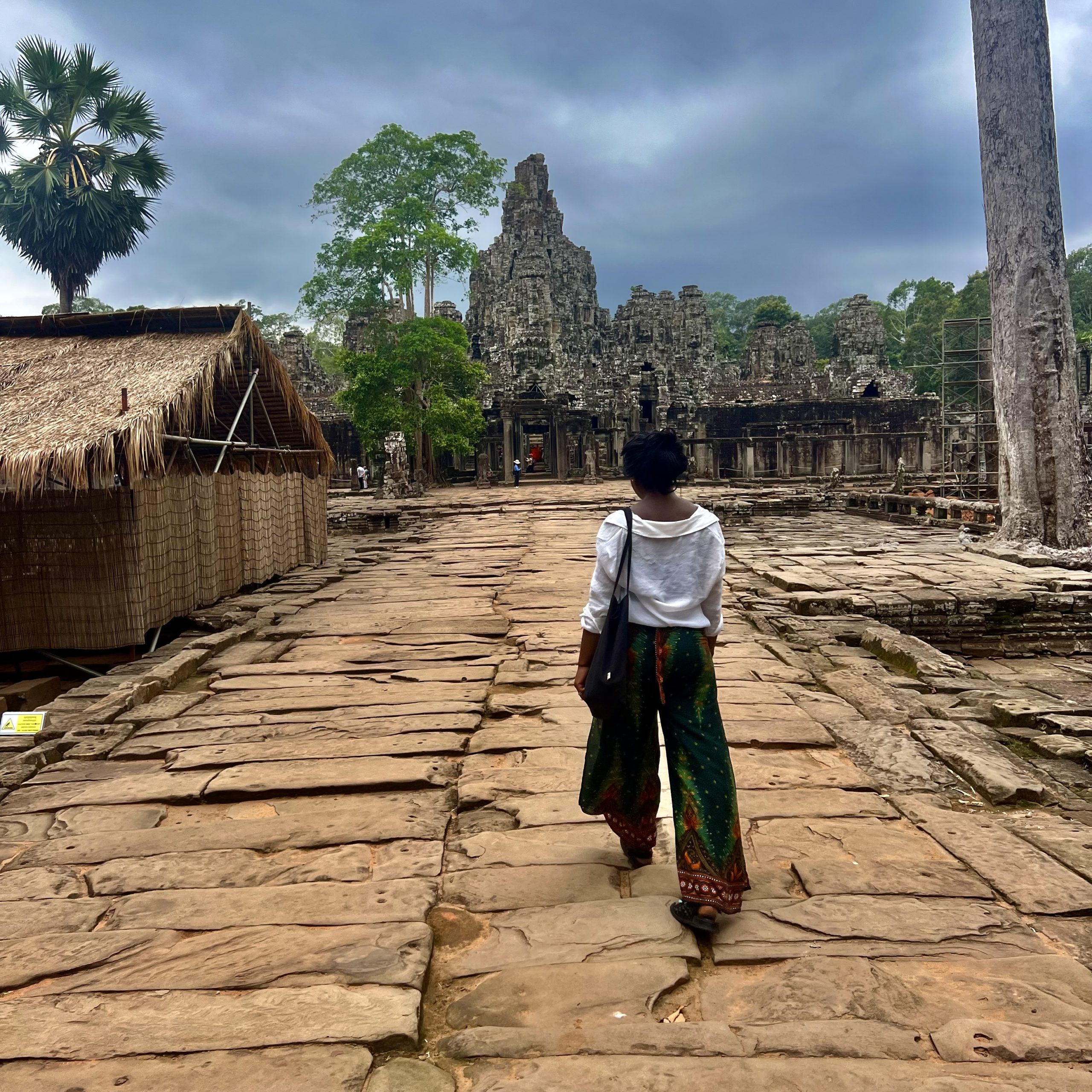
Even by the standards of today’s sprawling cities, the vastness of Angkor is awe-inspiring. Much of it is thanks to Suryavarman II, who expanded the empire to its greatest extent and then Jayavarman VII, who rebuilt the empire after the Cham invasion and constructed iconic temples like Bayon, Ta Prohm, and Preah Khan.
Historians think that his successor, Jayavarman VIII, systematically destroyed records of Indravarman’s reign in something of a coverup. In fact, only a single inscription survives to tell us he died in 1243, leaving everything else a mystery. Indravarman II’s “disappearance” from history might be linked to something deeper than royal rivalry. As a devoted Buddhist ruler following his father’s footsteps, he faced a kingdom increasingly pulling back toward Hinduism. When Jayavarman VIII took power, he led an aggressive Hindu restoration, potentially explaining his attempt to erase his Buddhist predecessors from memory.
Although Indravarman’s reign was peaceful, the empire was now in decline. The Khmer grip on Champa slipped away, and the rising Sukhothai kingdom carved off western territories. The rest, as they say, is lost to history.
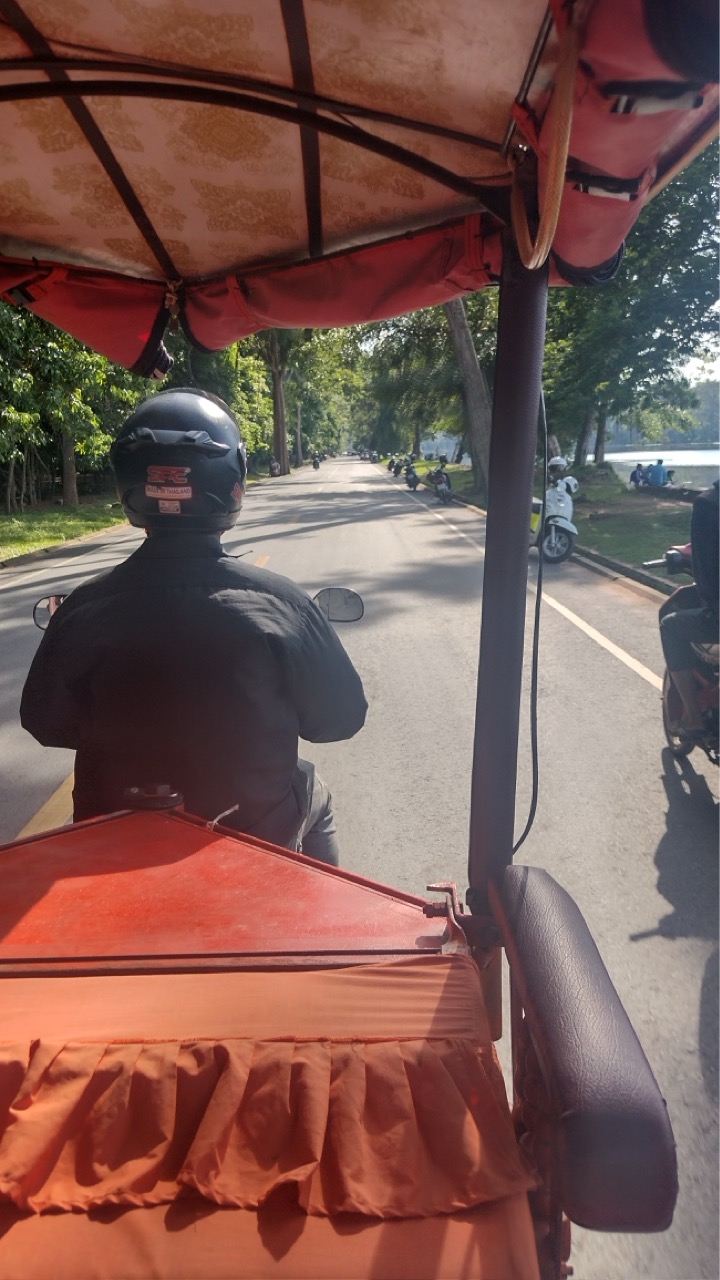
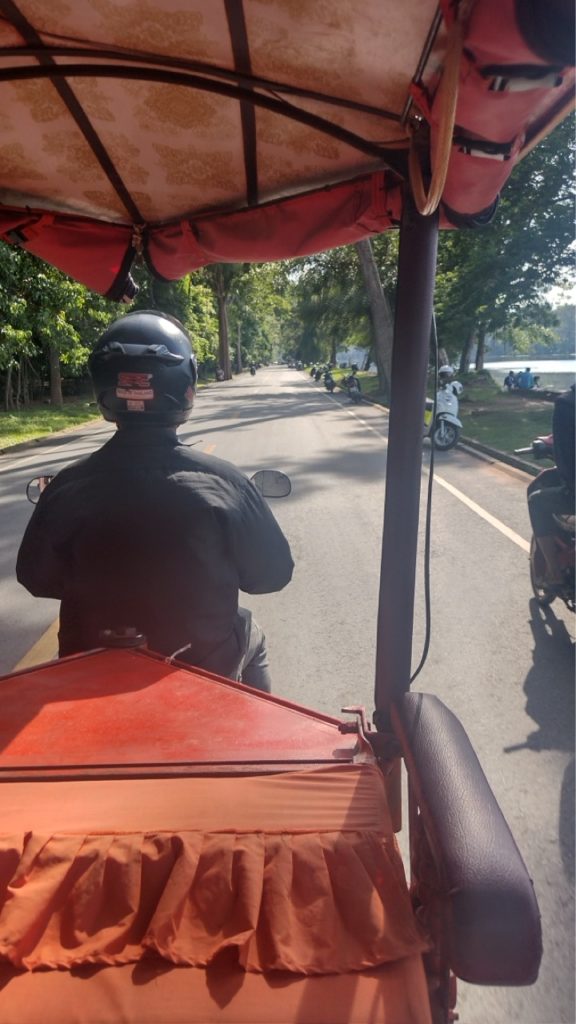
Siem Reap itself is a wonderful town to spend some time in. It’s small enough to feel manageable but lively enough to keep you busy — particularly after dark, when the night markets come to life. Stalls selling silk scarves, hand-carved wooden figures, stone carvings, and jewellery line the alleyways, and the smell of Khmer BBQ and grilled skewers drifts through the air. It’s the kind of place where you can wander without any particular destination in mind, cold beer in hand, and still have a brilliant evening. During the day, the tuk-tuks zip you out to the temples through the early morning heat, and the town has a pleasantly unhurried rhythm to it once you get away from the main tourist drag. A few days here, split between temple visits and evening wandering, is just about right.
After a week in Siem Reap, which is the modern city closest to Angkor Wat, Mrs. R and I traveled to the capital city, Phnom Penh. A thriving, vast and noisy place, Phnom Penh is currently in the midst of incredible growth. I expect that within ten years, with all the foreign investment it’s receiving, it’ll rival Bangkok or Singapore as an international hub.
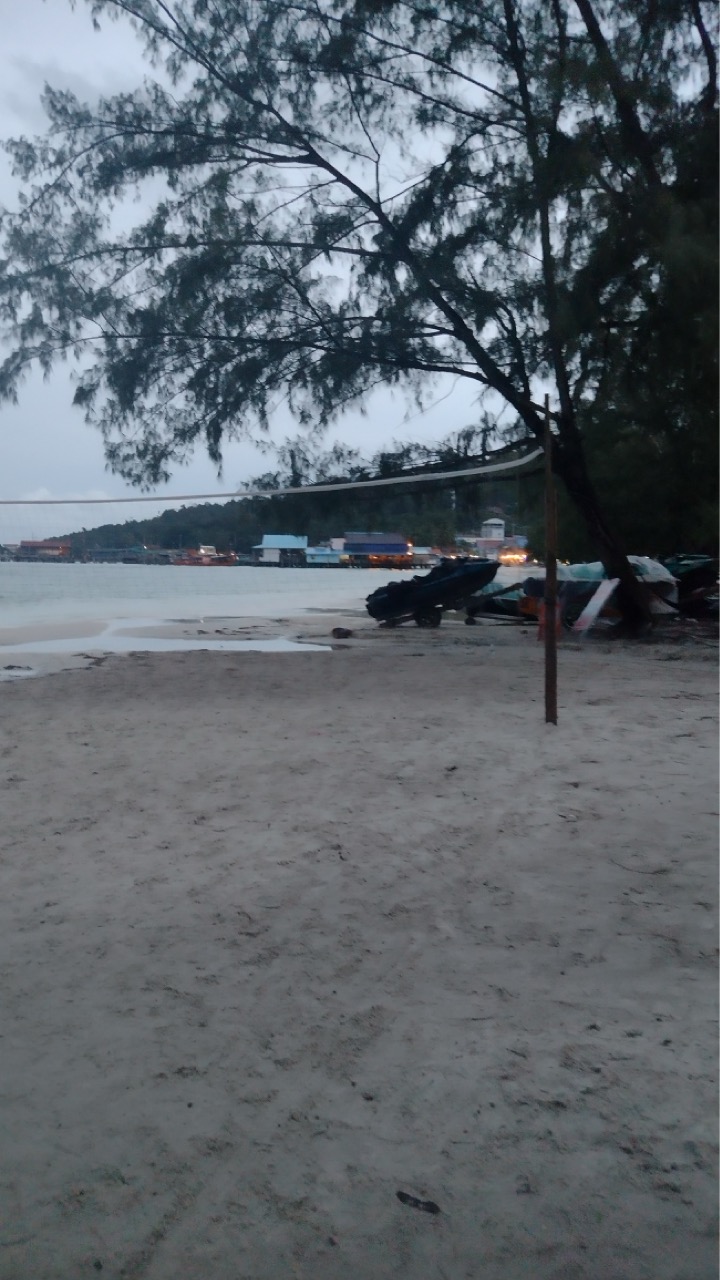
Preferring less chaotic places, we quickly moved on to the island of Koh Rong. Although we initially planned to spend only a few days on the island, we were so captivated by its charm that we ended up staying for nearly two weeks. We made our temporary home in a secluded beach hut, two hundred yards from a bar that served cold beer and barbeque food late into the night. Our only company was a family of monkeys that lived in the trees. If there’s a better place to spend a few days, I’ve not yet found it. It was there that I decided, in some small way, Eden should visit the island.
Not far from Koh Rong, lies the Bokor Hill Station, Bokor was built by French colonists in the 1920s. The site was envisioned as a luxury retreat to escape the sweltering heat of the lowlands. The centerpiece, the grand Bokor Palace Hotel & Casino, which once hosted Cambodia’s elite in art deco splendor, is now an empty ruin. An abandoned church stands nearby and the old post office, police station, and royal apartments are also frozen in time. The whole area was deserted during Cambodia’s wars and the Khmer Rouge insurgency in the late 20th century. The eerie, mist-shrouded ruins have since drawn tourists, artists, and filmmakers. Unfortunately, we didn’t make it here on this trip, but next time it’s top of the list.
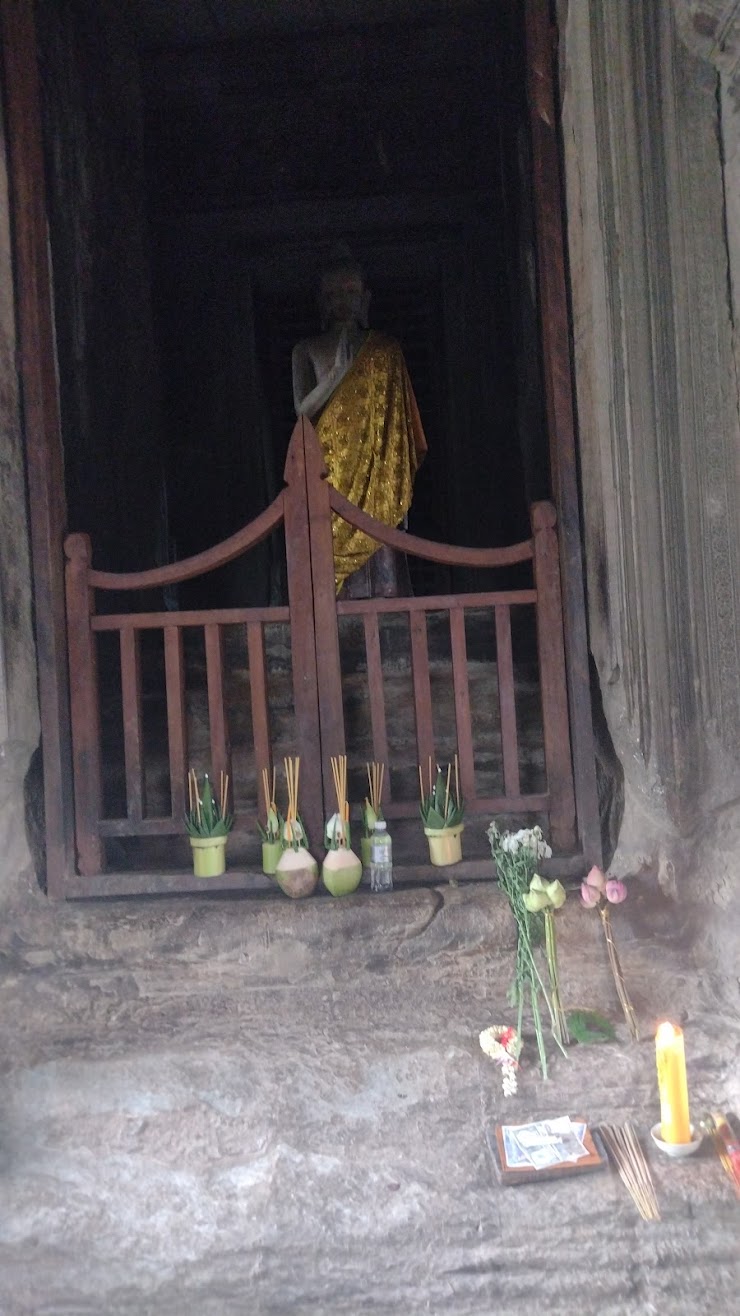
I also wanted to raise awareness of Cambodia’s stolen works of art. While walking through the temples today, it’s sadly all too common to see the feet of statues remaining, with the rest having been hacked off and sold. While the country suffered under a brutal dictatorship, carvings and ceremonial artifacts were taken from sacred sites across the region and are now in private collections or museums around the world.
Cambodia is now fighting back with a national campaign to recover and repatriate these relics. A team of archaeologists, investigators, and legal experts are working to trace, document and repatriate the country’s stolen treasures. Many major museums and private collectors are being forced to confront the provenance of their acquisitions, and several have already returned artifacts to their rightful homes.
These stolen artifacts are not the only haunting remnant of the conflict that once tore the country apart. Even after decades of peace, Cambodia remains one of the most heavily landmine-infested countries in the world. For many Cambodians, parts of their villages remain off limits for fear of unexploded devices.
The densest concentration of mines exists in the northwestern regions near the Thai border (where Eden and her crew visit) with significant numbers around temple complexes that once served as military strongholds. Brave men and women painstakingly clear the ground inch by inch using metal detectors, trained animals, and mechanical de-mining machines, saving lives and restoring safety to communities.
While in Cambodia, we visited an exhibition on how this continues to plague the poorest communities. Inspired by what we saw, we will support the Landmine Relief Fund in 2025. Although there are several charities who do great work in this area, this is the one who runs the museum we visited. In addition to removing the mines, they work with an organization that has built nearly 50 schools on or near old minefields. This means that a small percentage of the money you paid for this book and my other books will end up improving lives of people in the area that inspired this story. Should you be interested you can see the work the Landmine Relief Fund do on their website:
https://www.landmine-relief-fund.com/