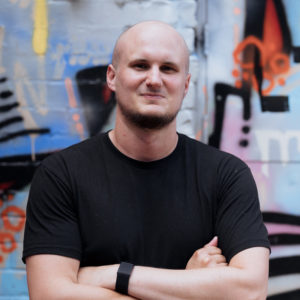
I often say that I wouldn’t be a writer if I hadn’t seen and experienced a bit of the world first.
At the end of December 2017, I started writing what would become my first novel. I say, what would become, because that afternoon as I sat in a café in Madrid, Spain, I had no idea that this would become something that would change my life in the ways it has.
At the time I was working as an English teacher in a high school. Some people speak of creating a business or selling their art to “break out” of their life before. This wasn’t the case for me. At that time, I wasn’t unhappy with the life as a teacher. I certainly had feelings of ‘there must be more to life than this’ but enjoyed many parts of the job, especially encouraging young people to explore their creativity with words.

Before that time in Madrid, I had already written a few short stories. Despite that Madrilenian afternoon getting the credit for my first serious writing attempt, the desire to came six years before when I visited India for the first time.
Still to this day, I remember that first day in Mumbai like it was yesterday, that’s how vividly it’s embedded on my mind’s eye.
I have told this story in various ways before, including in various author profiles, so to prevent repetition, this is the “lite version.”
I’d arrived at Mumbai airport at dawn on an overnight light. I struggled through the airport and found, with some effort, a taxi. As that taxi cut its way through the already heavy traffic toward my hotel, the city unfolded itself like a story right there beside the freeway. At that time, the eight-lane freeway backed on to one of the city’s largest slums, and the activities of the residents spilled out on to the road. I watched as people washed from buckets and children played around piles of trash. A man stumbled out of his hut, yawned, stretched and scratched his stomach as though we were right in his living room.
Chickens pecked at the dust just inches from the wheels of brightly painted trucks. A sports car waited patiently for a cart pulled by a guy on a bike to get out the way. Goats picked their way through the fumes in search of a tuft or two of grass. And, in the center of it all, wandered a small herd of cows, causing the traffic to brake and swerve at a moment’s notice. It was chaos, but I was transfixed by it.
What I felt then, is what I try to recreate with my stories. If I am able to capture just a fraction of that, taking you to that new world, and imprinting it on your memory long after the final page has been turned, then my work is done.
This journey features in my first book, Kathmandu Killers. Although the characters don’t visit Mumbai, I found similarities with the Nepalese capital so transferred my experience there.

Kathmandu Killers, published 2018.
A blinding orange sun sank through a fragmented wall of clouds. Shafts of haggard, uncompromising light signaled the falling blanket of dusk. Behind the sprawling city, the silver backs of the Himalayas stood resolute.
The clang and yammer of daytime production muted as merchants, makers, and menders packed away the tools of their trade. A welder, a bicycle repairman, a tire salesman. Their work for the day was now complete, and their concern for the hunger of their families met, for now.
In the upstairs windows, lights blazed. The smell of spice and onions replaced the odor of oil, paint, and rubber.
Two young men made their way through a backstreet. This city was a warren of such narrow thoroughfares, allowing people to scuttle unseen.
Concrete structures stood tall on both sides, leaving a narrow, dusty path. The going was difficult. The men knew it would be worth it, however. As they turned left at a crossroads, the narrow passage forced them into single file. They walked in silence.
The man in front lit a cigarette; it flared in the shadows.
The residents of the city were used to these people. A rabble of them had passed through their city, homes, and restaurants for as long as anyone could remember.
For some, it was the beginning of a journey — perhaps Pokhara, or Everest. For others, it was the end. A last stop before the road became impassable, inconvenient, or uncomfortable, and the flight home beckoned.
The men walked towards the end of the passage, a dead end — the concrete wall of a building. Its ugly construction looked bulky and mysterious in the darkness. Pipes and wires bulged like veins across its skin. The men knew what they sought, however. They had been there before.
All they had to do was look for the light. A bare bulb, swinging on its wire and encircled by insects, hung above a door. It was the only thing that separated the door the men were seeking from any other.
The following year I made my first trip to Thailand. I’ve since been back several times and always enjoy it. On that first visit I ended up in a nightclub which inspired part of my debut novel. A friend and I visited the nightclub on the recommendation of a pair of fellow travelers. We had a great evening, dancing the night away, drinking Chang Beers and meeting people from all around the world. In the morning, discussing the night before, we both remembered the name of the nightclub, but not its location. Ultimately, we turned to our guidebook for the answer. The guidebook said something like:
The nightclub seems to only exist during the hours of darkness. The only people who know exactly where it is are the taxi and tuktuk drivers. A Bangkok must do, if you can find it.
As such, the idea of the backstreet restaurant—although mine was a lot more sinister—was born.It was on this same trip that I spent a few days on the island of Koh Tao. With its white sand and pearlescent water, this continues to be one of the most beautiful places I’ve been. Once back at home I did some research about the place and learned of its dark side, where young travelers (like me at that time) died in mysterious and suspicious circumstances. These tragic events, set against the island’s beauty inspired my novella, Koh Tao Betrayal—which you can read for free here.

Koh Tao Betrayal, published 2020.
Half an hour later, the boat slid alongside the wooden structure of the Mae Haad Pier. The day was already warming up.
Leo felt his eyes ache. He was so tired. He wanted to close them and rest, just for a moment. The island before them was just too beautiful. Too perfect to miss.
A collection of bright buildings clung around the edge of the impossibly blue water, beyond which dense forest-covered hills rose towards the sky.
The muscular thudding of the ship’s engine, which Leo had grown used to during the crossing, sank into its lowest register and then stopped completely. Sounds of the quay filled the silence. Raised voices from somewhere nearby organised the disembarkation of the ship. Further away, the engine of a long tail boat squealed as it slipped through into the harbour.
Leo climbed to his aching feet and stretched. Then, shaking the movement back into his hands, he looked at a fishing boat moored further down the quay. The copper and teal-coloured boat was alive with a battalion of men in orange overalls. They cleaned, loaded and prepared the boat for its next trip. As Leo watched, a man dressed differently to the others climbed down from the bridge and scanned the working men. Leo surmised that he was probably the man in charge — the skipper, or captain, or first mate, or whatever the correct nautical term was. Even from a hundred feet, Leo saw that his brow was darkened in anger and his fists were clenched. The skipper spotted a man at work on the ship’s stern and marched towards him. He slapped the man around the head with an open palm. Leo felt himself jolt in shock.
“We’re going,” Mya said, standing up and retying her hair. “Come on.”
“Yeah, yeah, sure,” Leo said, shaking himself back into focus.
Down on the quay, Leo and Mya retrieved their bags from the piles the dockworkers had stacked them in and headed, in a sleepless glaze, towards the collection of buildings. A rust covered forklift truck rolled from the boat with two pallets of bricks, narrowly avoiding two dockworkers carrying large bundles of toilet roll.
Everything that came and went from this island, Leo realised, had to come and go on boats like this.
Leo pulled his bag tight and said a silent thank you. Firstly, that they’d made it through the storm, and secondly, that the boat’s state of disrepair had been hidden by darkness when they’d boarded.
Travel is an exercise in comparison, I think. It’s the comparison between where you live and where you are. It contrasts the lives of the people the—like the sports car waiting behind the donkey cart in Mumbai, or gruesome murders on a pristine island. This is one the reasons I loved Istanbul from the moment I arrived. Literately straddling the border between Asia and Europe, it’s a city where modern skyscrapers fight for attention next to thousand year old mosques. It’s got the busy streets I loved in Asia, while also feeling European.
One thing that stood out to me on that trip, and hasn’t made it into a book yet, but I’m certain will before too long, that’s the train station which used to be the terminal for the Orient Express. It’s a wonderful piece of architecture and speaks of a time when traveling across land was the only option. That gave me an idea, and seven years later in 2023 I set out on my own train journey, with the target of reaching Istanbul all over land. Ten countries and four weeks later, I arrived to meet my friend and fellow thriller author Steven Moore. It was great to show him around some of the city’s highlights including those mentioned in this story.
I did set the final book in International Detectives series in Istanbul, though.

Istanbul Icarus, Published 2022.
Sunset in Istanbul. Both in Sultanahmet and across the glittering waters of the Bosporus in Dogancilar, an unseen blanket of dusk was gradually being lowered over the city’s daylight chaos. In the markets and bazaars, the screeches of merchants muted in the growing shadows. The ghostly, high-pitched, sacred chant of the muezzin, which moments ago had boomed from the city’s countless minarets, sunk back into the unquiet night. The faithful were already where they needed to be. Everyone else? Well, they didn’t matter.
For this ancient meeting place, a fiercely defended confluence of the continents, night was coming. But night was not as pure as it once had been. Over the last century, desire and technology had diluted its power. Soon, darkness would spread across the sky, but not through the labyrinthine streets of the city. There, lights would continue blazing as the nocturnal circus bounced and bellowed its way through another turbulent night.
That same year I revisited India for the second time. In truth, I’d been longing to go back since that first trip five years before. I did the same taxi journey, and ended up quite randomly, staying in exactly the same hotel as I had before.
By the time I arrived at the hotel I’d booked, they told me they’d given the room to someone else as they didn’t think I would turn up (in my experience, things like this happen in India a lot!)
It was long past midnight, so I picked up my bag and set off to find another hotel. As I was walking down Colaba Causeway, past the famous Leopold’s Cafe, I remembered that the hotel I stayed at before was just a hundred feet ahead.
As though returning home, I popped in there and found that they, fortunately, had a room available. Although a lot of people do spend the night on the streets in Mumbai, I didn’t fancy it myself.
During this trip, I travelled overland across northern India to Kathmandu in Nepal, ticking off famous sights on the way. One of these is the Taj Mahal. I haven’t returned to the Taj again yet, but have promised Mrs. R that we will. I wrote about this in Kathmandu Killers, when Leo is reflecting on his visit there with the woman who led him into finding missing people.
Kathmandu Killers, published 2019.
“Look at that,” Mya said, pointing out a sign on a building to the left.
Rooftop bar and restaurant, views of Taj Mahal.
“Shall we?” she said, crossing the road before waiting for a reply.
They climbed a dusty stairwell, passing a different guesthouse or residence on each floor. On the final flight, a strip of sky appeared above them.
Standing on the skyline, amid the jumble and tussle of Agra, the Taj revealed herself. Domes and minarets in ivory white took on the changing hue of the glowing air, shining as they had every day for five-hundred years.
Mya stepped forwards, entranced by the Taj on the skyline..
Despite his lifelong desire to see the Taj, that was just a building. Buildings don’t give people hope, or optimism, or love; they can inspire it, but those feelings only come from other people. Leo gazed longingly at Mya.
In that moment, Leo wondered why people felt the compulsion to travel at all. It wasn’t because of the sights and sounds and smells of the place. You could see or smell things anywhere, right? Was it be because of the people? He thought not, because the world was full of people. You can meet new and interesting people every day.
Watching Mya blink away the dry evening, Leo knew it was because of the feeling. That feeling. When you came to a new place like this, you left your feelings behind and opened your heart and mind to the raw struggles of others. Sometimes that was understanding the people you met, and sometimes it was those you traveled beside.
My visit to Riga was an interesting one because it took place during the autumn of 2020, during the covid times. Frustrated with not being able to travel, I agreed to house sit there, looking after two rabbits. Although things looked alright for a while, within a few days Latvia entered another lockdown, and everything closed.
I knew that was a risk when I decided to take the trip, but as someone who needs to experience new places to create, I felt as though I didn’t have a choice. Of course, I took the necessary precautions and isolated for the first ten days of the trip. In fact, as it ended up, I don’t think I spoke to a single person face to face for over the three weeks I was there. These were the times that we were all talking online anyway, so the fact that I was in a different country actually made no difference.
Each day, I spent the mornings working in the apartment and then in the afternoons I would walk around the city. It was such a strange experience, and one that I’m now very grateful for, as I got this beautiful city pretty much to myself. Also, whilst I was there, I researched Latvia’s history, and that inspired by book Riga Rising, which is set there.
As a consequence of my experience there, the Riga you’ll find described in Riga Rising, is very different to the city you’ll find if you visit. For me it was a bleak, desolate, yet interesting place.

Allissa led them right again and through an archway into a much smaller passageway. The shadows lay thick here, only broken by the occasional streetlight. Ahead, the passage turned sharply to the right.
Leo looked around. “Are you sure we’re going the right way? I don’t remember this from the way here.”
Allissa paused and looked back the way they came. “No, you’re right, nor do I. I think it was that way.” She pointed further down the passage.
Allissa’s grip tightened on Leo’s arm. Together, they paced briskly, their footsteps echoing from the buildings on either side. At the corner, they veered right. Beneath their feet, the cobbles were treacherous, threatening to unseat their every step. The passage stretched relentlessly into the unknown, its end consumed by shadows. Behind them, the city’s noises faded, replaced by a quiet that loomed as large as the night itself. Allissa stopped and looked back the way they came again. That was as dark as the way forward. Leo stopped, too.
“I’m pretty sure —” Allissa stopped talking as footsteps resounded from the cobbles. Allissa was suddenly alert. Her eyes searched the shadows for any sign of movement. Nothing emerged. The footsteps died away.
“What is it?” Leo whispered, his voice urgent.
“Nothing, I just… I thought I heard something. Did you?” Allissa’s voice was faint and brittle.
“I’m not sure… maybe… I —”
Ahead, a streetlight suddenly snapped on, bathing the passage in bright white light. Allissa’s head whipped around, her eyes aching from the abrupt intrusion of light. She gasped and reeled backward. They stumbled back into the shadows, their feet slipping on uneven cobbles.
In the island of light, just a few feet away, stood a man. Despite the warm weather, he was dressed in a long, shapeless coat. The man stood motionless, his eyes on the floor in front of him. The streetlight cast unusual and eerie shadows across the face.
Leo and Allissa watched him, neither daring to speak.
Allissa’s heart pounded, each beat a resounding drum within the cage of her chest. Her hand clutched Leo’s, her fingers entwined with his. Her breath came in short, sharp gasps, the cold air stinging her lungs.
The man’s gaze lifted with predatory leisure, fixing on Leo and Allissa. Although small in stature, there was something menacing about the way he stood, relaxed in the gloom. His eyes, set wide apart, bore into them with an unsettling intensity. A smile, more a baring of teeth than a gesture of friendliness, crept across his face as he nodded. With a deliberate snap of his fingers, a shadow detached itself from the darkness, materializing into a small, wiry dog that positioned itself obediently at his side. The man bustled past Leo and Allissa and back into the labyrinthine passages. Somewhere beyond the buildings, a tram clattered unseen.
By 2023, I was deep into writing the second book in my Eden Black series, The Giza Protocol. As I’m sure has become clear by now, experiencing places myself is crucial for my creative process, so I arranged for Mrs. R and I to visit Egypt. I’d never been to Egypt before, but knew I’d love it. I wasn’t wrong.
Several places stand out for me on that trip, and two so far have made it into my writing. Surrounded by the Sahara on all sides, Siwa is hundreds of miles from anywhere. There’s one road in and out. And it’s a long, eight-hour journey along that road. It was though, worth the journey, and has been immortalized in my book, The Templar Enigma.
The second notable place was the setting for the book I was working on while we were there, The Giza Protocol.
Cairo, to me, felt like some of the crazy and beautiful cities of Asia. It’s noisy and polluted, but scenic too. Arriving in Cairo on the train, we got a taxi to our hotel. Darkness had fallen some time ago, and the lights of the city spread out on either side of the raised highway. And then, like approaching a long sunken ship in mirky waters, great triangular shapes appeared on the horizon. All tiredness was forgotten, we watched like enchanted children as the pyramids, silhouetted against the sky, grew nearer and nearer.

The Giza Protocol, published 2023.
As they slid between a pair of guesthouses, the plateau came into view. The outlines of the three largest pyramids towered into the night sky. The lights which illuminated the pyramids during the daily light show had long since been switched off, and the crowds had dispersed, but the monoliths were still visible just by the overflowing light pollution from the nearby city.
Eden glanced at her watch. It was just after 1 am. After finishing at the restaurant, they had returned to the villa and silently loaded up the truck. Then they had paced around the villa, acting as though they were going to bed. After climbing between the sheets, each had tip-toed back out to the truck. All going well, King would think they were fast asleep by now.
Come success or failure tonight, they would be back safe and well before King even realized. Or at least, Eden thought, she hoped they would be back safe and well. This was a dangerous mission, from which many people had never returned. Throw Lulu King and her henchmen into the mix, and there was no knowing what might happen.
Beaumont slowed the truck and rolled to a stop in front of the closed security gate. Several security cameras eyed them from high poles. A pair of guards climbed dozily from chairs on the other side of the gate and sauntered up to the bars.
Eden peered through the bars. In the gloom she could just about make out the shape of the Sphinx standing enticingly close.
The guards approached the driver’s window. Beaumont wound down the glass. From the passenger seat Mo entered into a quick-fire Arabic exchange with one of the men. The men peered closely at Eden and Baxter in the back of the truck. The Arabic exchange continued. Mo slipped the men a wad of notes. The men glanced at each other, then at the money, then nodded. They slid the gate open quickly and beckoned the truck inside.
Beaumont revved the engine and drove through the gate.
“Was it really that easy? What did you tell them?” Eden asked. She glanced at the guards to see they were both looking at her with something akin to awe.
“I told them that you both are American film stars, come all the way from Hollywood to see the pyramids at the invitation of our president. You were supposed to be here a few hours ago, but your flight was delayed. Tomorrow you must start filming out in the desert so have just one night in the city.”
In January 2024 I returned once again to the city that started it all: Mumbai, India. Now a full time author, and working on my book while I was there, I made that same taxi ride from the airport and visit some of the same restaurants I had thirteen years before.
This social media post captures it perfectly!
Social media post, published January 2024.
Last time I was in Mumbai, my life was so different… I was working full time as an English teacher in a high school. The longest thing I’d written was the dissertation for my degree (and in total, three people read that. In fairness, it was really boring.) Neither of my nephews had been born. Finally, I hadn’t yet met Mrs. R! Today, I’m re-familiarising myself with city that feels very similar, except so much has changed.
Thank you for joining me on this adventure, and here’s to more! Although the words in my books are my own, the characters, experiences and some of the events described are wholly inspired by the people I’ve traveled beside.
If we ever shared noodles from a street-food vendor, visited a temple together, played cards on a creaking overnight train, or had a beer in a back-street restaurant, you are forever in this book, and for that, I thank you!
Again, thank you for coming on the adventure with me. I hope to see you again.